2.9.6
Representation
Test your knowledge with free interactive questions on Seneca — used by over 10 million students.
Representation
While many newspapers are meant to be impartial, they often reflect the ideological perspectives of the media producers who constructed them.

Impartiality
- While many newspapers are meant to be impartial, they often represent certain social groups or events and issues with a clear opinion.
- Newspapers can reinforce or challenge dominant/hegemonic ideologies in relation to things such as gender roles, class, race and politics.

Mediation
- People, places and events are all re-presented to audiences and not simply shown (David Buckingham’s theory).
- Often representations we are provided with reflect the ideological perspectives of the media producers who constructed them and may reflect dominant viewpoints on an issue or group of people, even if it is inaccurate.
- For example tabloid newspapers representing all muslims as ‘dangerous’.

Contextual factors
- When discussing representation you must consider any contextual factors which may have influenced how and why the representations are as they are.
- Historical, social and cultural, economic and political factors should all be taken into account.
Political and Gender Representations
Consider how newspapers construct stories to either support or challenge certain political ideologies. Feminist theory should also be considered when analysing a newspaper text.

Political representations
- Newspapers often focus on political events and issues.
- Most newspapers are said to be either right or left wing.

Right wing
- Right wing means a general preference for more traditional political policies.
- Right wing media often serves the needs of the dominant groups in society and values things such as economic independence.
- Right wing publications are likely to align with parties such as UKIP or The Conservatives.

Left wing
- In contrast a left wing publication is more likely to support more liberal or progressive political policies.
- Therefore they would be more likely to support parties such as Labour.
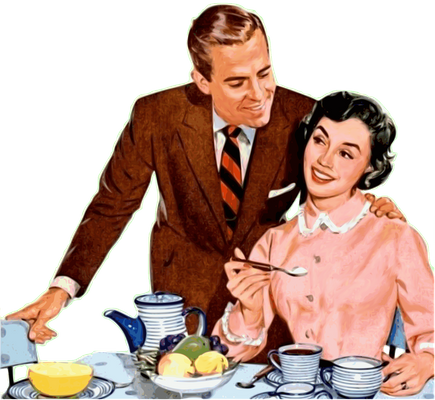
Gender representation
- Many forms of media reinforce the idea that women are less equal to men and add to the discrimination of women.
- This can be achieved in two main ways:
- Women are underrepresented in the media, or given lesser or less active roles.

Sexualisation of women
- Women are overly sexualised in the media.
- The emphasis is on how they look rather than what they do.
- This links with:
- Laura Mulvey’s theory regarding the 'male gaze'.
- John Berger's’ theory that men act and women 'appear' in the media.
1Overview
1.1Media Language
1.3Representation
2Component 1: Section A
2.1Magazines - Vogue
2.2Magazines - GQ
2.3Advertising & Marketing
2.4Print Advertisements - Quality Street
2.5Print Advertisements - (2026 Exams) This Girl Can
2.6Print Advertisements - (2027 Exams) NHS 111
2.7Film Posters (Marketing)
2.8Film - No Time To Die
2.9Newspapers
2.11The Guardian
2.12(2028 Exams) The Sun
2.13(2028 Exams) The Guardian
3Component 1: Section B
3.1Video Games
3.2Video Games - Fortnite
3.4Radio
3.5Radio - The Archers
3.6(2027 Exams) Radio - Desert Island Discs
4Component 2: Section A
4.1Television
4.3Sitcom - Modern Family
4.4Sitcom - Man Like Mobeen
4.5(2026 Exams) Luther
5Component 2: Section B
5.1Music Video
5.2Lizzo - 'Good as Hell'
5.3Taylor Swift - 'The Man'
5.4Stormzy - 'Superheroes'
5.5Justin Bieber - 'Intentions'
5.6TLC - 'Waterfalls'
5.7Duran Duran - 'Rio'
5.8Online Media - Lizzo
5.9Online Media - Taylor Swift
5.10Online Media - Stormzy
Jump to other topics
1Overview
1.1Media Language
1.3Representation
2Component 1: Section A
2.1Magazines - Vogue
2.2Magazines - GQ
2.3Advertising & Marketing
2.4Print Advertisements - Quality Street
2.5Print Advertisements - (2026 Exams) This Girl Can
2.6Print Advertisements - (2027 Exams) NHS 111
2.7Film Posters (Marketing)
2.8Film - No Time To Die
2.9Newspapers
2.11The Guardian
2.12(2028 Exams) The Sun
2.13(2028 Exams) The Guardian
3Component 1: Section B
3.1Video Games
3.2Video Games - Fortnite
3.4Radio
3.5Radio - The Archers
3.6(2027 Exams) Radio - Desert Island Discs
4Component 2: Section A
4.1Television
4.3Sitcom - Modern Family
4.4Sitcom - Man Like Mobeen
4.5(2026 Exams) Luther
5Component 2: Section B
5.1Music Video
5.2Lizzo - 'Good as Hell'
5.3Taylor Swift - 'The Man'
5.4Stormzy - 'Superheroes'
5.5Justin Bieber - 'Intentions'
5.6TLC - 'Waterfalls'
5.7Duran Duran - 'Rio'
5.8Online Media - Lizzo
5.9Online Media - Taylor Swift
5.10Online Media - Stormzy
Practice questions on Representation
Can you answer these? Test yourself with free interactive practice on Seneca — used by over 10 million students.
- 1
- 2Which is an example of a left wing political party?Multiple choice
- 3Gender bias in the media:Fill in the list
Unlock your full potential with Seneca Premium
Unlimited access to 10,000+ open-ended exam questions
Mini-mock exams based on your study history
Unlock 800+ premium courses & e-books