6.1.19
Structure of Personality & Little Hans
Test your knowledge with free interactive questions on Seneca — used by over 10 million students.
Freud's Structure of Personality
The mind can be divided into three levels of consciousness, which can be illustrated by the iceberg analogy. The unconscious mind, which is hidden below the surface, has the most influence on our personality.

Components of personality
- Freud viewed the adult personality as having three basic components – Id, Ego and Superego.
,h_400,q_80,w_640.png)
Id
- This is the instinct part of the personality and we are born with it.
- It is the source of our unconscious desires and impulses.
- It demands instant gratification of its needs, which consist of hunger, thirst and sex.
- It is the primitive part of our personality and as it seeks to obtain pleasure, it is said to operate on the pleasure principle.
Ego
- The ego represents our conscious mind.
- It develops around the age of 2-3 years.
- Its purpose is to balance the Id in society.
- The child realises that the demands of the Id cannot always be met. The ego is logical and rational and seeks to satisfy the Id in socially acceptable ways. It operates according to the reality principle.
Superego
- This is formed around the age of 5-6 years and contains our moral values. Therefore, it operates on the morality principle.
- The superego is our internalised same-sex parent, so for females morality comes from the mother and for males, the father.
- The superego ensures that the ego does not use unacceptable means to satisfy the demands of the Id.

Superego (cont.)
- It is around the age of 5-6 years that parents start to demand that the child acts in more socially acceptable ways.
- The superego gradually takes over this parental role and tells us inside our own head how we should behave.
- It consists of two parts: the conscience and ego ideal.
- The conscience tells us what we should not do, right and wrong.
- The ego ideal tells us what we should do.
- The conscience makes us feel guilty; the ego ideal makes us feel proud.
Conflict: Sides of the Personality & Defence Mechanisms
Freud argued that when we are confronted with a situation we are unable to deal with, certain defence mechanisms are triggered.

Defence mechanisms
- These are mainly unconscious and distort reality, so anxiety is reduced.
- However, they are only temporary; the only way to deal with these situations is to directly confront them in therapy.
- Defence mechanisms can be psychologically damaging.

Repression
- Freud states that we unconsciously block out painful memories, such as a child blocking out memories of physical and sexual abuse.
- For most of us though, painful memories tend to replay constantly in our minds and we wish we could block them out.
- Evidence for repression comes from studies on childbirth; the vast majority of women do seem to repress the memory of the pain.

Denial
- This is the refusal to accept reality.
- For example, an alcoholic refuses to accept they have a problem, even though they have been arrested several times and have lost their job and family.
- Recovery is only possible once reality has been accepted.
Displacement
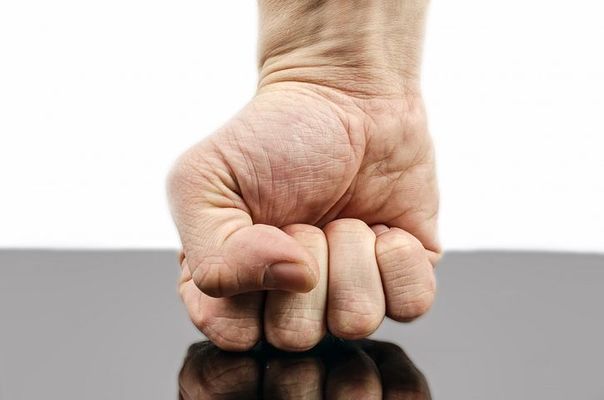
- Displacement is the redirection of hostile feeling towards a more acceptable target.
- For example, having an argument with your partner and slamming the door or punching the wall.
Freud (1909) — The Case Study of Little Hans
Freud’s most famous example of displacement is ‘Little Hans’. He argued that his fear of horses was a displaced fear of his father due to an unresolved Oedipus complex.
Research aim & procedure
- Aim
- To discover evidence to support the Oedipus complex and displacement theories.
- Procedure
- A case study. Little Hans' father was a supporter of Freud and corresponded with him about his son’s fear of horses. He recorded the conversations he had with the boy between the ages of 3-5 and accounts of his dreams.

Results & conclusions
- Results
- Freud argued that Little Hans’ obsession with his ‘widdler’ and his mother, showed that he was in the phallic stage of psychosexual sexual development and had an unresolved Oedipus complex.
- Conclusion
- Little Hans’ phobia of horses was a displaced fear of his father.

Evaluation of Little Hans case study
- Strengths
- In depth and detailed.
- Led to the development of therapy – the ‘talking cure’.
- Limitations
- Unfalsifiable.
- Cannot generalise from a case study.
- Other more plausible explanations for his fear of horses - behaviourism.
1Social Influence
1.1Social Influence
2Memory
2.1Memory
3Attachment
3.1Attachment
4(2026 Exams) Psychopathology
4.1Psychopathology
5(2027 Exams) Clinical Psychology & Mental Health
5.1Clinical Psychology & Mental Health
6Approaches in Psychology
6.1Approaches in Psychology
6.2Comparison of Approaches (A2 only)
7Biopsychology
7.1Biopsychology
8Research Methods
8.1Research Methods
8.2Scientific Processes
8.3Data Handling & Analysis
9Issues & Debates in Psychology (A2 only)
9.1Issues & Debates in Psychology (A2 only)
10Option 1: Relationships (A2 only)
10.1Relationships: Sexual Relationships (A2 only)
10.2Relationships: Romantic Relationships (A2 only)
10.3(2026 Exams) Relationships: Virtual (A2 only)
10.4(2027 Exams) Relationships: Online (A2 only)
11Option 1: Gender (A2 only)
11.1(2026 Exams) Gender (A2 only)
11.2(2027 Exams) Gender (A2 only)
12Option 1: Cognition & Development (A2 only)
12.1Cognition & Development (A2 only)
13Option 2: Schizophrenia (A2 only)
13.1Schizophrenia: Diagnosis (A2 only)
13.2Schizophrenia: Treatment (A2 only)
14Option 2: Eating Behaviour (A2 only)
14.1Eating Behaviour (A2 only)
15Option 2: Stress (A2 only)
15.1Stress (A2 only)
16Option 3: Aggression (A2 only)
16.1Aggression: Physiological (A2 only)
16.2Aggression: Social Psychological (A2 only)
17Option 3: Forensic Psychology (A2 only)
17.1Forensic Psychology (A2 only)
18Option 3: Addiction (A2 only)
18.1Addiction (A2 only)
18.2Treating Addiction (A2 only)
Jump to other topics
1Social Influence
1.1Social Influence
2Memory
2.1Memory
3Attachment
3.1Attachment
4(2026 Exams) Psychopathology
4.1Psychopathology
5(2027 Exams) Clinical Psychology & Mental Health
5.1Clinical Psychology & Mental Health
6Approaches in Psychology
6.1Approaches in Psychology
6.2Comparison of Approaches (A2 only)
7Biopsychology
7.1Biopsychology
8Research Methods
8.1Research Methods
8.2Scientific Processes
8.3Data Handling & Analysis
9Issues & Debates in Psychology (A2 only)
9.1Issues & Debates in Psychology (A2 only)
10Option 1: Relationships (A2 only)
10.1Relationships: Sexual Relationships (A2 only)
10.2Relationships: Romantic Relationships (A2 only)
10.3(2026 Exams) Relationships: Virtual (A2 only)
10.4(2027 Exams) Relationships: Online (A2 only)
11Option 1: Gender (A2 only)
11.1(2026 Exams) Gender (A2 only)
11.2(2027 Exams) Gender (A2 only)
12Option 1: Cognition & Development (A2 only)
12.1Cognition & Development (A2 only)
13Option 2: Schizophrenia (A2 only)
13.1Schizophrenia: Diagnosis (A2 only)
13.2Schizophrenia: Treatment (A2 only)
14Option 2: Eating Behaviour (A2 only)
14.1Eating Behaviour (A2 only)
15Option 2: Stress (A2 only)
15.1Stress (A2 only)
16Option 3: Aggression (A2 only)
16.1Aggression: Physiological (A2 only)
16.2Aggression: Social Psychological (A2 only)
17Option 3: Forensic Psychology (A2 only)
17.1Forensic Psychology (A2 only)
18Option 3: Addiction (A2 only)
18.1Addiction (A2 only)
18.2Treating Addiction (A2 only)
Practice questions on Structure of Personality & Little Hans
Can you answer these? Test yourself with free interactive practice on Seneca — used by over 10 million students.
- 1Which of these are true of the ego?True / false
- 2Which of these are true of defence mechanisms? True / false
- 3What defence mechanisms did Freud identify? Fill in the list
- 4
Unlock your full potential with Seneca Premium
Unlimited access to 10,000+ open-ended exam questions
Mini-mock exams based on your study history
Unlock 800+ premium courses & e-books