15.1.5
Hassles & Uplifts Scales
Test your knowledge with free interactive questions on Seneca — used by over 10 million students.
Kanner et al. (1981) - Hassles and Uplifts Scales
Kanner et al. (1981) first devised the hassles and uplifts scales. The scales are used to try to determine the impact of daily experience on perceived stress levels and bodily health.
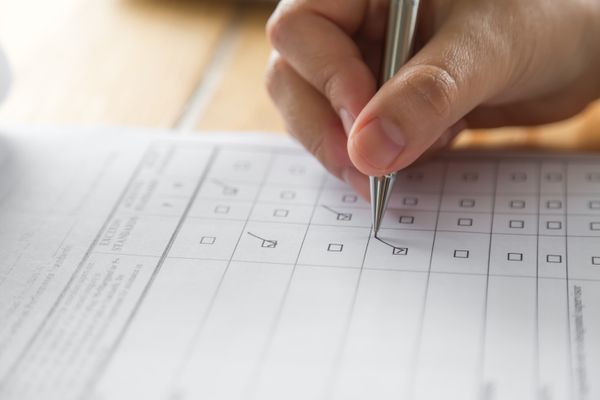
Rating scales
- One scale consists of 117 items, all daily hassles. 100 participants rated all of these items in terms of how severely they provoke stress for them, on a three-point scale.
- Another scale consists of 135 items, all daily uplifts. Participants rated these in terms of their stress relieving properties.
- The scales were repeated every month for nine months.

Results and conclusions
- Some hassles were more common than others (e.g. worrying about weight).
- Hassles scores were positively correlated with physical and psychological health issues (the greater the score, the more likely to have problems).
- Uplifts scores were negatively correlated with health problems.
- In conclusion, they found that hassles and stress/health are linked. This correlation is stronger than the correlation between life events and stress/health.
DeLongis et al (1988) - Hassles and Uplifts Scales
Kanner et al. (1981) first devised the hassles and uplifts scales. DeLongis et al (1988) developed an updated version of the scales which combined them into one scale of 53 items.

New version
- DeLongis et al (1988) developed an updated version of the scales which combined them into one scale of 53 items.
- They claimed this version was more balanced between hassles and uplifts, and found a correlation between hassles and illness the next day.

Findings
- In comparison, they found no correlation between illness and life events suggesting that hassles have a greater effect on stress and health outcomes than life events.
Evaluation of Hassles and Uplifts Scales
Kanner et al. (1981) first devised the hassles and uplifts scales. DeLongis et al (1988) developed an updated version of the scales. These theories have their downsides:
-min,h_400,q_80,w_640.jpg)
No explanation of cause
- Like the SRRS, this data is only correlational. So a conclusion about whether hassles cause stress cannot be drawn.

Limitations of quantitative data
- As all the data is quantitative, there is no opportunity for people to explain their answers. The way individuals experience different levels of stress is not represented in any detail.

Limitations of self-report
- Self-report measures always rely on participants having good recall of situations, and on them being honest about their feelings at the time.

Lack of generalisability
- These scales are very westernised, based on the daily lives of individuals in western countries.
- This means they can’t be generalised across the world.

Individual differences
- Measures of people’s perceptions of stressful events differ because of individual differences, meaning everyone has a different way of responding to situations.
- Some people are better at dealing with stress, and certain environmental factors play a part in this (e.g. social support can lessen the burden of stress).
1Social Influence
1.1Social Influence
2Memory
2.1Memory
3Attachment
3.1Attachment
4(2026 Exams) Psychopathology
4.1Psychopathology
5(2027 Exams) Clinical Psychology & Mental Health
5.1Clinical Psychology & Mental Health
6Approaches in Psychology
6.1Approaches in Psychology
6.2Comparison of Approaches (A2 only)
7Biopsychology
7.1Biopsychology
8Research Methods
8.1Research Methods
8.2Scientific Processes
8.3Data Handling & Analysis
9Issues & Debates in Psychology (A2 only)
9.1Issues & Debates in Psychology (A2 only)
10Option 1: Relationships (A2 only)
10.1Relationships: Sexual Relationships (A2 only)
10.2Relationships: Romantic Relationships (A2 only)
10.3(2026 Exams) Relationships: Virtual (A2 only)
10.4(2027 Exams) Relationships: Online (A2 only)
11Option 1: Gender (A2 only)
11.1(2026 Exams) Gender (A2 only)
11.2(2027 Exams) Gender (A2 only)
12Option 1: Cognition & Development (A2 only)
12.1Cognition & Development (A2 only)
13Option 2: Schizophrenia (A2 only)
13.1Schizophrenia: Diagnosis (A2 only)
13.2Schizophrenia: Treatment (A2 only)
14Option 2: Eating Behaviour (A2 only)
14.1Eating Behaviour (A2 only)
15Option 2: Stress (A2 only)
15.1Stress (A2 only)
16Option 3: Aggression (A2 only)
16.1Aggression: Physiological (A2 only)
16.2Aggression: Social Psychological (A2 only)
17Option 3: Forensic Psychology (A2 only)
17.1Forensic Psychology (A2 only)
18Option 3: Addiction (A2 only)
18.1Addiction (A2 only)
18.2Treating Addiction (A2 only)
Jump to other topics
1Social Influence
1.1Social Influence
2Memory
2.1Memory
3Attachment
3.1Attachment
4(2026 Exams) Psychopathology
4.1Psychopathology
5(2027 Exams) Clinical Psychology & Mental Health
5.1Clinical Psychology & Mental Health
6Approaches in Psychology
6.1Approaches in Psychology
6.2Comparison of Approaches (A2 only)
7Biopsychology
7.1Biopsychology
8Research Methods
8.1Research Methods
8.2Scientific Processes
8.3Data Handling & Analysis
9Issues & Debates in Psychology (A2 only)
9.1Issues & Debates in Psychology (A2 only)
10Option 1: Relationships (A2 only)
10.1Relationships: Sexual Relationships (A2 only)
10.2Relationships: Romantic Relationships (A2 only)
10.3(2026 Exams) Relationships: Virtual (A2 only)
10.4(2027 Exams) Relationships: Online (A2 only)
11Option 1: Gender (A2 only)
11.1(2026 Exams) Gender (A2 only)
11.2(2027 Exams) Gender (A2 only)
12Option 1: Cognition & Development (A2 only)
12.1Cognition & Development (A2 only)
13Option 2: Schizophrenia (A2 only)
13.1Schizophrenia: Diagnosis (A2 only)
13.2Schizophrenia: Treatment (A2 only)
14Option 2: Eating Behaviour (A2 only)
14.1Eating Behaviour (A2 only)
15Option 2: Stress (A2 only)
15.1Stress (A2 only)
16Option 3: Aggression (A2 only)
16.1Aggression: Physiological (A2 only)
16.2Aggression: Social Psychological (A2 only)
17Option 3: Forensic Psychology (A2 only)
17.1Forensic Psychology (A2 only)
18Option 3: Addiction (A2 only)
18.1Addiction (A2 only)
18.2Treating Addiction (A2 only)
Practice questions on Hassles & Uplifts Scales
Can you answer these? Test yourself with free interactive practice on Seneca — used by over 10 million students.
- 1
- 2Which of these statements about uplifts is NOT true?Multiple choice
- 3Characteristics of __Kanner et al.'s__ uplift scale:Fill in the list
- 4
- 5
Unlock your full potential with Seneca Premium
Unlimited access to 10,000+ open-ended exam questions
Mini-mock exams based on your study history
Unlock 800+ premium courses & e-books