16.1.1
Neural Mechanisms
Test your knowledge with free interactive questions on Seneca — used by over 10 million students.
The Limbic System
Human aggression can be explained in terms of biological structures, for example, the role of brain mechanisms and hormones. The limbic system and neurochemicals, such as testosterone and serotonin, are also thought to be important.

The limbic system
- The limbic system is the network of subcortical structures in the brain (including the hypothalamus and the amygdala) thought to be closely involved in regulating emotional behaviours such as aggression.
- Papez (1937) made the first attempt to link the limbic system to emotional behaviours such as aggression.
- This was later revised by Maclean (1952).
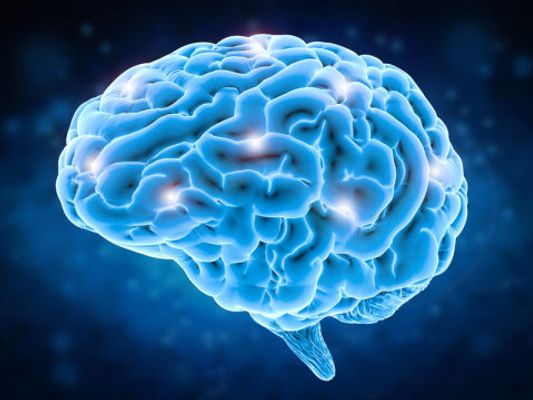
Limic system parts
The limbic system is comprised of:
- The cingulate gyrus.
- Septal area.
- Hypothalamus.
- Fornix.
- Amygdala.
- And parts of the hippocampus and thalamus.
Amygdala
Human aggression can be explained in terms of biological structures, for example, the role of brain mechanisms and hormones. The limbic system and neurochemicals such as testosterone and serotonin are also thought to be important.

Amygdala
- The most important of these structures (in the limbic system) is the amygdala.
- This determines how both humans and non-human animals behave in response to environmental threats and challenges.
- The reactivity of the amygdala is proven to be an important predictor of aggressive behaviour.

The Ultimatum Game
- Gospic et al. (2011) used a well-established laboratory method of assessing aggressive behaviour called the Ultimatum Game that featured two players.
- In the Ultimatum Game, the proposer offers to split money in a certain way with the responder. If the responder accepts, the money is split as proposed. But if the responder rejects the offer, both receive nothing.

Gospic et al. (2011)
- Participants in this study played as responders while having their brain scanned by fMRI, which highlights activity in different areas of the brain.
- The researchers reported that when responders rejected unfair offers the scans revealed a fast and heightened response by the amygdala.

Gospic et al. (2011) results
- Gospic et al. also found that if a benzodiazepine drug (which reduces arousal of the autonomic nervous system) was taken before the game it had two effects on responses to unfair offers:
- It halved the number of rejections, that is, it reduced aggression.
- It decreased the activity of the amygdala.
- This suggests an association between reactive (impulsive) aggression and amygdala activity.
Amygdala and the Orbitofrontal Cortex
The most important of the limbic system is the amygdala. The amygdala has a key role in humans and non-human animals in terms of how an organism behaves in response to environmental threats and challenges.

Orbitofrontal cortex
- Recent studies indicate that the amygdala does not operate in isolation in determining aggression but appears to function in tandem with the orbitofrontal cortex (OFC), which is not part of the limbic system.
- The OFC is thought to be involved in self-control, impulse regulation and inhibition of aggressive behaviour.

Coccaro et al. (2007)
- Coccaro et al. (2007) found that patients with psychiatric disorders that feature aggression had reduced activity in the OFC.
- This has been found to disrupt impulse control function and consequentially lead to increased aggression.

Amygdala and OFC
- Combined with findings from Gospic et al. (2011), this indicates that the regulation of aggression is highly complex and involves at least three structures in the brain:
- The amygdala.
- The OFC.
- The connection between the two.
1Social Influence
1.1Social Influence
2Memory
2.1Memory
3Attachment
3.1Attachment
4(2026 Exams) Psychopathology
4.1Psychopathology
5(2027 Exams) Clinical Psychology & Mental Health
5.1Clinical Psychology & Mental Health
6Approaches in Psychology
6.1Approaches in Psychology
6.2Comparison of Approaches (A2 only)
7Biopsychology
7.1Biopsychology
8Research Methods
8.1Research Methods
8.2Scientific Processes
8.3Data Handling & Analysis
9Issues & Debates in Psychology (A2 only)
9.1Issues & Debates in Psychology (A2 only)
10Option 1: Relationships (A2 only)
10.1Relationships: Sexual Relationships (A2 only)
10.2Relationships: Romantic Relationships (A2 only)
10.3(2026 Exams) Relationships: Virtual (A2 only)
10.4(2027 Exams) Relationships: Online (A2 only)
11Option 1: Gender (A2 only)
11.1(2026 Exams) Gender (A2 only)
11.2(2027 Exams) Gender (A2 only)
12Option 1: Cognition & Development (A2 only)
12.1Cognition & Development (A2 only)
13Option 2: Schizophrenia (A2 only)
13.1Schizophrenia: Diagnosis (A2 only)
13.2Schizophrenia: Treatment (A2 only)
14Option 2: Eating Behaviour (A2 only)
14.1Eating Behaviour (A2 only)
15Option 2: Stress (A2 only)
15.1Stress (A2 only)
16Option 3: Aggression (A2 only)
16.1Aggression: Physiological (A2 only)
16.2Aggression: Social Psychological (A2 only)
17Option 3: Forensic Psychology (A2 only)
17.1Forensic Psychology (A2 only)
18Option 3: Addiction (A2 only)
18.1Addiction (A2 only)
18.2Treating Addiction (A2 only)
Jump to other topics
1Social Influence
1.1Social Influence
2Memory
2.1Memory
3Attachment
3.1Attachment
4(2026 Exams) Psychopathology
4.1Psychopathology
5(2027 Exams) Clinical Psychology & Mental Health
5.1Clinical Psychology & Mental Health
6Approaches in Psychology
6.1Approaches in Psychology
6.2Comparison of Approaches (A2 only)
7Biopsychology
7.1Biopsychology
8Research Methods
8.1Research Methods
8.2Scientific Processes
8.3Data Handling & Analysis
9Issues & Debates in Psychology (A2 only)
9.1Issues & Debates in Psychology (A2 only)
10Option 1: Relationships (A2 only)
10.1Relationships: Sexual Relationships (A2 only)
10.2Relationships: Romantic Relationships (A2 only)
10.3(2026 Exams) Relationships: Virtual (A2 only)
10.4(2027 Exams) Relationships: Online (A2 only)
11Option 1: Gender (A2 only)
11.1(2026 Exams) Gender (A2 only)
11.2(2027 Exams) Gender (A2 only)
12Option 1: Cognition & Development (A2 only)
12.1Cognition & Development (A2 only)
13Option 2: Schizophrenia (A2 only)
13.1Schizophrenia: Diagnosis (A2 only)
13.2Schizophrenia: Treatment (A2 only)
14Option 2: Eating Behaviour (A2 only)
14.1Eating Behaviour (A2 only)
15Option 2: Stress (A2 only)
15.1Stress (A2 only)
16Option 3: Aggression (A2 only)
16.1Aggression: Physiological (A2 only)
16.2Aggression: Social Psychological (A2 only)
17Option 3: Forensic Psychology (A2 only)
17.1Forensic Psychology (A2 only)
18Option 3: Addiction (A2 only)
18.1Addiction (A2 only)
18.2Treating Addiction (A2 only)
Practice questions on Neural Mechanisms
Can you answer these? Test yourself with free interactive practice on Seneca — used by over 10 million students.
- 1The structures in the limbic system:Fill in the list
- 2
- 3Which of these is NOT a structure in the limbic system?Multiple choice
- 4
- 5
Unlock your full potential with Seneca Premium
Unlimited access to 10,000+ open-ended exam questions
Mini-mock exams based on your study history
Unlock 800+ premium courses & e-books