3.1.8
Explanations of Attachment
Test your knowledge with free interactive questions on Seneca — used by over 10 million students.
Learning Theory
There are different explanations as to why attachments develop. Learning theories suggested attachment is a quieter experience (the behaviourist approach).

Learning theory
- Learning theory suggests attachment happens because the infant associates the caregiver with food, often referred to as cupboard love.
- Two types of learning theory apply to the development of attachment: classical conditioning and operant conditioning.

Classical conditioning
- Classical conditioning happens when a response produced naturally by stimulus becomes associated with another stimulus not normally associated with that particular response.
- Attachments are learned by the food (the unconditioned stimulus) producing a natural response of pleasure (unconditioned response) being paired with a caregiver (conditional stimulus). As these parents persist, the infant learns to associate caregiver with pleasure even in the absence of food.

Operant conditioning
- Operant conditioning states that where any action with a pleasurable outcome is repeated, the behaviour will also be repeated.
- So attachments happen because the caregiver has become associated with the reduction of hunger (negative reinforcement) and the caregiver becomes the source of reinforcement (or reward) themselves.

Research
- Dollard and Miller (1950) pointed to the fact that babies in their first year are fed 2,000 times, usually by the main carer. This gives opportunity for the carer to become associated with the removal of the unpleasant feeling of hunger, supporting attachments being formed through operant conditioning.
- Schaffer and Emerson (1964) found in 39% of cases, the mother, and usually the main carer, was not the infants main attachment figure. This casts doubt on the learning theory view detachment because it suggests that food was not the primary explanation for attachment.

Evaluation
- Conditioning can explain the learning of simple behaviour but not more complex behaviours such as attachment. Attachments to people who are not involved in feeding would suggest that learning theory provides an inadequate explanation.
- Behaviourist explanations are reductionist, because they explain complex behaviours in the simplest way without taking into account cognitive processes for the emotional nature of attachment.
Bowlby's Monotropic Theory
Bowlby's Monotropic Theory states that evolution is the primary explanation for attachments and proposes an internal working model which is used to form all bonds after the primary attachment.

Animal studies influence
- Bowlby’s monotropic theory was heavily influenced by animal studies, such as those conducted by Lorenz and Harlow.
- Bowlby applied his findings of animal studies to humans, concluding that emotional bonds had evolutionary functions.
- According to Bowlby, attachment bonds developed during the Pleistocene or Stone Age era as a response to the constant threat from predators.
- So attachment evolved to make sure that offspring remain close to caregivers.

Evolutionary influence
- Through evolution, infants become genetically programmed to behave in particular ways towards their mothers and fathers, ways that increase their chance of survival.
- Through evolution, infants have developed innate species-specific behaviours, making sure they are cared for and protected. These behaviours are known as social releases.

Social releases
- Social releases include:
- Crying - to attract parents' attention.
- Looking/smiling/vocalising - to maintain parental attention and interest.
- Following and clinging - to gain and maintain physical proximity to parents.
- Infants display social releases from a very early stage.
- To begin with, they appear in an automatic, stereotyped way and are triggered by many people, but become focused on fewer people within the first year.
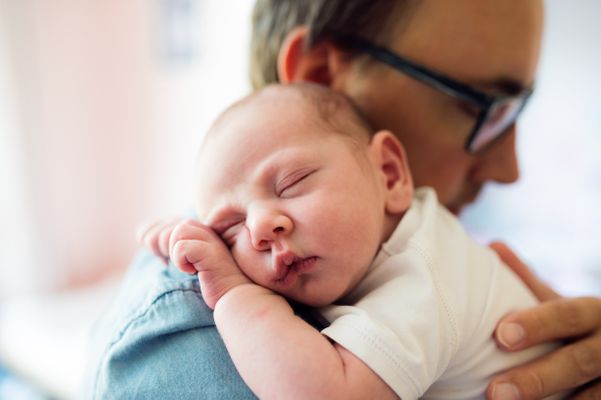
Complimentary system
- According to Bowlby, evolution of attachment behaviours involved a complimentary system between infants and carers - meaning that attachment develops only if carers respond to these social releases in a meaningful way.
- Bowlby saw this generally happening between infants and their biological mothers, but admitted that it might occasionally happen with fathers or non-biologically related individuals.

Critical period
- Critical period refers to Bowlby’s belief that attachment behaviours between infant and carer must take place within a certain time period.
- Attachment behaviours give little purpose for most children if developed beyond the first year and are useless if developed after two and a half to three years.

Internal working model
- Attachment to a single individual is the first and strongest bond to develop and forms a model or template for all future relationships.
- Bowlby called this template the internal working model.
- Disruption in infancy could have repercussions later on and, although Bowlby believed that other attachments were possible, he saw these as secondary to the bond between mother and child.
Evaluation of Bowlby's Theory
Although elements of Bowlby's theory have research to support, there is a number of flaws in the theory.

Research against theory
- Schaffer and Emerson (1964) found that multiple attachments are the norm, disputing Bowlby‘s theory of monotropy.
- Rutter (1981) also disputes Bowlby's idea of monotropy, discovering that infants form a range of attachments with many individuals.
- Lamb et al. (1982) discovered infants form multiple attachments for different purposes and that these attachments are not hierarchical.
-min - Edited,h_400,q_80,w_640.jpg)
Positive evaluation
- The continuity hypothesis, the notion that there is a consistency between early attachment types in later relationships, is supported by research evidence.
- Schaffer and Emerson (1964) found that infants do have multiple attachments, but that they also have one primary attachment figure. This supports Bowlby’s theory of monotropy.

Negative evaluation
- Imprinting applies primarily to precocial (animals mobile soon after birth), but humans are an altricial species (they are born at a very early stage of development) so imprinting might not relate to humans.
- Schaffer and Emerson (1964) found that attachments happened mainly with individuals displaying sensitive responses. This disputes Bowlby's suggestion that attachment is a form of human imprinting.
- While Bowlby saw fathers as minor attachment figures, research disputes this.
1Social Influence
1.1Social Influence
2Memory
2.1Memory
3Attachment
3.1Attachment
4(2026 Exams) Psychopathology
4.1Psychopathology
5(2027 Exams) Clinical Psychology & Mental Health
5.1Clinical Psychology & Mental Health
6Approaches in Psychology
6.1Approaches in Psychology
6.2Comparison of Approaches (A2 only)
7Biopsychology
7.1Biopsychology
8Research Methods
8.1Research Methods
8.2Scientific Processes
8.3Data Handling & Analysis
9Issues & Debates in Psychology (A2 only)
9.1Issues & Debates in Psychology (A2 only)
10Option 1: Relationships (A2 only)
10.1Relationships: Sexual Relationships (A2 only)
10.2Relationships: Romantic Relationships (A2 only)
10.3(2026 Exams) Relationships: Virtual (A2 only)
10.4(2027 Exams) Relationships: Online (A2 only)
11Option 1: Gender (A2 only)
11.1(2026 Exams) Gender (A2 only)
11.2(2027 Exams) Gender (A2 only)
12Option 1: Cognition & Development (A2 only)
12.1Cognition & Development (A2 only)
13Option 2: Schizophrenia (A2 only)
13.1Schizophrenia: Diagnosis (A2 only)
13.2Schizophrenia: Treatment (A2 only)
14Option 2: Eating Behaviour (A2 only)
14.1Eating Behaviour (A2 only)
15Option 2: Stress (A2 only)
15.1Stress (A2 only)
16Option 3: Aggression (A2 only)
16.1Aggression: Physiological (A2 only)
16.2Aggression: Social Psychological (A2 only)
17Option 3: Forensic Psychology (A2 only)
17.1Forensic Psychology (A2 only)
18Option 3: Addiction (A2 only)
18.1Addiction (A2 only)
18.2Treating Addiction (A2 only)
Jump to other topics
1Social Influence
1.1Social Influence
2Memory
2.1Memory
3Attachment
3.1Attachment
4(2026 Exams) Psychopathology
4.1Psychopathology
5(2027 Exams) Clinical Psychology & Mental Health
5.1Clinical Psychology & Mental Health
6Approaches in Psychology
6.1Approaches in Psychology
6.2Comparison of Approaches (A2 only)
7Biopsychology
7.1Biopsychology
8Research Methods
8.1Research Methods
8.2Scientific Processes
8.3Data Handling & Analysis
9Issues & Debates in Psychology (A2 only)
9.1Issues & Debates in Psychology (A2 only)
10Option 1: Relationships (A2 only)
10.1Relationships: Sexual Relationships (A2 only)
10.2Relationships: Romantic Relationships (A2 only)
10.3(2026 Exams) Relationships: Virtual (A2 only)
10.4(2027 Exams) Relationships: Online (A2 only)
11Option 1: Gender (A2 only)
11.1(2026 Exams) Gender (A2 only)
11.2(2027 Exams) Gender (A2 only)
12Option 1: Cognition & Development (A2 only)
12.1Cognition & Development (A2 only)
13Option 2: Schizophrenia (A2 only)
13.1Schizophrenia: Diagnosis (A2 only)
13.2Schizophrenia: Treatment (A2 only)
14Option 2: Eating Behaviour (A2 only)
14.1Eating Behaviour (A2 only)
15Option 2: Stress (A2 only)
15.1Stress (A2 only)
16Option 3: Aggression (A2 only)
16.1Aggression: Physiological (A2 only)
16.2Aggression: Social Psychological (A2 only)
17Option 3: Forensic Psychology (A2 only)
17.1Forensic Psychology (A2 only)
18Option 3: Addiction (A2 only)
18.1Addiction (A2 only)
18.2Treating Addiction (A2 only)
Practice questions on Explanations of Attachment
Can you answer these? Test yourself with free interactive practice on Seneca — used by over 10 million students.
- 1Classical conditioning and attachment:Fill in the list
- 2
- 3
- 4
- 5
Unlock your full potential with Seneca Premium
Unlimited access to 10,000+ open-ended exam questions
Mini-mock exams based on your study history
Unlock 800+ premium courses & e-books