6.1.15
(2027 Exams) The Biological Approach
Test your knowledge with free interactive questions on Seneca — used by over 10 million students.
Genetics
Every person has a unique genetic code, and this arises through genetic variation. Each gene usually has a number of variations, or alleles, which make up a person's genotype. Each gene helps to shape a person's phenotype, along with their environment.

Unique individuals
- While all humans share certain biological mechanisms, we are each unique.
- Although our bodies have many of the same parts - brains and hormones and cells with genetic codes - these are expressed in a wide variety of behaviours, thoughts, and reactions.

Genetic variation
- Genetic variation, the genetic difference between individuals, is what contributes to a species’ adaptation to its environment.
- In humans, genetic variation begins with an egg, about 100 million sperm, and fertilisation.
- The egg and the sperm each contain 23 chromosomes containing long strings of genetic material known as deoxyribonucleic acid, or DNA. DNA is made up of many genes.

Genes and alleles
- In each chromosome, sequences of DNA make up genes that may control physical traits such as eye or hair colour.
- A single gene may have different variations, known as alleles. For example, these alleles may cause the carrier of that gene to have blue eyes or green eyes.
- When a sperm and egg fuse, each parent contributes half the genetic information carried by the offspring.
- The resulting physical characteristics of the offspring (their phenotype) are determined by the genetic material from their parents (their genotype).

Genes and our environment
- Although our phenotype is partially controlled by our genotype, it is actually as a result of a combination of genetic and environmental influences.
- Our environment is incredibly important in determining not only when and how our genes express themselves, but also in what combination.
Evolutionary Psychology
Darwin's theory of evolution by natural selection can be applied to the field of psychology. Evolutionary psychologists try to explain psychological traits as survival-enhancing adaptations.
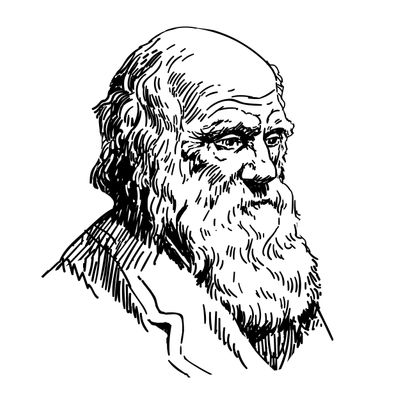
Origins of the theory of evolution
- Charles Darwin proposed the theory of evolution by natural selection.
- In simple terms, the theory states that organisms that are better suited for their environment will survive and reproduce, while those that are poorly suited for their environment will die off.

Evolutionary psychology
- Evolutionary psychology has enjoyed a resurgence in recent decades.
- As an approach, evolutionary psychology seeks to explain psychological traits as survival-enhancing adaptations.
- To be subject to evolution by natural selection, a behaviour must have a significant genetic cause.
- In general, we expect all human cultures to express a behaviour if it is caused genetically, since the genetic differences among human groups are small.

Approaches in evolutionary psychology
- The approach taken by most evolutionary psychologists is to predict the outcome of a behaviour in a particular situation based on evolutionary theory and then to make observations, or conduct experiments, to determine whether the results match the theory.
- But these types of studies are not strong evidence that a behaviour is adaptive. This is because they lack evidence that the behaviour is in some part genetic and not entirely cultural.

Drawbacks of evolutionary psychology
- A major drawback of evolutionary psychology is that the traits that we possess now evolved under environmental and social conditions far back in human history, and we have a poor understanding of what these conditions were.
- Therefore, making predictions about what is adaptive for a behaviour is difficult because they don't need to be adaptive under current conditions.

Predictions from evolution
- There are many areas of human behaviour for which evolution can make predictions.
- Examples include memory, mate choice, relationships between kin, friendship and co-operation, parenting, social organisation, and status.
Genetics and Behaviour
Genes provide a biological basis for development, but behaviour emerges from interactions between inherited potential and environmental experiences.

Genetics and behaviour
- Genes shape biological development and provide the inherited potential that may contribute to behavioural tendencies.
- Research suggests some genetic patterns are linked to differences in temperament and vulnerability to psychological conditions.
- Behaviour does not arise from genes alone; it reflects interactions between genotype and environmental influences across development.

Example study - Heston (1966)
- Heston (1966) investigated adoptees to examine how inherited risk and upbringing interact in the development of schizophrenia. He compared children whose biological mothers had schizophrenia with those who did not, and assessed whether they were raised in disturbed or healthy environments.

Study findings
- 36.8% of adoptees with high genetic risk and disturbed upbringing later developed schizophrenia.
- Only 5.8% of high-risk adoptees raised in healthy environments did so.
- The findings support an interactionist view: inherited vulnerability contributes to risk, but environmental experiences play a crucial role in whether the disorder develops.
1Social Influence
1.1Social Influence
2Memory
2.1Memory
3Attachment
3.1Attachment
4(2026 Exams) Psychopathology
4.1Psychopathology
5(2027 Exams) Clinical Psychology & Mental Health
5.1Clinical Psychology & Mental Health
6Approaches in Psychology
6.1Approaches in Psychology
6.2Comparison of Approaches (A2 only)
7Biopsychology
7.1Biopsychology
8Research Methods
8.1Research Methods
8.2Scientific Processes
8.3Data Handling & Analysis
9Issues & Debates in Psychology (A2 only)
9.1Issues & Debates in Psychology (A2 only)
10Option 1: Relationships (A2 only)
10.1Relationships: Sexual Relationships (A2 only)
10.2Relationships: Romantic Relationships (A2 only)
10.3(2026 Exams) Relationships: Virtual (A2 only)
10.4(2027 Exams) Relationships: Online (A2 only)
11Option 1: Gender (A2 only)
11.1(2026 Exams) Gender (A2 only)
11.2(2027 Exams) Gender (A2 only)
12Option 1: Cognition & Development (A2 only)
12.1Cognition & Development (A2 only)
13Option 2: Schizophrenia (A2 only)
13.1Schizophrenia: Diagnosis (A2 only)
13.2Schizophrenia: Treatment (A2 only)
14Option 2: Eating Behaviour (A2 only)
14.1Eating Behaviour (A2 only)
15Option 2: Stress (A2 only)
15.1Stress (A2 only)
16Option 3: Aggression (A2 only)
16.1Aggression: Physiological (A2 only)
16.2Aggression: Social Psychological (A2 only)
17Option 3: Forensic Psychology (A2 only)
17.1Forensic Psychology (A2 only)
18Option 3: Addiction (A2 only)
18.1Addiction (A2 only)
18.2Treating Addiction (A2 only)
Jump to other topics
1Social Influence
1.1Social Influence
2Memory
2.1Memory
3Attachment
3.1Attachment
4(2026 Exams) Psychopathology
4.1Psychopathology
5(2027 Exams) Clinical Psychology & Mental Health
5.1Clinical Psychology & Mental Health
6Approaches in Psychology
6.1Approaches in Psychology
6.2Comparison of Approaches (A2 only)
7Biopsychology
7.1Biopsychology
8Research Methods
8.1Research Methods
8.2Scientific Processes
8.3Data Handling & Analysis
9Issues & Debates in Psychology (A2 only)
9.1Issues & Debates in Psychology (A2 only)
10Option 1: Relationships (A2 only)
10.1Relationships: Sexual Relationships (A2 only)
10.2Relationships: Romantic Relationships (A2 only)
10.3(2026 Exams) Relationships: Virtual (A2 only)
10.4(2027 Exams) Relationships: Online (A2 only)
11Option 1: Gender (A2 only)
11.1(2026 Exams) Gender (A2 only)
11.2(2027 Exams) Gender (A2 only)
12Option 1: Cognition & Development (A2 only)
12.1Cognition & Development (A2 only)
13Option 2: Schizophrenia (A2 only)
13.1Schizophrenia: Diagnosis (A2 only)
13.2Schizophrenia: Treatment (A2 only)
14Option 2: Eating Behaviour (A2 only)
14.1Eating Behaviour (A2 only)
15Option 2: Stress (A2 only)
15.1Stress (A2 only)
16Option 3: Aggression (A2 only)
16.1Aggression: Physiological (A2 only)
16.2Aggression: Social Psychological (A2 only)
17Option 3: Forensic Psychology (A2 only)
17.1Forensic Psychology (A2 only)
18Option 3: Addiction (A2 only)
18.1Addiction (A2 only)
18.2Treating Addiction (A2 only)
Practice questions on (2027 Exams) The Biological Approach
Can you answer these? Test yourself with free interactive practice on Seneca — used by over 10 million students.
- 1What is our environment NOT important in determining?Multiple choice
- 2What is the acronym for deoxyribonucleic acid?Multiple choice
- 3Who proposed the theory of evolution by natural selection?Multiple choice
- 4What steps do most evolutionary psychologists undertake?Fill in the list
- 5
Unlock your full potential with Seneca Premium
Unlimited access to 10,000+ open-ended exam questions
Mini-mock exams based on your study history
Unlock 800+ premium courses & e-books