4.4.1
Childhood
Test your knowledge with free interactive questions on Seneca — used by over 10 million students.
The Social Construction of Childhood
Evidence supporting the social construction of childhood comes from cross-cultural differences, historical changes and differences within society.

The sociological perspective
- Sociologists see childhood as a social construction, created by the social structure and culture, people’s interpretations and dominant social attitudes, norms and traditions.
- Evidence supporting the social construction of childhood comes from cross-cultural differences, historical changes and differences within society.

Cross-cultural differences
- Children in the West experience a freedom from adult responsibilities that is not seen across all societies.
- In Britain, there is a prolonged period of childhood and adolescence before the transition into adulthood; this is not seen in all societies.
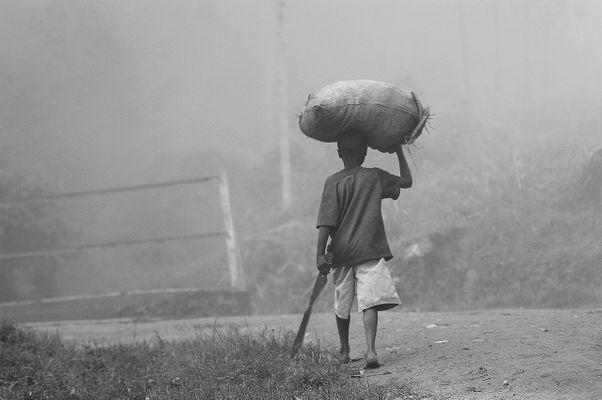
- In many countries, even very small children are expected to take on adult roles as soon as they are physically able (e.g. factory work or as soldiers).
Historical changes
- According to Ariès, in medieval times, childhood did not exist as a separate entity, with children being view as ‘little adults’ and an economic asset to the family.
- Children once went straight from infancy to adult roles and responsibilities.

Legal changes
- Ariès argues that the social construction of childhood was linked to industrialisation, as work moved outside of the family and into the factory.
- This also created the need for a literate and numerate workforce, leading to compulsory education in 1880.
- Legislation restricting child labour also created a distinct group separate to adults.

‘Childhood’
- Such changes led to the emergence of the concept of ‘childhood’ as seen in Western societies today, with children lacking in power and dependent on adults.
Differences Between Children in the Same Society
Childhood is not the same for all children and there are inequalities in life chances based on social class, gender and ethnicity.

Class difference
- About a quarter of children in the UK live in poverty; poor children suffer from more ill-health and disability and do less well in education.

Gender difference
- Girls often have a more restricted and controlled childhood than boys.

Ethnic difference
- Different ethnic groups may have different expectations on children and their behaviour.
1Theory & Methods
1.1Sociological Theories
1.2Sociological Methods
2Education with Methods in Context
2.1Role & Function of the Education System
2.2Educational Achievement
2.3Relationships & Processes Within Schools
3Option 1: Culture & Identity
3.1Conceptions of Culture
3.2Identity & Socialisation
3.3Social Identity
3.4Production, Consumption & Globalisation
4Option 1: Families & Households
4.1Families & Households
4.2Changing Patterns
4.3The Symmetrical Family
4.4Children & Childhood
5Option 1: Health
5.1Social Constructions
5.2Social Distribution of Healthcare
5.3Provision & Access to Healthcare
5.4Mental Health
6Option 1: Work, Poverty & Welfare
6.1Poverty & Wealth
7Option 2: Beliefs in Society
7.1Ideology, Science & Religion
7.2Religious Movements
7.3Society & Religion
8Option 2: Global Development
8.1Development, Underdevelopment & Global Inequality
8.2Globalisation & Global Organisations
8.3Aid, Trade, Industrialisation, Urbanisation
9Option 2: The Media
9.1Contemporary Media
9.2Media Representations
10Crime & Deviance
10.1Crime & Society
10.2Social Distribution of Crime
Jump to other topics
1Theory & Methods
1.1Sociological Theories
1.2Sociological Methods
2Education with Methods in Context
2.1Role & Function of the Education System
2.2Educational Achievement
2.3Relationships & Processes Within Schools
3Option 1: Culture & Identity
3.1Conceptions of Culture
3.2Identity & Socialisation
3.3Social Identity
3.4Production, Consumption & Globalisation
4Option 1: Families & Households
4.1Families & Households
4.2Changing Patterns
4.3The Symmetrical Family
4.4Children & Childhood
5Option 1: Health
5.1Social Constructions
5.2Social Distribution of Healthcare
5.3Provision & Access to Healthcare
5.4Mental Health
6Option 1: Work, Poverty & Welfare
6.1Poverty & Wealth
7Option 2: Beliefs in Society
7.1Ideology, Science & Religion
7.2Religious Movements
7.3Society & Religion
8Option 2: Global Development
8.1Development, Underdevelopment & Global Inequality
8.2Globalisation & Global Organisations
8.3Aid, Trade, Industrialisation, Urbanisation
9Option 2: The Media
9.1Contemporary Media
9.2Media Representations
10Crime & Deviance
10.1Crime & Society
10.2Social Distribution of Crime
Practice questions on Childhood
Can you answer these? Test yourself with free interactive practice on Seneca — used by over 10 million students.
- 1Features of childhood in medieval times:Fill in the list
- 2A study of childhood by __Ariès__:True / false
- 3When was education made compulsory in Britain? Multiple choice
- 4Roughly, how many children in the UK live in poverty?Multiple choice
- 5Factors that influence inequalities in life chances:Fill in the list
Unlock your full potential with Seneca Premium
Unlimited access to 10,000+ open-ended exam questions
Mini-mock exams based on your study history
Unlock 800+ premium courses & e-books