9.3.2
Aerobic Respiration
Test your knowledge with free interactive questions on Seneca — used by over 10 million students.
The Link Reaction
Pyruvate can be used in aerobic respiration by converting it to acetyl coenzyme A. This process is called the link reaction and it takes place in the matrix of the mitochondria.

Decarboxylation
- Pyruvate is first actively transported from the cytoplasm across the mitochondrial membrane and into the matrix of the mitochondria.
- In the mitochondrial matrix, pyruvate is decarboxylated and dehydrogenated to acetate, which is a two-carbon molecule.
- CO2 is produced as a by-product.
- NAD is reduced to NADH.
Coenzyme A
- Acetate then combines with coenzyme A (CoA) to produce acetyl coenzyme A.
- Acetyl coenzyme A is used in the Krebs cycle (the next stage of aerobic respiration).
- The link reaction links glycolysis to the Krebs cycle.
Net gain
- The net gain from the link reaction is:
- 1 CO2 molecule.
- 1 NADH molecule.
The Krebs Cycle
The Krebs cycle takes place in the matrix of the mitochondria. The products of the cycle are two coenzymes (NADH and FADH2), ATP and CO2.

Acetyl coenzyme A (coA)
- Acetyl coenzyme A acts as a carrier for the two-carbon acetyl group. It reacts with oxaloacetate (a four-carbon molecule) to produce citrate (a six-carbon molecule).
- CoA is now available to be recycled and reused in the link reaction.
- The production of citrate allows the Krebs cycle to begin.
6C → 5C
- Citrate is converted to a five-carbon molecule (5C) by decarboxylation and dehydrogenation.
- CO2 is produced as a by-product.
- NAD is reduced to NADH.
5C → 4C
- The five-carbon molecule is decarboxylated and dehydrogenated again to a four-carbon compound.
- CO2 is produced.
- NAD is reduced to NADH.
- ATP is also produced by substrate-level phosphorylation.
Regeneration of oxaloacetate
- This 4C molecule is then dehydrogenated again to produce another molecule of NADH. FAD is also reduced to FADH2.
- No decarboxylation takes place at this stage.
- These intermediate reactions regenerate oxaloacetate. This allows the cycle to continue again.

Net gain
- The net gain of the Krebs cycle is:
- 2 CO2 molecules.
- 3 NADH molecules.
- 1 ATP molecule.
- 1 FADH2 molecules.
- For each molecule of glucose, there are two cycles (this is because two molecules of pyruvate are produced in glycolysis).
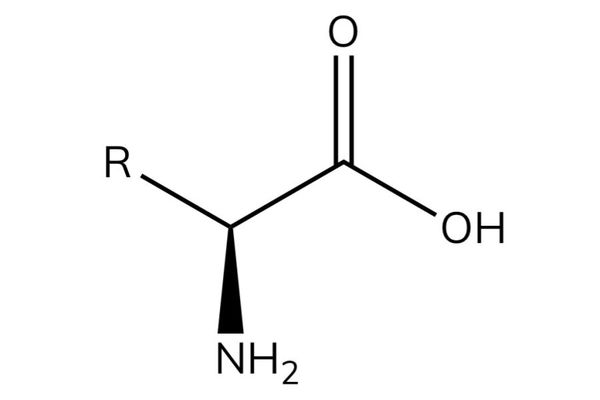
Other respiratory substrates
- Fatty acids and amino acids can also be used as respiratory substrates in aerobic respiration.
- The substrates are converted to molecules that can easily enter the Krebs cycle.
Oxidative Phosphorylation
Oxidative phosphorylation is the final stage in aerobic respiration.

Inner mitochondrial membrane
- Oxidative phosphorylation takes place at the inner mitochondrial membrane.
- There are several features of the membrane that allows production of ATP on a large scale:
- Three electron carrier proteins (electron transport chain, ETC).
- ATP synthase enzyme.
- The space between the inner and outer mitochondrial membranes is called the intermembrane space.

Electron transport chain
- NADH and FADH2 (from the Krebs cycle) are oxidised by the first electron carrier protein in the inner mitochondrial membrane.
- This initiates oxidative phosphorylation because NADH and FADH2 release two protons and two electrons each.
- The electrons are then transferred along the ETC.

Proton gradient
- As the electrons move down the ETC, they lose energy.
- This energy pumps the protons from NADH and FADH2 into the intermembrane space.
- This creates a proton gradient (also known as an electrochemical gradient).
Chemiosmosis
- The protons diffuse down the concentration gradient through the ATP synthase enzyme.
- As protons flow through the ATP synthase, energy is released.
- This energy converts ADP and inorganic phosphate to ATP.
- This process is called chemiosmosis.
 2.1.4.3 - Covalent bonding in oxygen (1),h_400,q_80,w_640.png)
The final electron acceptor
- After the electrons have reached the end of the ETC and protons have flowed through the ATP synthase enzyme, they combine with O2 to form water (H2O).
- Oxygen is called the final electron acceptor for this reason.
1Unity & Diversity - Molecules
1.1Water
1.2DNA Structure & Replication
1.3Transcription & Gene Expression
2Unity & Diversity - Cells
2.1The Origin of Cells
2.2Introduction to Cells
2.3Ultrastructure of Cells
2.4Cell Division
2.5Structure of DNA & RNA
2.6DNA Replication, Transcription & Translation
2.7Cell Respiration
2.8Photosynthesis
2.9Viruses
3Unity & Diversity - Organisms
3.1Diversity of Organisms
3.2Evidence for Evolution
4Unity & Diversity - Ecosystems
4.1Classification
4.3Evolution & Speciation
4.3.1Evidence for Evolution - Fossils & DNA4.3.2Evidence for Evolution - Anatomy & Geography4.3.3IB Multiple Choice - Evidence for Evolution4.3.4Extended Response - DNA & Evolution4.3.5Populations4.3.6Mutations, Genetic Drift, & Gene Flow4.3.7Speciation4.3.8Rate of Speciation4.3.9Allopatric & Sympatric Speciation
4.4Conservation of Biodiversity
5Form & Function - Molecules
6Form & Function - Cells
6.1Membranes & Membrane Transport
6.2Organelles & Compartmentalization
6.3Cell Specialization
7Form & Function - Organisms
7.2Transport
7.3Muscle & Motility
8Form & Function - Ecosystems
8.1Species, Communities & Ecosytems
8.3Carbon Cycle
9Interaction & Interdependence - Molecules
9.1Enzymes
9.2Metabolism
9.3Cell Respiration
10Interaction & Interdependence - Cells
10.1Chemical Signalling
10.2Neural Signalling
10.3Adaptation to Environment
10.4Ecological Niches
11Interaction & Interdependence - Organisms
11.1Integration of Body Systems
12Interaction & Interdependence - Ecosystems
12.1Populations & Communities
12.2Transfers of Energy & Matter
13Continuity & Change - Molecules
13.1DNA Replication
13.2Protein Synthesis
14Continuity & Change - Cells
15Continuity & Change - Organisms
15.1Inheritance
15.1.1Non-Nuclear Inheritance15.1.2Linked Genes15.1.3IB Multiple Choice - Non-Mendelian Genetics15.1.4Extended Response - Inheritance15.1.5Introduction to Non-Mendelian Inheritance15.1.6Chi-Squared Test15.1.7End of Topic Quiz - Inheritance15.1.8Sex-Linked Genes15.1.9Grade 4-5 (Scientific Practices) - Inheritance
16Continuity & Change - Ecosystems
16.1Natural Selection
16.2Stability & Change
Jump to other topics
1Unity & Diversity - Molecules
1.1Water
1.2DNA Structure & Replication
1.3Transcription & Gene Expression
2Unity & Diversity - Cells
2.1The Origin of Cells
2.2Introduction to Cells
2.3Ultrastructure of Cells
2.4Cell Division
2.5Structure of DNA & RNA
2.6DNA Replication, Transcription & Translation
2.7Cell Respiration
2.8Photosynthesis
2.9Viruses
3Unity & Diversity - Organisms
3.1Diversity of Organisms
3.2Evidence for Evolution
4Unity & Diversity - Ecosystems
4.1Classification
4.3Evolution & Speciation
4.3.1Evidence for Evolution - Fossils & DNA4.3.2Evidence for Evolution - Anatomy & Geography4.3.3IB Multiple Choice - Evidence for Evolution4.3.4Extended Response - DNA & Evolution4.3.5Populations4.3.6Mutations, Genetic Drift, & Gene Flow4.3.7Speciation4.3.8Rate of Speciation4.3.9Allopatric & Sympatric Speciation
4.4Conservation of Biodiversity
5Form & Function - Molecules
6Form & Function - Cells
6.1Membranes & Membrane Transport
6.2Organelles & Compartmentalization
6.3Cell Specialization
7Form & Function - Organisms
7.2Transport
7.3Muscle & Motility
8Form & Function - Ecosystems
8.1Species, Communities & Ecosytems
8.3Carbon Cycle
9Interaction & Interdependence - Molecules
9.1Enzymes
9.2Metabolism
9.3Cell Respiration
10Interaction & Interdependence - Cells
10.1Chemical Signalling
10.2Neural Signalling
10.3Adaptation to Environment
10.4Ecological Niches
11Interaction & Interdependence - Organisms
11.1Integration of Body Systems
12Interaction & Interdependence - Ecosystems
12.1Populations & Communities
12.2Transfers of Energy & Matter
13Continuity & Change - Molecules
13.1DNA Replication
13.2Protein Synthesis
14Continuity & Change - Cells
15Continuity & Change - Organisms
15.1Inheritance
15.1.1Non-Nuclear Inheritance15.1.2Linked Genes15.1.3IB Multiple Choice - Non-Mendelian Genetics15.1.4Extended Response - Inheritance15.1.5Introduction to Non-Mendelian Inheritance15.1.6Chi-Squared Test15.1.7End of Topic Quiz - Inheritance15.1.8Sex-Linked Genes15.1.9Grade 4-5 (Scientific Practices) - Inheritance
16Continuity & Change - Ecosystems
16.1Natural Selection
16.2Stability & Change
Practice questions on Aerobic Respiration
Can you answer these? Test yourself with free interactive practice on Seneca — used by over 10 million students.
- 1Where does the link reaction take place?Multiple choice
- 2The net gain of the link reaction is:Fill in the list
- 3
- 4
- 5Where does the Krebs cycle take place?Multiple choice
Unlock your full potential with Seneca Premium
Unlimited access to 10,000+ open-ended exam questions
Mini-mock exams based on your study history
Unlock 800+ premium courses & e-books