9.1.1
Enzymes
Test your knowledge with free interactive questions on Seneca — used by over 10 million students.
Enzymes
Enzymes are proteins that catalyse reactions. The chemical reactants that enzymes bind to are called substrates.
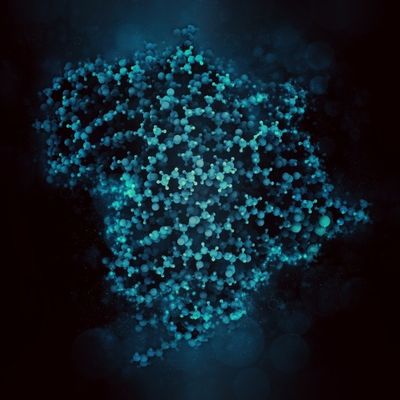
Biological catalyst
- A substance that speeds up a chemical reaction without being used up itself is a catalyst.
- Enzymes are proteins that catalyse biochemical reactions.
- Enzymes can act inside or outside of cells.
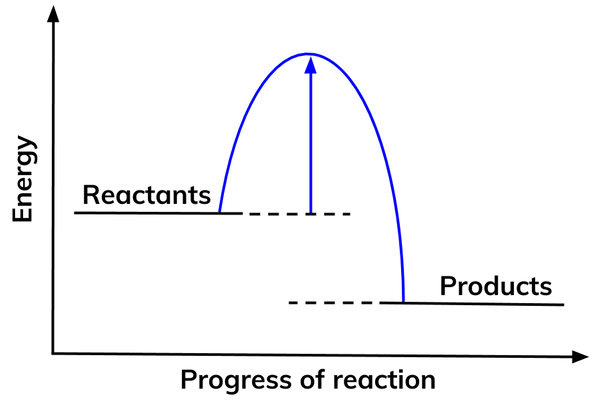
Activation energy
- For a chemical reaction to start, it needs a specific amount of energy. This amount of energy is different for different reactions.
- This is called the activation energy.
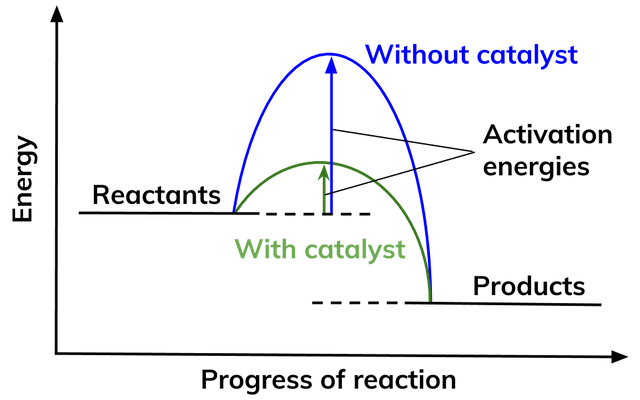
Activation energy and enzymes
- Enzymes lower the activation energies of chemical reactions inside the cell to increase the rate of reactions.
- Enzymes lower the activation energy by binding to the reactant molecules (substrate) and allowing chemical bond-breaking and bond-forming processes to happen more easily.
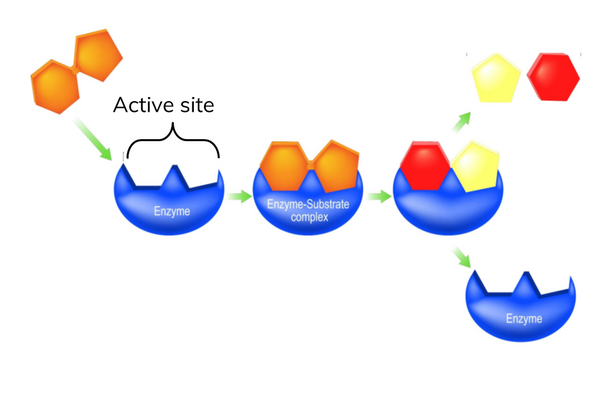
The active site
- Enzymes catalyse specific reactions.
- The active site has a specific shape for each enzyme.
- Substrates with a complementary shape to the active site of an enzyme can bind to form an enzyme-substrate complex.
- The shape of the active site is determined by the tertiary structure of the polypeptide.
Models of Enzyme Action
Models of enzyme action have changed over time. For many years, it was thought that enzymes worked in a lock and key manner. The induced fit model is now more widely accepted.
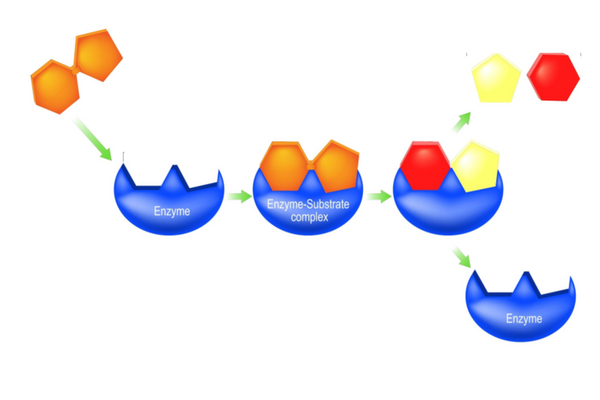
The lock and key model
- The lock and key model was originally used to explain enzyme action.
- The model proposes that the enzyme and substrate fit together perfectly.
- The substrate is a key fitting into a lock (the enzyme).
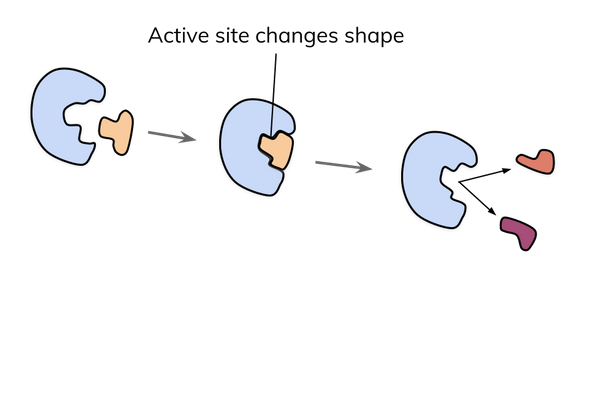
The induced fit model
- The induced fit model suggests there is a more dynamic interaction between enzyme and substrate.
- The model states that as an enzyme and substrate come together, their interaction causes a small shift in the enzyme’s structure.
- The shift means that the enzyme and substrate can bind to form an enzyme-substrate complex and catalyse a reaction.
- This model is now more widely accepted.
Enzyme-Substrate Complexes
Enzymes bind with substrates to form an enzyme-substrate complex in a specific fashion. The specificity of enzymes is determined by two things:
Active site
- Every enzyme only catalyses one specific reaction.
- Every enzyme has a specific active site that is complementary to the specific substrate.
- This jigsaw puzzle-like match between an enzyme and its substrates is what makes enzymes highly specific.
,h_400,q_80,w_640.png)
Environmental factors
- The 3D, tertiary structure of the polypetide chain determines the shape of the active site.
- Environmental changes can change the tertiary structure of the active site and can stop the enzyme from working properly.
- This is called a denatured enzyme.
1Unity & Diversity - Molecules
1.1Water
1.2DNA Structure & Replication
1.3Transcription & Gene Expression
2Unity & Diversity - Cells
2.1The Origin of Cells
2.2Introduction to Cells
2.3Ultrastructure of Cells
2.4Cell Division
2.5Structure of DNA & RNA
2.6DNA Replication, Transcription & Translation
2.7Cell Respiration
2.8Photosynthesis
2.9Viruses
3Unity & Diversity - Organisms
3.1Diversity of Organisms
3.2Evidence for Evolution
4Unity & Diversity - Ecosystems
4.1Classification
4.3Evolution & Speciation
4.4Conservation of Biodiversity
5Form & Function - Molecules
6Form & Function - Cells
6.1Membranes & Membrane Transport
6.2Organelles & Compartmentalization
6.3Cell Specialization
7Form & Function - Organisms
7.2Transport
7.3Muscle & Motility
8Form & Function - Ecosystems
8.1Species, Communities & Ecosytems
8.3Carbon Cycle
9Interaction & Interdependence - Molecules
9.1Enzymes
9.2Metabolism
9.3Cell Respiration
10Interaction & Interdependence - Cells
10.1Chemical Signalling
10.2Neural Signalling
10.3Adaptation to Environment
10.4Ecological Niches
11Interaction & Interdependence - Organisms
11.1Integration of Body Systems
12Interaction & Interdependence - Ecosystems
12.1Populations & Communities
12.2Transfers of Energy & Matter
13Continuity & Change - Molecules
13.1DNA Replication
13.2Protein Synthesis
14Continuity & Change - Cells
15Continuity & Change - Organisms
15.1Inheritance
16Continuity & Change - Ecosystems
16.1Natural Selection
16.2Stability & Change
Jump to other topics
1Unity & Diversity - Molecules
1.1Water
1.2DNA Structure & Replication
1.3Transcription & Gene Expression
2Unity & Diversity - Cells
2.1The Origin of Cells
2.2Introduction to Cells
2.3Ultrastructure of Cells
2.4Cell Division
2.5Structure of DNA & RNA
2.6DNA Replication, Transcription & Translation
2.7Cell Respiration
2.8Photosynthesis
2.9Viruses
3Unity & Diversity - Organisms
3.1Diversity of Organisms
3.2Evidence for Evolution
4Unity & Diversity - Ecosystems
4.1Classification
4.3Evolution & Speciation
4.4Conservation of Biodiversity
5Form & Function - Molecules
6Form & Function - Cells
6.1Membranes & Membrane Transport
6.2Organelles & Compartmentalization
6.3Cell Specialization
7Form & Function - Organisms
7.2Transport
7.3Muscle & Motility
8Form & Function - Ecosystems
8.1Species, Communities & Ecosytems
8.3Carbon Cycle
9Interaction & Interdependence - Molecules
9.1Enzymes
9.2Metabolism
9.3Cell Respiration
10Interaction & Interdependence - Cells
10.1Chemical Signalling
10.2Neural Signalling
10.3Adaptation to Environment
10.4Ecological Niches
11Interaction & Interdependence - Organisms
11.1Integration of Body Systems
12Interaction & Interdependence - Ecosystems
12.1Populations & Communities
12.2Transfers of Energy & Matter
13Continuity & Change - Molecules
13.1DNA Replication
13.2Protein Synthesis
14Continuity & Change - Cells
15Continuity & Change - Organisms
15.1Inheritance
16Continuity & Change - Ecosystems
16.1Natural Selection
16.2Stability & Change
Practice questions on Enzymes
Can you answer these? Test yourself with free interactive practice on Seneca — used by over 10 million students.
- 1
- 2
- 3Name the two models of enzyme action:Fill in the list
- 4What is the name of the model of enzyme action shown below?Multiple choice
- 5
Unlock your full potential with Seneca Premium
Unlimited access to 10,000+ open-ended exam questions
Mini-mock exams based on your study history
Unlock 800+ premium courses & e-books