14.2.1
Controlling Blood Water Potential
Test your knowledge with free interactive questions on Seneca — used by over 10 million students.
Glomerular Filtrate
The first stage in osmoregulation is the formation of the glomerular filtrate. This process takes place in the Bowman's capsule. The steps involved are:

1) Pressure filtration
- The branch of capillary that enters the glomerulus is much wider than the branch that exits the glomerulus. This creates a high blood pressure in the glomerulus.
- The high blood pressure causes the fluid and its solutes (e.g. glucose, amino acids) in the blood to be forced out of the capillary.
- This is called pressure filtration.

2) Capillary endothelium
- The fluid flows through the pores in the capillary endothelium.
3) Basement membrane
- Then the smaller molecules filter through slit pores in the basement membrane. This is a mesh of collagen fibres and glycoprotein.
- Most proteins and all blood cells are too big to pass through the slit pores.
4) Podocytes
- The substances finally pass between the epithelial cells of the Bowman's capsule.
- The epithelial cells, called podocytes, have finger-like projections that the substances can flow between.
5) Glomerular filtrate
- The fluid that has filtered from the capillaries to the Bowman's capsule is called the glomerular filtrate.
- The filtrate contains:
- Water.
- Amino acids.
- Urea.
- Glucose.
- Inorganic ions.
Proximal Convoluted Tubule
Most of the substances in the glomerular filtrate are selectively reabsorbed into the bloodstream in the proximal convoluted tubule (PCT). The steps involved are:

1) Sodium-potassium pumps
- Na+ ions are actively transported out of the PCT epithelial cells and into the blood by sodium-potassium pumps.
- K+ ions are also transported into the epithelium.

2) Co-transporter proteins
- Active transport of Na+ ions causes the concentration of Na+ ions inside the epithelial cells to decrease.
- Na+ ions in the filtrate diffuse into the epithelial cells (down their concentration gradient) through co-transporter proteins.
- Co-transporter proteins allow glucose and amino acids to be transported into the epithelial cells along with the Na+ ions.
3) Reabsorption of glucose and amino acids
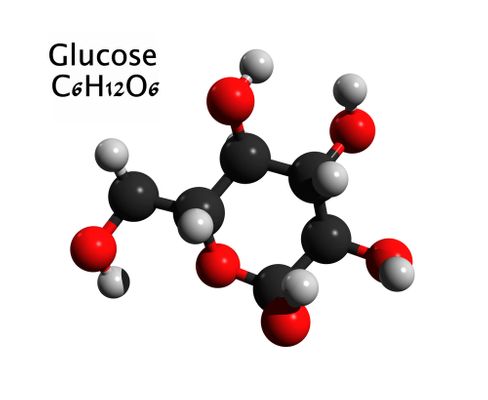
- As glucose and the amino acids are co-transported into the PCT epithelial cells, their concentration increases inside the cells.
- Glucose and the amino acids diffuse down the concentration gradient into the blood.
- Blood pressure is relatively high so that the substances in the blood are carried away quickly. This maintains a steep concentration gradient.
4) Reabsorption of water
- The movement of Na+ ions, glucose and amino acids into the bloodstream causes the water potential to decrease in the blood and increase in the PCT.
- Water in the PCT diffuses into the blood through osmosis.
- Any substances that are not reabsorbed are excreted as waste.
Loop of Henle
The loop of Henle creates a region of low water potential and high sodium concentration in the medulla of the kidney. This allows water to be reabsorbed in the collecting duct. The steps involved are:

1) Top of the ascending limb
- Na+ ions are actively transported out of the top of the ascending limb into the surrounding tissue fluid in the medulla.
- This causes the solute concentration of the medulla to increase and the water potential to decrease.
- The ascending limb is impermeable to water. This means water inside the tubule cannot diffuse out.
2) Bottom of the ascending limb
- Na+ ions diffuse out of the bottom of the ascending limb into the medulla.
- This further increases the solute concentration of medulla.
3) The descending limb
- The descending limb is permeable to water. This means that water inside the tubule can diffuse out because there is a lower water potential in the medulla.
- The water is reabsorbed by the bloodstream.
4) Reabsorption of water
- The overall effect of the descending and ascending limb is to create a high solute concentration and low water potential in the tissue fluid surrounding the collecting duct.
- This causes the water inside the collecting duct to diffuse into the surrounding tissue fluid by osmosis.
- The water is then reabsorbed into the bloodstream.
5) Osmoregulation
- The volume of water that is reabsorbed into the bloodstream depends on the permeability of the collecting duct.
- The permeability of the collecting duct varies according to the water potential of the blood.
- If the water potential is high, the collecting duct is less permeable and less water is absorbed in the blood.
- If the water potential is low, the collecting duct is more permeable and more water is absorbed in the blood.
1Unity & Diversity - Molecules
1.1Water
1.2DNA Structure & Replication
1.3Transcription & Gene Expression
2Unity & Diversity - Cells
2.1The Origin of Cells
2.2Introduction to Cells
2.3Ultrastructure of Cells
2.4Cell Division
2.5Structure of DNA & RNA
2.6DNA Replication, Transcription & Translation
2.7Cell Respiration
2.8Photosynthesis
2.9Viruses
3Unity & Diversity - Organisms
3.1Diversity of Organisms
3.2Evidence for Evolution
4Unity & Diversity - Ecosystems
4.1Classification
4.3Evolution & Speciation
4.4Conservation of Biodiversity
5Form & Function - Molecules
6Form & Function - Cells
6.1Membranes & Membrane Transport
6.2Organelles & Compartmentalization
6.3Cell Specialization
7Form & Function - Organisms
7.2Transport
7.3Muscle & Motility
8Form & Function - Ecosystems
8.1Species, Communities & Ecosytems
8.3Carbon Cycle
9Interaction & Interdependence - Molecules
9.1Enzymes
9.2Metabolism
9.3Cell Respiration
10Interaction & Interdependence - Cells
10.1Chemical Signalling
10.2Neural Signalling
10.3Adaptation to Environment
10.4Ecological Niches
11Interaction & Interdependence - Organisms
11.1Integration of Body Systems
12Interaction & Interdependence - Ecosystems
12.1Populations & Communities
12.2Transfers of Energy & Matter
13Continuity & Change - Molecules
13.1DNA Replication
13.2Protein Synthesis
14Continuity & Change - Cells
15Continuity & Change - Organisms
15.1Inheritance
16Continuity & Change - Ecosystems
16.1Natural Selection
16.2Stability & Change
Jump to other topics
1Unity & Diversity - Molecules
1.1Water
1.2DNA Structure & Replication
1.3Transcription & Gene Expression
2Unity & Diversity - Cells
2.1The Origin of Cells
2.2Introduction to Cells
2.3Ultrastructure of Cells
2.4Cell Division
2.5Structure of DNA & RNA
2.6DNA Replication, Transcription & Translation
2.7Cell Respiration
2.8Photosynthesis
2.9Viruses
3Unity & Diversity - Organisms
3.1Diversity of Organisms
3.2Evidence for Evolution
4Unity & Diversity - Ecosystems
4.1Classification
4.3Evolution & Speciation
4.4Conservation of Biodiversity
5Form & Function - Molecules
6Form & Function - Cells
6.1Membranes & Membrane Transport
6.2Organelles & Compartmentalization
6.3Cell Specialization
7Form & Function - Organisms
7.2Transport
7.3Muscle & Motility
8Form & Function - Ecosystems
8.1Species, Communities & Ecosytems
8.3Carbon Cycle
9Interaction & Interdependence - Molecules
9.1Enzymes
9.2Metabolism
9.3Cell Respiration
10Interaction & Interdependence - Cells
10.1Chemical Signalling
10.2Neural Signalling
10.3Adaptation to Environment
10.4Ecological Niches
11Interaction & Interdependence - Organisms
11.1Integration of Body Systems
12Interaction & Interdependence - Ecosystems
12.1Populations & Communities
12.2Transfers of Energy & Matter
13Continuity & Change - Molecules
13.1DNA Replication
13.2Protein Synthesis
14Continuity & Change - Cells
15Continuity & Change - Organisms
15.1Inheritance
16Continuity & Change - Ecosystems
16.1Natural Selection
16.2Stability & Change
Practice questions on Controlling Blood Water Potential
Can you answer these? Test yourself with free interactive practice on Seneca — used by over 10 million students.
- 1
- 2Stages in Formation of the Glomerula FiltratePut in order
- 3What are the steps involved in selective reabsorption?Fill in the list
- 4
- 5
Unlock your full potential with Seneca Premium
Unlimited access to 10,000+ open-ended exam questions
Mini-mock exams based on your study history
Unlock 800+ premium courses & e-books