11.2.5
Vaccines
Test your knowledge with free interactive questions on Seneca — used by over 10 million students.
Vaccination
Vaccines help the immune system recognise and destroy pathogens.

Insertion of antigens
- Vaccines insert the antigens for a specific disease into the individual.
- The antigens can be inserted by:
- Injection.
- Oral insertion (oral vaccinations may be broken down in the stomach).

Primary immune response
- The presence of antigens in the body induces the primary immune response.
- The antigens are inserted as a dead or weakened pathogen so the vaccine does not give rise to a full-scale infection with symptoms.

Memory cells
- The primary immune response leads to the production of memory cells.
Immunity
- Memory cells provide immunity.
- If the individual is infected by a living pathogen, the memory cells will be ready to induce a fast, strong secondary response.
Booster vaccinations
- Booster vaccinations can be given over time to make sure the memory cells are still in the body.

Continuous trial
- Some vaccinations are continuously being changed because the antigens are evolving at a very rapid rate.
- Pathogens evolve to avoid detection by the immune system. This causes a problem because it makes the vaccines useless.
- Pathogens with a high mutation rate (e.g. influenza and HIV) are the most difficult to vaccinate against.
Herd Immunity
Herd immunity is the concept that if enough people in a population have immunity against a disease, the entire population are less likely to be infected.

Spread of a pathogen
- Herd immunity works if a large proportion of the population is vaccinated against a disease.
- If most of the population are immune, the chance of someone without immunity coming into contact with the disease is reduced.

Population requirements
- Herd immunity is the basis of widescale vaccination programs.
- If the disease is highly contagious (e.g. measles), over 90% of the population must be vaccinated.
- If the disease is less contagious (e.g. polio), over 80% of the population must be vaccinated.
Benefit
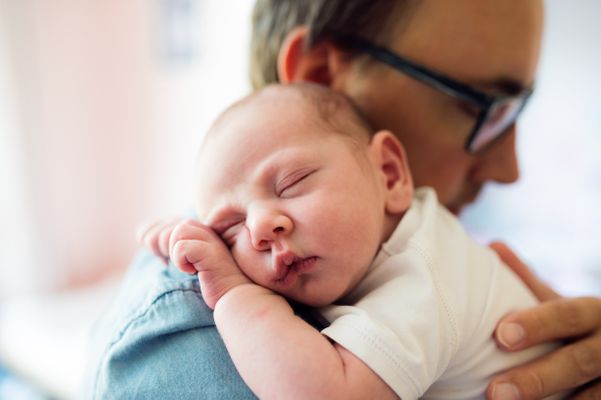
- Herd immunity offers protection for the most vulnerable people in a population (e.g. new born babies and the elderly).
Active and Passive Immunity
Immunity can be provided in an active or a passive way. Active and passive immunity can also be artificial or natural. The different types of immunity are:

Active immunity
- Active immunity is where the immune system has created its own antibodies.
- Active immunity can be:
- Natural (antibodies have been created in response to catching a disease).
- Artificial (antibodies have been created in response to vaccination of antigens).

Passive immunity
- Passive immunity is where an individual receives antibodies from an external source. The antibodies are not made by the individual.
- Passive immunity can be:
- Natural (antibodies are transferred to a baby from its mother in breast milk).
- Artificial (antibodies are transferred to an individual by injection).
1Unity & Diversity - Molecules
1.1Water
1.2DNA Structure & Replication
1.3Transcription & Gene Expression
2Unity & Diversity - Cells
2.1The Origin of Cells
2.2Introduction to Cells
2.3Ultrastructure of Cells
2.4Cell Division
2.5Structure of DNA & RNA
2.6DNA Replication, Transcription & Translation
2.7Cell Respiration
2.8Photosynthesis
2.9Viruses
3Unity & Diversity - Organisms
3.1Diversity of Organisms
3.2Evidence for Evolution
4Unity & Diversity - Ecosystems
4.1Classification
4.3Evolution & Speciation
4.3.1Evidence for Evolution - Fossils & DNA4.3.2Evidence for Evolution - Anatomy & Geography4.3.3IB Multiple Choice - Evidence for Evolution4.3.4Extended Response - DNA & Evolution4.3.5Populations4.3.6Mutations, Genetic Drift, & Gene Flow4.3.7Speciation4.3.8Rate of Speciation4.3.9Allopatric & Sympatric Speciation
4.4Conservation of Biodiversity
5Form & Function - Molecules
6Form & Function - Cells
6.1Membranes & Membrane Transport
6.2Organelles & Compartmentalization
6.3Cell Specialization
7Form & Function - Organisms
7.2Transport
7.3Muscle & Motility
8Form & Function - Ecosystems
8.1Species, Communities & Ecosytems
8.3Carbon Cycle
9Interaction & Interdependence - Molecules
9.1Enzymes
9.2Metabolism
9.3Cell Respiration
10Interaction & Interdependence - Cells
10.1Chemical Signalling
10.2Neural Signalling
10.3Adaptation to Environment
10.4Ecological Niches
11Interaction & Interdependence - Organisms
11.1Integration of Body Systems
12Interaction & Interdependence - Ecosystems
12.1Populations & Communities
12.2Transfers of Energy & Matter
13Continuity & Change - Molecules
13.1DNA Replication
13.2Protein Synthesis
14Continuity & Change - Cells
15Continuity & Change - Organisms
15.1Inheritance
15.1.1Non-Nuclear Inheritance15.1.2Linked Genes15.1.3IB Multiple Choice - Non-Mendelian Genetics15.1.4Extended Response - Inheritance15.1.5Introduction to Non-Mendelian Inheritance15.1.6Chi-Squared Test15.1.7End of Topic Quiz - Inheritance15.1.8Sex-Linked Genes15.1.9Grade 4-5 (Scientific Practices) - Inheritance
16Continuity & Change - Ecosystems
16.1Natural Selection
16.2Stability & Change
Jump to other topics
1Unity & Diversity - Molecules
1.1Water
1.2DNA Structure & Replication
1.3Transcription & Gene Expression
2Unity & Diversity - Cells
2.1The Origin of Cells
2.2Introduction to Cells
2.3Ultrastructure of Cells
2.4Cell Division
2.5Structure of DNA & RNA
2.6DNA Replication, Transcription & Translation
2.7Cell Respiration
2.8Photosynthesis
2.9Viruses
3Unity & Diversity - Organisms
3.1Diversity of Organisms
3.2Evidence for Evolution
4Unity & Diversity - Ecosystems
4.1Classification
4.3Evolution & Speciation
4.3.1Evidence for Evolution - Fossils & DNA4.3.2Evidence for Evolution - Anatomy & Geography4.3.3IB Multiple Choice - Evidence for Evolution4.3.4Extended Response - DNA & Evolution4.3.5Populations4.3.6Mutations, Genetic Drift, & Gene Flow4.3.7Speciation4.3.8Rate of Speciation4.3.9Allopatric & Sympatric Speciation
4.4Conservation of Biodiversity
5Form & Function - Molecules
6Form & Function - Cells
6.1Membranes & Membrane Transport
6.2Organelles & Compartmentalization
6.3Cell Specialization
7Form & Function - Organisms
7.2Transport
7.3Muscle & Motility
8Form & Function - Ecosystems
8.1Species, Communities & Ecosytems
8.3Carbon Cycle
9Interaction & Interdependence - Molecules
9.1Enzymes
9.2Metabolism
9.3Cell Respiration
10Interaction & Interdependence - Cells
10.1Chemical Signalling
10.2Neural Signalling
10.3Adaptation to Environment
10.4Ecological Niches
11Interaction & Interdependence - Organisms
11.1Integration of Body Systems
12Interaction & Interdependence - Ecosystems
12.1Populations & Communities
12.2Transfers of Energy & Matter
13Continuity & Change - Molecules
13.1DNA Replication
13.2Protein Synthesis
14Continuity & Change - Cells
15Continuity & Change - Organisms
15.1Inheritance
15.1.1Non-Nuclear Inheritance15.1.2Linked Genes15.1.3IB Multiple Choice - Non-Mendelian Genetics15.1.4Extended Response - Inheritance15.1.5Introduction to Non-Mendelian Inheritance15.1.6Chi-Squared Test15.1.7End of Topic Quiz - Inheritance15.1.8Sex-Linked Genes15.1.9Grade 4-5 (Scientific Practices) - Inheritance
16Continuity & Change - Ecosystems
16.1Natural Selection
16.2Stability & Change
Practice questions on Vaccines
Can you answer these? Test yourself with free interactive practice on Seneca — used by over 10 million students.
- 1
- 2What cells provide long-lasting immunity?Multiple choice
- 3
- 4
- 5Which members of the population does herd immunity protect?Multiple choice
Unlock your full potential with Seneca Premium
Unlimited access to 10,000+ open-ended exam questions
Mini-mock exams based on your study history
Unlock 800+ premium courses & e-books