2.4.2
Mitosis
Test your knowledge with free interactive questions on Seneca — used by over 10 million students.
Stages of Mitosis
In mitosis, chromosomes go through interphase, prophase, metaphase, anaphase, and telophase in order to produce genetically identical cells.

Interphase
- The cell prepares to divide.
- DNA is replicated by semi-conservative replication. There are now two copies of every chromosome.
- The organelles are also replicated.
- More ATP is produced to be used in cell division.
Prophase
- The nuclear envelope breaks down and the nucleolus disappears. Chromosomes are left floating in the cytoplasm.
- The chromosomes coil more tightly and become shorter and fatter. They can be seen under a light microscope.
- Small protein bundles called centrioles move to opposite poles of the cell.
- Microtubules form the mitotic spindle between the centrioles.
Metaphase
- The chromosomes line up along the mid-line of the cell.
- In metaphase, the chromosomes are maximally condensed.
- They are attached to the spindle by the centromere.
Anaphase
- The chromosomes break into two chromatids. The sister chromatids separate at the centromere.
- The spindles contract and pull the chromatids to each pole of the cell.
Telophase
- The chromatids reach the opposite poles and begin to decondense (unravel), becoming chromosomes again.
- Nuclear envelopes form around the chromosomes so there are now two nuclei.
- The cytoplasm splits and two daughter cells are formed. The daughter cells are identical to the original cell and to each other.
- The cell cycle starts again.

Way to remember the stages:
- I (interphase).
- Picked (prophase).
- My (metaphase).
- Apples (anaphase).
- Today (telophase).
The Significance of Mitosis in Life Cycles
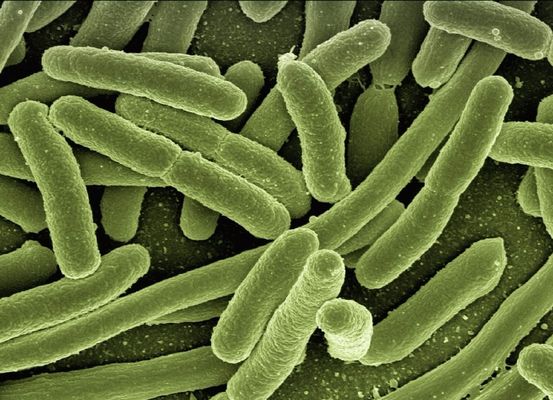
Bacteria and other unicellular organisms largely rely on mitosis for reproduction, while multicellular organisms need mitosis in order to grow and repair tissues.

Asexual reproduction
- Single celled organisms reproduce via mitosis as cellular and organismal levels of organization are the same for them, cell division represents reproduction of entire organisms.
- Mitosis produces identical cells, so reproduction via this method produces clonal organisms. This means entire colonies of bacteria are likely to be identical to each other.
- This form of reproduction is known as asexual as there is no meiosis and shuffling of genes.
Asexual reproduction - 2
- Asexual reproduction only requires one parent cell, allowing single-celled organisms to increase population rapidly.
- Mitosis introduces no genetic variation into populations so bacteria rely on alternative methods, such as horizontal gene transfer of plasmids for variation.
Growth
- Multicellular organisms must grow through increasing their cell count.
- Mitosis is vital as it allows somatic (body) cells to reproduce and form clones that can perform the exact same function within the body as parent cells.
- The zygote, formed after fertilization, grows in size by mitosis. As the zygote grows, different cells specialize for particular functions.

Tissue repair
- When damaged or injured, an organism can replace the lost cells via mitosis.
- Structures such as skin and bones can be reconstructed with new cells produced from mitosis, while lost fluids such as blood can be replenished in this way too.
- Some organisms such as axolotls are able to replace entire limbs and tails via mitosis.
1Unity & Diversity - Molecules
1.1Water
1.2DNA Structure & Replication
1.3Transcription & Gene Expression
2Unity & Diversity - Cells
2.1The Origin of Cells
2.2Introduction to Cells
2.3Ultrastructure of Cells
2.4Cell Division
2.5Structure of DNA & RNA
2.6DNA Replication, Transcription & Translation
2.7Cell Respiration
2.8Photosynthesis
2.9Viruses
3Unity & Diversity - Organisms
3.1Diversity of Organisms
3.2Evidence for Evolution
4Unity & Diversity - Ecosystems
4.1Classification
4.3Evolution & Speciation
4.3.1Evidence for Evolution - Fossils & DNA4.3.2Evidence for Evolution - Anatomy & Geography4.3.3IB Multiple Choice - Evidence for Evolution4.3.4Extended Response - DNA & Evolution4.3.5Populations4.3.6Mutations, Genetic Drift, & Gene Flow4.3.7Speciation4.3.8Rate of Speciation4.3.9Allopatric & Sympatric Speciation
4.4Conservation of Biodiversity
5Form & Function - Molecules
6Form & Function - Cells
6.1Membranes & Membrane Transport
6.2Organelles & Compartmentalization
6.3Cell Specialization
7Form & Function - Organisms
7.2Transport
7.3Muscle & Motility
8Form & Function - Ecosystems
8.1Species, Communities & Ecosytems
8.3Carbon Cycle
9Interaction & Interdependence - Molecules
9.1Enzymes
9.2Metabolism
9.3Cell Respiration
10Interaction & Interdependence - Cells
10.1Chemical Signalling
10.2Neural Signalling
10.3Adaptation to Environment
10.4Ecological Niches
11Interaction & Interdependence - Organisms
11.1Integration of Body Systems
12Interaction & Interdependence - Ecosystems
12.1Populations & Communities
12.2Transfers of Energy & Matter
13Continuity & Change - Molecules
13.1DNA Replication
13.2Protein Synthesis
14Continuity & Change - Cells
15Continuity & Change - Organisms
15.1Inheritance
15.1.1Non-Nuclear Inheritance15.1.2Linked Genes15.1.3IB Multiple Choice - Non-Mendelian Genetics15.1.4Extended Response - Inheritance15.1.5Introduction to Non-Mendelian Inheritance15.1.6Chi-Squared Test15.1.7End of Topic Quiz - Inheritance15.1.8Sex-Linked Genes15.1.9Grade 4-5 (Scientific Practices) - Inheritance
16Continuity & Change - Ecosystems
16.1Natural Selection
16.2Stability & Change
Jump to other topics
1Unity & Diversity - Molecules
1.1Water
1.2DNA Structure & Replication
1.3Transcription & Gene Expression
2Unity & Diversity - Cells
2.1The Origin of Cells
2.2Introduction to Cells
2.3Ultrastructure of Cells
2.4Cell Division
2.5Structure of DNA & RNA
2.6DNA Replication, Transcription & Translation
2.7Cell Respiration
2.8Photosynthesis
2.9Viruses
3Unity & Diversity - Organisms
3.1Diversity of Organisms
3.2Evidence for Evolution
4Unity & Diversity - Ecosystems
4.1Classification
4.3Evolution & Speciation
4.3.1Evidence for Evolution - Fossils & DNA4.3.2Evidence for Evolution - Anatomy & Geography4.3.3IB Multiple Choice - Evidence for Evolution4.3.4Extended Response - DNA & Evolution4.3.5Populations4.3.6Mutations, Genetic Drift, & Gene Flow4.3.7Speciation4.3.8Rate of Speciation4.3.9Allopatric & Sympatric Speciation
4.4Conservation of Biodiversity
5Form & Function - Molecules
6Form & Function - Cells
6.1Membranes & Membrane Transport
6.2Organelles & Compartmentalization
6.3Cell Specialization
7Form & Function - Organisms
7.2Transport
7.3Muscle & Motility
8Form & Function - Ecosystems
8.1Species, Communities & Ecosytems
8.3Carbon Cycle
9Interaction & Interdependence - Molecules
9.1Enzymes
9.2Metabolism
9.3Cell Respiration
10Interaction & Interdependence - Cells
10.1Chemical Signalling
10.2Neural Signalling
10.3Adaptation to Environment
10.4Ecological Niches
11Interaction & Interdependence - Organisms
11.1Integration of Body Systems
12Interaction & Interdependence - Ecosystems
12.1Populations & Communities
12.2Transfers of Energy & Matter
13Continuity & Change - Molecules
13.1DNA Replication
13.2Protein Synthesis
14Continuity & Change - Cells
15Continuity & Change - Organisms
15.1Inheritance
15.1.1Non-Nuclear Inheritance15.1.2Linked Genes15.1.3IB Multiple Choice - Non-Mendelian Genetics15.1.4Extended Response - Inheritance15.1.5Introduction to Non-Mendelian Inheritance15.1.6Chi-Squared Test15.1.7End of Topic Quiz - Inheritance15.1.8Sex-Linked Genes15.1.9Grade 4-5 (Scientific Practices) - Inheritance
16Continuity & Change - Ecosystems
16.1Natural Selection
16.2Stability & Change
Practice questions on Mitosis
Can you answer these? Test yourself with free interactive practice on Seneca — used by over 10 million students.
- 1Stages of MitosisPut in order
- 2Which of these does NOT take place during interphase?Multiple choice
- 3The significance of mitosis in life cycles:Fill in the list
- 4
- 5How many parent cells does asexual reproduction require?Multiple choice
Unlock your full potential with Seneca Premium
Unlimited access to 10,000+ open-ended exam questions
Mini-mock exams based on your study history
Unlock 800+ premium courses & e-books