1.4.6
Business Plans
Test your knowledge with free interactive questions on Seneca — used by over 10 million students.
Why Do Businesses Create Plans?
It is important for any new or existing business to create a plan in order to have an understanding of how it plans to achieve its aims and objectives. There are 4 key reasons why businesses create plans:

Important for new businesses
- It is important for a new business to have a plan for the owner to clarify their thoughts and plans and for a potential investor like a venture capitalist or bank manager. A detailed plan lets the owner and financial backers think about the business idea in depth.
- When Peter Jones and Theo Paphitis invested in Levi Roots Reggae Reggae Sauce, they asked to see Levi’s business plan before they committed to providing their expertise and investment.

Raising finance
- To decide whether to give finance to a business, investors and banks need in-depth financial information.
- A business plan can provide detailed info about the costs and expected revenue for a company and this can be used to convince financial backers that they should invest.
- When Facebook raised finance from venture capitalists to grow and when Snap Inc listed on the New York Stock Exchange they had to provide business plans.

Setting objectives
- A plan lets a business clearly set out what the business’ objectives are and how they are going to go about achieving them.
- These specific business objectives help firms to achieve their aims as they are measurable targets for the firm to work towards.
- It also allows a business to see which areas (growth, sales, profits etc.) they need to improve and which they are doing well on. If they fail to meet an objective then it can be easier to understand why it was not met.

Business organisation
- By detailing how functions of the business will be organised, a business plan can help improve the way that a business is run.
- It helps businesses, particularly smaller ones, to think logically about the most efficient way to run a business.
- A local cafe can plan its purchasing, pricing and staffing in a business plan that can help it manage its operations.
The Main Parts of a Business Plan
There are lots of different ways to structure a business plan. However, some sections are very important and are almost always included.

Executive summary
- The executive summary should be a concise overview of the entire business plan.

Mission statement
- A mission statement says what a company wants to achieve.
Products or services
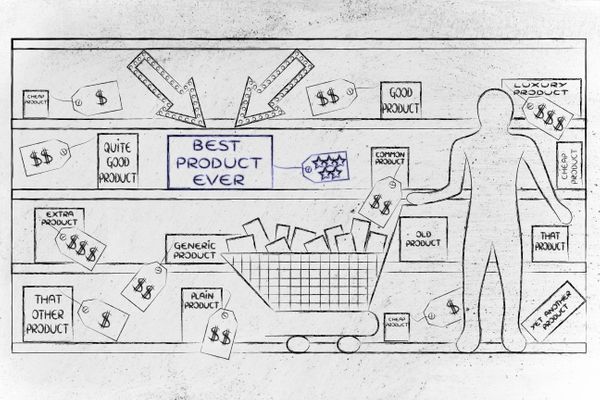
- This section should clearly describe which products or services the company sells and why customers will benefit from this.
- This also may include what a product’s unique selling point (USP) is. The USP of a product or service is how this product or service is different (or unique) from the products or services offered by the competition.

Market analysis
- This will include an in-depth analysis of different aspects of the business’ environment.
- Analysis of competitors – Who the main competition are and where they are positioned in the market.
- Analysis of customers – The different customer segments and which of these will be the ‘target market’.

Organisation and management team
- This will outline the company’s organisation structure and provide personal details of the owners and other important personnel.

Production details
- This will outline how a firm will produce its products or provide its services.
- This includes things like the location of factories, who the suppliers will be, what materials will be needed and how much they will cost.
Finance
- This section will outline the investment that is needed to start up a business, as well as objectives for revenue and profit.
- Cost and profit - This includes detailed outlines of the forecasts for cost, revenue and profit.
- This section usually includes a cash-flow forecast and projected profit and loss account for the first 12 months of trading.
- Sources of finance - This section often includes details of how a company will fund investment if it is required.
Advantages and Disadvantages of a Business Plan
There are advantages and disadvantages of creating business plans.

Advantages
- Business plans provide parameters for setting targets.
- Management can check staffing, incomes, product ranges and lots of other things against previous business plans and expansion plans.
- A business plan can be used as a benchmark against outcomes like cashflow, production outcomes or service delivery. The plan can also be compared to the behaviour of competitors and the business’ own performance in past years.

Disadvantages
- Businesses need to be flexible and able to adapt to a changing environment. A business plan may stop a company changing.
- Business plans can be costly and time consuming to make. If an entrepreneur has less time to spend designing a good product and selling to customers, then the time spent making a business plan may be negative for the business.
- Also, forecasts of revenue and profit may be misleading and lead to bad decisions.
1Investigating Small Business
1.1Enterprise & Entrepreneurship
1.2Spotting a Business Opportunity
1.3Putting a Business Idea into Practice
1.4Making the Business Effective
1.5Business Stakeholders
2Building a Business
2.1Growing the Business
2.2Making Marketing Decisions
2.3Making Operational Decisions
2.4Making Financial Decisions
2.5Making Human Resource Decisions
Jump to other topics
1Investigating Small Business
1.1Enterprise & Entrepreneurship
1.2Spotting a Business Opportunity
1.3Putting a Business Idea into Practice
1.4Making the Business Effective
1.5Business Stakeholders
2Building a Business
2.1Growing the Business
2.2Making Marketing Decisions
2.3Making Operational Decisions
2.4Making Financial Decisions
2.5Making Human Resource Decisions
Practice questions on Business Plans
Can you answer these? Test yourself with free interactive practice on Seneca — used by over 10 million students.
- 1What are the 4 key reasons why businesses create plans?Fill in the list
- 2
- 3Which of the following is not a key part of a business plan?Multiple choice
- 4
- 5Features of business plans:True / false
Unlock your full potential with Seneca Premium
Unlimited access to 10,000+ open-ended exam questions
Mini-mock exams based on your study history
Unlock 800+ premium courses & e-books