6.1.5
Men & Women
Test your knowledge with free interactive questions on Seneca — used by over 10 million students.
Willy's Relationships with Women
The relationships between men and women in the play largely conform to conventional representations of the 1940/50s: men are the breadwinners while women are seen in a domestic role, as mother and housewife.

Linda
- Linda acts in an almost maternal role in her marriage.
- At the beginning of the play we see her comfort and console Willy, taking off his shoes, taking his jacket from him, soothing his ego and, in a revealing stage direction, treating him “very carefully, delicately”.
- She is careful to avoid confronting Willy, knowing that this upsets him further, but, as a result, many commentators see her as being too passive, allowing Willy to, in Biff’s words, “wipe the floor” with her.

Linda’s passivity
- One example of Linda’s passivity is her refusal to confront Willy about the piece of rubber tubing Willy has hid behind the gas heater.
- Linda knows of Willy’s suicidal impulses but feels it would “insult” Willy to mention it to him.
- Therefore, at the heart of their marriage, there is a refusal to speak or confront the truth.

Willy's guilt
- This sense of a dark secret at the heart of their marriage is amplified by Willy’s guilt about his infidelity.
- This in turn leads to erratic behaviour from Willy e.g. when he reacts “angrily” to Linda mending her pair of silk stockings.

Willy's affair
- The relationship between Willy and the Woman is only glimpsed in short scenes, but the flashes that we see reveal that both parties ‘gain something’ from the affair.
- Willy is boosted by the reassurance offered by the Woman (“You picked me, heh?”) while she is quick to remind him that “you promised me stockings, Willy!”
- Willy and the Woman use each other for their own ends.
Happy's Relationship with Women
Happy’s relationships with women are troubled in that Happy uses them for some short-lived sense of victory or satisfaction.

Work
- The world of work is represented as an almost exclusively male world.
- When women do appear in the workplace, it is as a secretary (Jenny).
- As a result, ‘masculine’ traits are celebrated in the workplace, exemplified by Happy’s competitiveness (“I’m gonna win it for him”) and Howard’s hard-headedness (“business is business”).

Womanising
- Happy’s relationships with women are troubled in that Happy uses them for some short-lived sense of victory or satisfaction.
- His compulsive womanising, sleeping with the partners of his superiors at work, is driven by a need to prove himself against the “pompous, self-important executives” he works with.

Women as sport
- As Happy himself explains to Biff: “it gets like bowling or something. I just keep knockin’ them over and it doesn’t mean a thing”.
- The metaphor is revealing: for Happy, his relationships with women are a sport.
Objectification of women
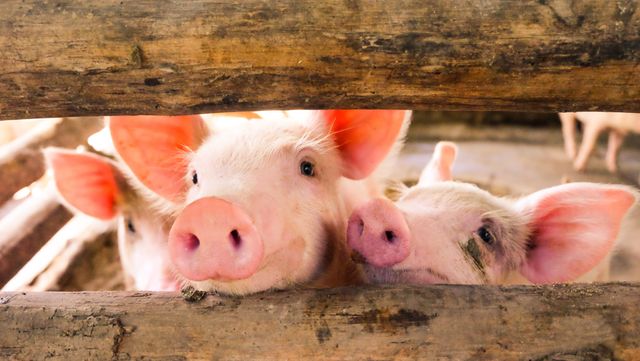
- Happy objectifies women throughout the play, reminiscing about the “pig” with who he shared his “first time” and then later telling Stanley, the waiter, “Strudel’s comin’” before the entrance of Miss Forsythe.
- Happy’s dialogue with Miss Forsythe is also full of innuendo, for example when Happy asks “You don’t happen to sell, do you?” implying that she may be a prostitute.
1Introduction
1.1Introductions
2Act One
3Act Two
4Extended Passage Analysis
5Character Profiles
5.1Willy & Linda Loman
5.2Biff & Happy Loman
5.3Other Characters
6Key Themes
7Writing Techniques
7.1Structure
7.3Expressionism
8Historical Context
8.1Historical Context
9Literary Context
9.1Tragedy
10Critical Debates
10.1Introduction
10.2The Marxist Reading
10.3The Feminist Reading
10.4The Eco-Critical Reading
10.5Other Debates
11Recap: Main Quotes
11.1Characters Quotes
11.2Quotes by Act
11.2.1Act One: Key Events 1-3 Quotes11.2.2Act One: Key Events 4-6 Quotes11.2.3Act One: Key Events 7-9 Quotes11.2.4Act One: Key Events 10-12 Quotes11.2.5Act One: Stage Direction Quotes11.2.6Act One: The Woman Quotes11.2.7Act Two: Key Events 1-2 Quotes11.2.8Act Two: Key Events 3-4 Quotes11.2.9Act Two: Key Events 5-6 Quotes11.2.10Act Two: Key Events 7-8 Quotes11.2.11Act Two: Key Events 9-10 Quotes11.2.12Act Two: Howard's Office Quotes11.2.13Act Two: The Requiem Quotes
Jump to other topics
1Introduction
1.1Introductions
2Act One
3Act Two
4Extended Passage Analysis
5Character Profiles
5.1Willy & Linda Loman
5.2Biff & Happy Loman
5.3Other Characters
6Key Themes
7Writing Techniques
7.1Structure
7.3Expressionism
8Historical Context
8.1Historical Context
9Literary Context
9.1Tragedy
10Critical Debates
10.1Introduction
10.2The Marxist Reading
10.3The Feminist Reading
10.4The Eco-Critical Reading
10.5Other Debates
11Recap: Main Quotes
11.1Characters Quotes
11.2Quotes by Act
11.2.1Act One: Key Events 1-3 Quotes11.2.2Act One: Key Events 4-6 Quotes11.2.3Act One: Key Events 7-9 Quotes11.2.4Act One: Key Events 10-12 Quotes11.2.5Act One: Stage Direction Quotes11.2.6Act One: The Woman Quotes11.2.7Act Two: Key Events 1-2 Quotes11.2.8Act Two: Key Events 3-4 Quotes11.2.9Act Two: Key Events 5-6 Quotes11.2.10Act Two: Key Events 7-8 Quotes11.2.11Act Two: Key Events 9-10 Quotes11.2.12Act Two: Howard's Office Quotes11.2.13Act Two: The Requiem Quotes
Practice questions on Men & Women
Can you answer these? Test yourself with free interactive practice on Seneca — used by over 10 million students.
- 1
- 2What does Linda refuse to confront Willy about?Multiple choice
- 3‘Masculine’ traits celebrated in the workplace:Fill in the list
- 4What does Happy's dialogue with Miss Forsythe imply? Multiple choice
Unlock your full potential with Seneca Premium
Unlimited access to 10,000+ open-ended exam questions
Mini-mock exams based on your study history
Unlock 800+ premium courses & e-books