18.2.2
The Gestapo & SS
Test your knowledge with free interactive questions on Seneca — used by over 10 million students.
The Nazi Police State
Hitler ran Germany as a police state. This means that the police controlled every aspect of daily life for German citizens. The Gestapo and SS were two key groups in this system.
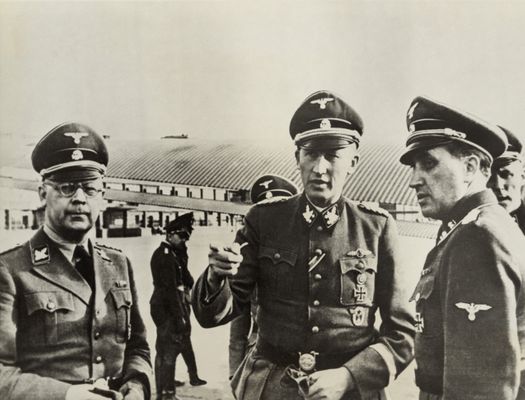
The Gestapo
- The Gestapo was Hitler’s secret police service, set up by Hermann Goering in 1933 and led by Reynhard Heydrich (centre) in 1934.
- The Gestapo did not wear uniforms as they were secret investigators.

The purpose of the Gestapo
- The Gestapo was a small unit of 50,000 policemen who relied on informers to identify opponents.
- They spied on German citizens and prosecuted people who spoke against the Nazi regime.
- Punishment for such a crime was torture or being sent to a concentration camp.
- The German population were terrified of the Gestapo’s power.
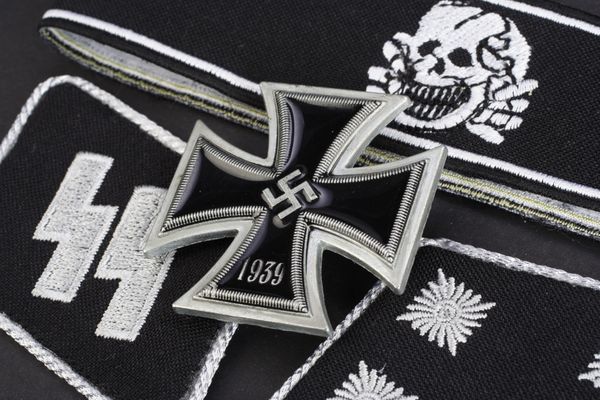
The SS (Schutzstaffel)
- The SS was Hitler’s Protection Squad (bodyguards).
- It was set up in 1925 AD and led by Heinrich Himmler.
- The SS recruited Aryans. It was an expectation that SS troops would also have children with Aryan women.
- SS troops were highly trained and very disciplined (this was one reason why Hitler preferred them to the SA).
- They wore black uniforms.
- The SS had 90,000 full-time employees and 200,000 'informal workers', who were informants passing information.
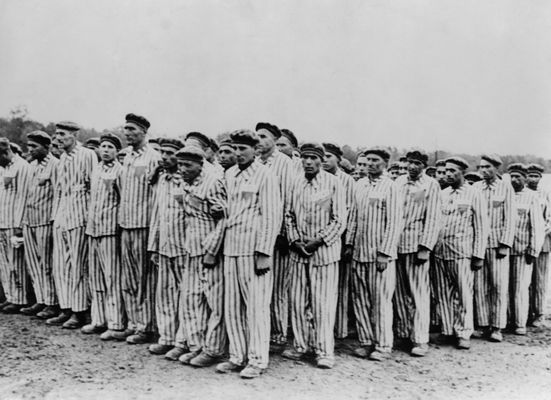
The role of the SS
- The SS were in charge of Germany’s police force.
- They had the power to search people’s property and send them to prison without receiving a trial.
- They ran the concentration camps.
- In the Second World War, the SS were in charge of the Einsatzgruppen and death camps.
1Empires East & West: 1000 AD
1.1The Rise & Fall of Ancient China’s Empire
1.2The Medieval Greatness of the Byzantine Empire
1.3The Golden Age of the Islamic Empire
1.4The Politics & Power of the Holy Roman Empire
1.5Medieval Religion
1.6The Influence of the Church in Medieval Times
1.7How Religion Tested the Power of Kings
1.8Dynastic Challenges to Medieval Monarchs
1.9Challenges to Medieval Monarchs
1.10Revolts, Rebellions & Rights
1.11Medieval England & Her Neighbours
1.12European Renaissance
1.13Norman Conquest & Control
1.13.1Pre-10661.13.2Pre-1066 - Warfare1.13.3Pre-1066 - Culture1.13.4Edward's Death1.13.5Claims to the English Throne1.13.6The Conquest - Battle of Gate Fulford1.13.7The Conquest - The Battle of Stamford Bridge1.13.8The Conquest - The Battle of Hastings1.13.9The Conquest - The Battle of Hastings - Tactics1.13.10The Conquest - Why Did William Win?1.13.11Disciplinary Knowledge - Causation1.13.12Disciplinary Knowledge - Consequence1.13.13Norman Power & Control1.13.14Changes Under the Normans - Society1.13.15Changes Under the Normans - Towns1.13.16Changes Under the Normans - Town Features1.13.17Changes Under the Normans - The Church1.13.18Changes Under the Normans - The Church 21.13.19Changes Under the Normans - The Feudal System1.13.20Changes Under the Normans - Rights & Responsibilit1.13.21Disciplinary Knowledge - Change & Continuity
2The Medieval World: 450-1450 AD
2.1Anglo-Saxon England
2.2The Contest for the English Throne
2.3Conquering the Holy Land, 10-96-1396 AD
2.3.1Origins of the Crusades2.3.2Early Disputes Over the Holy Land2.3.3The First Crusade2.3.4Course of the Crusades2.3.5Reasons for the Crusades2.3.6Military Impact of the Crusades2.3.7Scientific Impact of the Crusades2.3.8Domestic Impact of the Crusades2.3.9Christian Interpretation of the Crusades2.3.10Muslim Interpretation of the Crusades2.3.11End of Topic Test - The Crusades2.3.12End of Topic Test - The Crusades 2
2.4King John
2.5The Magna Carta & Parliament
2.5.1The Magna Carta2.5.2Lasting Impact of the Magna Carta2.5.3The Magna Carta & the Monarchy2.5.4The Magna Carta & Democracy2.5.5Contemporary Interpretations of King John2.5.6Later Interpretations of King John2.5.7Modern Interpretations of King John2.5.8End of Topic Test - The Magna Carta2.5.9End of Topic Test - Lasting Impact of Magna Carta2.5.10End of Topic Test - Interpretations of King John
2.6The Black Death
3Worldviews
3.1Time & History
3.2The Christian World
4The Empire of Mali: 1076-1670 AD
4.1Geography
4.2Key Figures
4.3The Hajj to Mecca
5The Renaissance & Reformations: 1500-1598 AD
5.1The Renaissance
5.2The Reformation
6The British Empire: 1583-1960 AD
6.1The British Empire
6.2North America
6.3The Caribbean
6.4India
6.5Australia
7The Peasants' Revolt: 1381 AD
7.1Causes of the Peasants' Revolt
7.2Course of the Revolt
7.3Consequences of the Peasants Revolt
8Religion in the Middle Ages
9Slavery: 1619-1833 AD
9.1Slavery
9.1.1Beginnings of the Slave Trade9.1.2The Triangular Slave Trade9.1.3Impact of the Slave Trade on Britain9.1.4Slave Trade & World Impacts9.1.5Reasons Attitudes to the Slave Trade Changed9.1.6The Committee for the Abolition9.1.7The Abolition of Slavery: Key Events9.1.8Interpretations of the Slave Trade9.1.9Interpretations of Abolition9.1.10End of Topic Test - Slavery
10The English Civil War: 1642-1660 AD
10.1Charles I
10.2Why Did the Civil War Break Out?
10.3The Civil War
10.4The Commonwealth
11The Industrial Revolution: 1750-1840 AD
12US Independence: 1775-1783 AD
13The French Revolution: 1789-1815 AD
13.1The Revolution
14The British Empire: 1857–1930 AD
14.1The British Empire
14.1.1Empires over Time14.1.2Expansion into Africa14.1.3Motives for Expansion into Africa14.1.4History of Egypt14.1.5The British Empire & India14.1.6The Bengal Famine, Indian Mutiny & Indian Economy14.1.7International Relations with other Powers14.1.8Scramble for Africa14.1.9The Berlin Conference & Assessment14.1.10Native Policy in Colonies14.1.11Relations & Business with Iran14.1.12Iran After WW214.1.13Impact of WW1 - White Dominion Support14.1.14Impact of WW1 - Indian and African Support14.1.15Palestine & the Middle East14.1.16Britain & its African & Middle Eastern Colonies
15Suffrage: 1840-1928 AD
15.1Suffrage
15.2The Campaign for Women’s Suffrage
15.3Women’s Enfranchisement
16World War 1: 1914-1918 AD
16.1Causes of WW1
16.2Outbreak & Early War
16.3The War of Attrition
16.4Forgotten Armies of WWI
17The Russian Revolution: 1917 AD
17.1Russia's Economy and Society
17.2Nicholas II's Autocracy & the Court
17.3The First World War
17.4Lenin's New Society
18The Inter-War Years: 1919-1939 AD
18.1Increasing Support for Fascists
18.2Control of People in Totalitarian States
18.2.1The German Police State18.2.2The Gestapo & SS18.2.3The Success of Repression18.2.4The USSR Police State18.2.5Employment in Germany18.2.6Economic Policies in Germany18.2.7Nazi Economic Policy - Costs & Benefits18.2.8Economic Policies in USSR18.2.9The Jews & Anti-Semitism18.2.10The Persecution of the Jews - The Holocaust18.2.11Cult of Personality in the USSR
18.3The Rise of Dictators
19World War 2: 1939-1945 AD
19.1World War 2
19.1.1Long Term Factors of WW219.1.2Hitler & the Nazis19.1.3Appeasement19.1.4The Phoney War19.1.5The Blitzkrieg19.1.6The Battle of Britain19.1.7German Invasion of the USSR19.1.8US Entrance into WW219.1.9Allied Victory19.1.10Churchill19.1.11Anti-Semitism19.1.12The Holocaust19.1.13Outcome of WW219.1.14Interpretations of the Causes of WW219.1.15Interpretation of US Entrance19.1.16Interpretation of USSR Entrance
20The Cold War: 1947-1962 AD
20.1The Cold War
20.1.1Introduction to Key Terms of the Cold War20.1.2Ideological Differences Between the Superpowers20.1.3The Yalta & Potsdam Conferences - 1945 AD20.1.4Satellite States20.1.5The Atomic Bomb20.1.6NATO20.1.7Containment20.1.8The Marshall Plan20.1.9The Berlin Crisis20.1.10The Berlin Airlift20.1.11The Refugee Problem in Berlin20.1.12The Berlin Wall20.1.13The Arms Race20.1.14The Space Race20.1.15Relations with Cuba20.1.16The Cuban Missile Crisis20.1.17Consequences of the Cuban Missile Crisis
21Civil Rights in the USA: 1954-1975 AD
21.1Segregation in the USA
21.1.1Segregation & Discrimination21.1.2Voting21.1.3Brown v. Topeka21.1.4Little Rock High School21.1.5Rosa Parks21.1.6Montgomery Bus Boycott21.1.7Opposition to the Civil Rights Movement21.1.8The Murder of Emmett Till21.1.9The James Meredith Case21.1.10Peaceful Protests in the 1960s21.1.11Freedom Summer & Mississippi Murders21.1.12Civil & Voting Rights Acts21.1.13Presidents Kennedy & Johnson21.1.14The Riots of 1965–6721.1.15The Kerner Report21.1.16Martin Luther King's Campaign21.1.17Assassination of Martin Luther King21.1.18Consequences of Assassination of MLK
Jump to other topics
1Empires East & West: 1000 AD
1.1The Rise & Fall of Ancient China’s Empire
1.2The Medieval Greatness of the Byzantine Empire
1.3The Golden Age of the Islamic Empire
1.4The Politics & Power of the Holy Roman Empire
1.5Medieval Religion
1.6The Influence of the Church in Medieval Times
1.7How Religion Tested the Power of Kings
1.8Dynastic Challenges to Medieval Monarchs
1.9Challenges to Medieval Monarchs
1.10Revolts, Rebellions & Rights
1.11Medieval England & Her Neighbours
1.12European Renaissance
1.13Norman Conquest & Control
1.13.1Pre-10661.13.2Pre-1066 - Warfare1.13.3Pre-1066 - Culture1.13.4Edward's Death1.13.5Claims to the English Throne1.13.6The Conquest - Battle of Gate Fulford1.13.7The Conquest - The Battle of Stamford Bridge1.13.8The Conquest - The Battle of Hastings1.13.9The Conquest - The Battle of Hastings - Tactics1.13.10The Conquest - Why Did William Win?1.13.11Disciplinary Knowledge - Causation1.13.12Disciplinary Knowledge - Consequence1.13.13Norman Power & Control1.13.14Changes Under the Normans - Society1.13.15Changes Under the Normans - Towns1.13.16Changes Under the Normans - Town Features1.13.17Changes Under the Normans - The Church1.13.18Changes Under the Normans - The Church 21.13.19Changes Under the Normans - The Feudal System1.13.20Changes Under the Normans - Rights & Responsibilit1.13.21Disciplinary Knowledge - Change & Continuity
2The Medieval World: 450-1450 AD
2.1Anglo-Saxon England
2.2The Contest for the English Throne
2.3Conquering the Holy Land, 10-96-1396 AD
2.3.1Origins of the Crusades2.3.2Early Disputes Over the Holy Land2.3.3The First Crusade2.3.4Course of the Crusades2.3.5Reasons for the Crusades2.3.6Military Impact of the Crusades2.3.7Scientific Impact of the Crusades2.3.8Domestic Impact of the Crusades2.3.9Christian Interpretation of the Crusades2.3.10Muslim Interpretation of the Crusades2.3.11End of Topic Test - The Crusades2.3.12End of Topic Test - The Crusades 2
2.4King John
2.5The Magna Carta & Parliament
2.5.1The Magna Carta2.5.2Lasting Impact of the Magna Carta2.5.3The Magna Carta & the Monarchy2.5.4The Magna Carta & Democracy2.5.5Contemporary Interpretations of King John2.5.6Later Interpretations of King John2.5.7Modern Interpretations of King John2.5.8End of Topic Test - The Magna Carta2.5.9End of Topic Test - Lasting Impact of Magna Carta2.5.10End of Topic Test - Interpretations of King John
2.6The Black Death
3Worldviews
3.1Time & History
3.2The Christian World
4The Empire of Mali: 1076-1670 AD
4.1Geography
4.2Key Figures
4.3The Hajj to Mecca
5The Renaissance & Reformations: 1500-1598 AD
5.1The Renaissance
5.2The Reformation
6The British Empire: 1583-1960 AD
6.1The British Empire
6.2North America
6.3The Caribbean
6.4India
6.5Australia
7The Peasants' Revolt: 1381 AD
7.1Causes of the Peasants' Revolt
7.2Course of the Revolt
7.3Consequences of the Peasants Revolt
8Religion in the Middle Ages
9Slavery: 1619-1833 AD
9.1Slavery
9.1.1Beginnings of the Slave Trade9.1.2The Triangular Slave Trade9.1.3Impact of the Slave Trade on Britain9.1.4Slave Trade & World Impacts9.1.5Reasons Attitudes to the Slave Trade Changed9.1.6The Committee for the Abolition9.1.7The Abolition of Slavery: Key Events9.1.8Interpretations of the Slave Trade9.1.9Interpretations of Abolition9.1.10End of Topic Test - Slavery
10The English Civil War: 1642-1660 AD
10.1Charles I
10.2Why Did the Civil War Break Out?
10.3The Civil War
10.4The Commonwealth
11The Industrial Revolution: 1750-1840 AD
12US Independence: 1775-1783 AD
13The French Revolution: 1789-1815 AD
13.1The Revolution
14The British Empire: 1857–1930 AD
14.1The British Empire
14.1.1Empires over Time14.1.2Expansion into Africa14.1.3Motives for Expansion into Africa14.1.4History of Egypt14.1.5The British Empire & India14.1.6The Bengal Famine, Indian Mutiny & Indian Economy14.1.7International Relations with other Powers14.1.8Scramble for Africa14.1.9The Berlin Conference & Assessment14.1.10Native Policy in Colonies14.1.11Relations & Business with Iran14.1.12Iran After WW214.1.13Impact of WW1 - White Dominion Support14.1.14Impact of WW1 - Indian and African Support14.1.15Palestine & the Middle East14.1.16Britain & its African & Middle Eastern Colonies
15Suffrage: 1840-1928 AD
15.1Suffrage
15.2The Campaign for Women’s Suffrage
15.3Women’s Enfranchisement
16World War 1: 1914-1918 AD
16.1Causes of WW1
16.2Outbreak & Early War
16.3The War of Attrition
16.4Forgotten Armies of WWI
17The Russian Revolution: 1917 AD
17.1Russia's Economy and Society
17.2Nicholas II's Autocracy & the Court
17.3The First World War
17.4Lenin's New Society
18The Inter-War Years: 1919-1939 AD
18.1Increasing Support for Fascists
18.2Control of People in Totalitarian States
18.2.1The German Police State18.2.2The Gestapo & SS18.2.3The Success of Repression18.2.4The USSR Police State18.2.5Employment in Germany18.2.6Economic Policies in Germany18.2.7Nazi Economic Policy - Costs & Benefits18.2.8Economic Policies in USSR18.2.9The Jews & Anti-Semitism18.2.10The Persecution of the Jews - The Holocaust18.2.11Cult of Personality in the USSR
18.3The Rise of Dictators
19World War 2: 1939-1945 AD
19.1World War 2
19.1.1Long Term Factors of WW219.1.2Hitler & the Nazis19.1.3Appeasement19.1.4The Phoney War19.1.5The Blitzkrieg19.1.6The Battle of Britain19.1.7German Invasion of the USSR19.1.8US Entrance into WW219.1.9Allied Victory19.1.10Churchill19.1.11Anti-Semitism19.1.12The Holocaust19.1.13Outcome of WW219.1.14Interpretations of the Causes of WW219.1.15Interpretation of US Entrance19.1.16Interpretation of USSR Entrance
20The Cold War: 1947-1962 AD
20.1The Cold War
20.1.1Introduction to Key Terms of the Cold War20.1.2Ideological Differences Between the Superpowers20.1.3The Yalta & Potsdam Conferences - 1945 AD20.1.4Satellite States20.1.5The Atomic Bomb20.1.6NATO20.1.7Containment20.1.8The Marshall Plan20.1.9The Berlin Crisis20.1.10The Berlin Airlift20.1.11The Refugee Problem in Berlin20.1.12The Berlin Wall20.1.13The Arms Race20.1.14The Space Race20.1.15Relations with Cuba20.1.16The Cuban Missile Crisis20.1.17Consequences of the Cuban Missile Crisis
21Civil Rights in the USA: 1954-1975 AD
21.1Segregation in the USA
21.1.1Segregation & Discrimination21.1.2Voting21.1.3Brown v. Topeka21.1.4Little Rock High School21.1.5Rosa Parks21.1.6Montgomery Bus Boycott21.1.7Opposition to the Civil Rights Movement21.1.8The Murder of Emmett Till21.1.9The James Meredith Case21.1.10Peaceful Protests in the 1960s21.1.11Freedom Summer & Mississippi Murders21.1.12Civil & Voting Rights Acts21.1.13Presidents Kennedy & Johnson21.1.14The Riots of 1965–6721.1.15The Kerner Report21.1.16Martin Luther King's Campaign21.1.17Assassination of Martin Luther King21.1.18Consequences of Assassination of MLK
Practice questions on The Gestapo & SS
Can you answer these? Test yourself with free interactive practice on Seneca — used by over 10 million students.
- 1
- 2What colour uniforms did the SS wear?Multiple choice
- 3
- 4Who was the leader of the Gestapo from 1934?Multiple choice
- 5
Unlock your full potential with Seneca Premium
Unlimited access to 10,000+ open-ended exam questions
Mini-mock exams based on your study history
Unlock 800+ premium courses & e-books