2.1.10
Onomatopoeia
Test your knowledge with free interactive questions on Seneca — used by over 10 million students.
Onomatopoeia
Onomatopoeia is when the way the word sounds imitates the sound it is describing.

Heels clacking
- Her heels clacked on the wooden floor.
- In this phrase, ‘clacked’ is onomatopoeia because ‘clack’ sounds like the noise that high heels make when they hit wooden floors.
- The onomatopoeia adds to your writing because it grabs the reader’s attention, jarring them as the description is interrupted with the literal sound, ‘clack’.
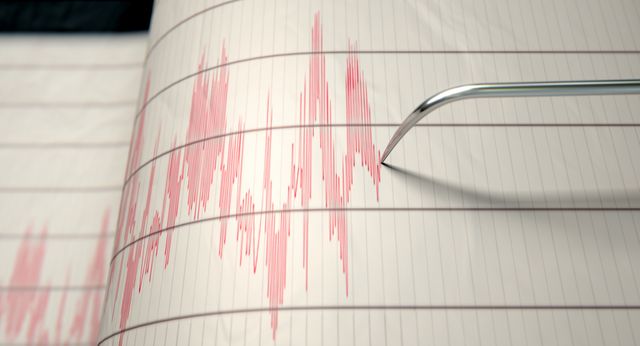
Earthquake rumbling
- The earthquake rumbled across the valley.
- In this phrase, ‘rumbled’ is onomatopoeia because ‘rumble’ sounds like the noise that earthquakes make as they move through the ground.
- The onomatopoeia adds to your writing because it grabs the reader’s attention, jarring them as the description is interrupted with the literal sound, ‘rumble’.

Paint splattering
- He flicked the brush and paint splattered across the wall.
- In this phrase, ‘splattered’ is onomatopoeia because ‘splat’ sounds like the noise that paint makes when it hits a surface.
- The onomatopoeia adds to your writing because it grabs the reader’s attention, jarring them as the description is interrupted with the literal sound, ‘splat’.
Tips for Using Onomatopoeia
Onomatopoeia is when the way the word sounds imitates the sound it is describing.

Focus on the sound
- Focus on the sound you are trying to create. What are you describing and what sound do you want your reader to actually hear in their heads as they read the sentence?

Consider tone/atmosphere
- Consider what kind of tone/atmosphere you are trying to create – the right onomatopoeic sound could give you a very tense feeling (‘rumble’, ‘crunch’, ‘clatter’) or could create a more uplifting feeling (‘hum’, ‘jingle’).

Choose vocabulary well
- Your choice of vocabulary is vital in creating your language devices effectively.
1Key Terms
1.1Key Terms
2Language Devices
3Writing Structure
4Section B: Reading & Writing
4.1Writing Formats
4.2Writing to...
4.2.1Writing to Inform4.2.2Writing to Inform - Example4.2.3Writing to Explain4.2.4Writing to Explain - Example4.2.5Writing to Persuade4.2.6Writing to Persuade - Example4.2.7Writing to Argue4.2.8Writing to Argue - Example4.2.9Writing to Persuade vs Writing to Argue4.2.10Writing to Advise4.2.11Writing to Advise - Example4.2.12End of Topic Test - Writing to...
5Section C: Writing
Jump to other topics
1Key Terms
1.1Key Terms
2Language Devices
3Writing Structure
4Section B: Reading & Writing
4.1Writing Formats
4.2Writing to...
4.2.1Writing to Inform4.2.2Writing to Inform - Example4.2.3Writing to Explain4.2.4Writing to Explain - Example4.2.5Writing to Persuade4.2.6Writing to Persuade - Example4.2.7Writing to Argue4.2.8Writing to Argue - Example4.2.9Writing to Persuade vs Writing to Argue4.2.10Writing to Advise4.2.11Writing to Advise - Example4.2.12End of Topic Test - Writing to...
5Section C: Writing
Practice questions on Onomatopoeia
Can you answer these? Test yourself with free interactive practice on Seneca — used by over 10 million students.
- 1
- 2Which word uses onomatopoeia? Multiple choice
- 3Which word uses onomatopoeia? Multiple choice
- 4Which phrases use onomatopoeia?True / false
- 5
Unlock your full potential with Seneca Premium
Unlimited access to 10,000+ open-ended exam questions
Mini-mock exams based on your study history
Unlock 800+ premium courses & e-books