4.2.3
Genome
Test your knowledge with free interactive questions on Seneca — used by over 10 million students.
The Genome
The genome is all the genetic material of an organism, inherited (passed down) from parents to offspring. Within a genome, there are lots of levels of organisation:
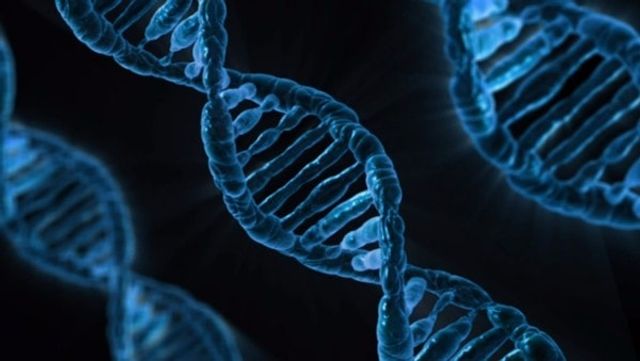
DNA
- DNA is double helix polymer, which means it is a polymer (a large molecule made up of many subunits called nucleotides) made up of two strands forming a twisted, ladder shape.

Genes
- A gene is a small section of DNA. Genes code for a sequence of amino acids, which combine to give a specific protein.

Chromosomes
- Long strands of DNA are coiled up to form chromosomes.
- Chromosomes contain many genes.
- Human body cells contain 23 pairs of chromosomes, one of each pair coming from each parent.
1The Nature & Variety of Living Organisms
1.1Characteristics of Living Organisms
2Structure & Functions in Living Organisms
2.1Organisation Structure
2.1.1Cells2.1.2Tissues2.1.3Organs2.1.4Organ Systems2.1.5Organisms2.1.6Animal cells2.1.7Plant cells2.1.8Cell Differentiation2.1.9Stem Cells2.1.10Uses of Stem Cells2.1.11Disadvantages of Stem Cells2.1.12End of Topic Test - Cell Types & Structures2.1.13Exam-Style Questions - Cells2.1.14Diffusion2.1.15Factors affecting Diffusion2.1.16Surface Area to Volume Ratio2.1.17Diffusion - Experiment2.1.18Osmosis2.1.19Required Practical - Osmosis2.1.20Active Transport2.1.21Transport in Cells2.1.22End of Topic Test - Cell Transport2.1.23Grade 9 - Cell Transport2.1.24Exam-Style Questions - Substance Exchange
2.2Biological Molecules
2.3Nutrition
2.3.1Photosynthesis2.3.2Photosynthesis Equation2.3.3Factors affecting Rate of Photosynthesis2.3.4Photosynthesis - Calculations2.3.5Investigating Photosynthesis2.3.6Testing Leaves for Starch2.3.7Grade 9 - Photosynthesis Experiment2.3.8Exam-Style Questions - Rate of Photosynthesis2.3.9Leaf Adaptations2.3.10Ion Deficiencies2.3.11Human Diet2.3.12Vitamins and Minerals2.3.13Dietary Needs2.3.14Human Digestive System2.3.15Peristalsis2.3.16Villi2.3.17Digestive Enzymes2.3.18Amylase2.3.19Protease2.3.20Lipase2.3.21Bile2.3.22End of Topic Test - Enzymes & Nutririon2.3.23Exam-Style Questions - Enzymes & Digestion
3Organism Functions
3.1Respiration
3.2Gas Exchange
3.3Transport
3.3.1Surface Area to Volume Ratio3.3.2Exchange Surfaces3.3.3Examples of Exchange Surfaces3.3.4Root Hair Cells3.3.5Transpiration3.3.6Rate of Transpiration3.3.7Measuring Transpiration3.3.8Xylem3.3.9Translocation3.3.10Blood Components3.3.11Plasma3.3.12Red Blood Cell3.3.13Platelets3.3.14The Immune System3.3.15Antibodies3.3.16Vaccination3.3.17Types of Blood Vessel3.3.18Blood Vessels - Arteries3.3.19Blood Vessels - Veins3.3.20Blood Vessels - Capillaries3.3.21Function of the Heart3.3.22Structure of the Heart3.3.23Heart Rate3.3.24Heart Disease3.3.25Double Circulatory System3.3.26Important Blood Vessels3.3.27End of Topic - Transport3.3.28Exam-Style Questions - The Heart
3.4Excretion
3.5Coordination & Response
3.5.1Homeostasis3.5.2Regulating Internal Conditions3.5.3Coordinated Responses3.5.4Types of Tropisms3.5.5Auxin and Phototropism3.5.6Nervous System3.5.7Synapses3.5.8Reflex Actions3.5.9Reflex Arc3.5.10Sense Organs3.5.11The Eye3.5.12Eye - Focusing3.5.13Eye - Adapting to Light3.5.14Thermoregulation3.5.15Sweating and Shivering3.5.16Thermoregulation - Blood Vessels3.5.17Exam-Style Questions - Homeostasis3.5.18Endocrine Glands3.5.19Hormones3.5.20Nervous vs Endocrine3.5.21Adrenaline3.5.22Glucose3.5.23Puberty3.5.24Menstruation3.5.25Menstrual Cycle3.5.26Menstrual Hormones3.5.27Grade 9 - Hormonal Coordination3.5.28End of Topic Test - Coordination & Response
4Reproduction & Inheritance
4.1Reproduction
4.2Genetics
4.3Variation
4.3.1Alleles4.3.2Phenotype4.3.3Monohybrid Inheritance4.3.4Punnett Square4.3.5Sex Determination4.3.6Codominance4.3.7Cystic Fibrosis Punnett Square4.3.8Cystic Fibrosis Pedigree Diagram4.3.9Variation4.3.10Mutations4.3.11Natural Selection4.3.12Evolution4.3.13Resistant Bacteria4.3.14End of Topic Test - Variation4.3.15Grade 9 - Evolution4.3.16Exam-Style Questions - Cystic Fibrosis
5Ecology
5.1Ecosystems
5.1.1Ecosystems5.1.2Resources5.1.3Interdependence5.1.4Growth Factors5.1.5Assessing Ecosystems5.1.6Quadrats5.1.7Required Practical5.1.8Exam-Style Questions - Sampling5.1.9Energy Flow5.1.10Food Chains5.1.11Trophic Levels5.1.12Decomposers5.1.13Pyramids of Biomass5.1.14Transfer of Biomass5.1.15Reasons for Wastage5.1.16End of Topic Test - Food and Trophic Levels5.1.17Recycling Materials5.1.18Carbon Cycle5.1.19Exam-Style Questions - Carbon Cycle5.1.20Nitrogen Cycle5.1.21The Nitrogen Cycle and Microorganisms5.1.22End of Topic Test - Ecosystems5.1.23Grade 9 - Ecosystems
6Biological Resources
6.1Food Production
6.1.1Intensive Farming - Crop Yield6.1.2Intensive Farming - Ion Deficiency6.1.3Intensive Farming - Pest Control6.1.4Intensive Farming - Fish Farming6.1.5Microorganisms in Food6.1.6Factors Affecting Microorganism Growth6.1.7Industrial Fermentation6.1.8Selective Breeding6.1.9Selective Breeding Process6.1.10Uses of Selective Breeding6.1.11Exam-Style Questions - Selective Breeding
Jump to other topics
1The Nature & Variety of Living Organisms
1.1Characteristics of Living Organisms
2Structure & Functions in Living Organisms
2.1Organisation Structure
2.1.1Cells2.1.2Tissues2.1.3Organs2.1.4Organ Systems2.1.5Organisms2.1.6Animal cells2.1.7Plant cells2.1.8Cell Differentiation2.1.9Stem Cells2.1.10Uses of Stem Cells2.1.11Disadvantages of Stem Cells2.1.12End of Topic Test - Cell Types & Structures2.1.13Exam-Style Questions - Cells2.1.14Diffusion2.1.15Factors affecting Diffusion2.1.16Surface Area to Volume Ratio2.1.17Diffusion - Experiment2.1.18Osmosis2.1.19Required Practical - Osmosis2.1.20Active Transport2.1.21Transport in Cells2.1.22End of Topic Test - Cell Transport2.1.23Grade 9 - Cell Transport2.1.24Exam-Style Questions - Substance Exchange
2.2Biological Molecules
2.3Nutrition
2.3.1Photosynthesis2.3.2Photosynthesis Equation2.3.3Factors affecting Rate of Photosynthesis2.3.4Photosynthesis - Calculations2.3.5Investigating Photosynthesis2.3.6Testing Leaves for Starch2.3.7Grade 9 - Photosynthesis Experiment2.3.8Exam-Style Questions - Rate of Photosynthesis2.3.9Leaf Adaptations2.3.10Ion Deficiencies2.3.11Human Diet2.3.12Vitamins and Minerals2.3.13Dietary Needs2.3.14Human Digestive System2.3.15Peristalsis2.3.16Villi2.3.17Digestive Enzymes2.3.18Amylase2.3.19Protease2.3.20Lipase2.3.21Bile2.3.22End of Topic Test - Enzymes & Nutririon2.3.23Exam-Style Questions - Enzymes & Digestion
3Organism Functions
3.1Respiration
3.2Gas Exchange
3.3Transport
3.3.1Surface Area to Volume Ratio3.3.2Exchange Surfaces3.3.3Examples of Exchange Surfaces3.3.4Root Hair Cells3.3.5Transpiration3.3.6Rate of Transpiration3.3.7Measuring Transpiration3.3.8Xylem3.3.9Translocation3.3.10Blood Components3.3.11Plasma3.3.12Red Blood Cell3.3.13Platelets3.3.14The Immune System3.3.15Antibodies3.3.16Vaccination3.3.17Types of Blood Vessel3.3.18Blood Vessels - Arteries3.3.19Blood Vessels - Veins3.3.20Blood Vessels - Capillaries3.3.21Function of the Heart3.3.22Structure of the Heart3.3.23Heart Rate3.3.24Heart Disease3.3.25Double Circulatory System3.3.26Important Blood Vessels3.3.27End of Topic - Transport3.3.28Exam-Style Questions - The Heart
3.4Excretion
3.5Coordination & Response
3.5.1Homeostasis3.5.2Regulating Internal Conditions3.5.3Coordinated Responses3.5.4Types of Tropisms3.5.5Auxin and Phototropism3.5.6Nervous System3.5.7Synapses3.5.8Reflex Actions3.5.9Reflex Arc3.5.10Sense Organs3.5.11The Eye3.5.12Eye - Focusing3.5.13Eye - Adapting to Light3.5.14Thermoregulation3.5.15Sweating and Shivering3.5.16Thermoregulation - Blood Vessels3.5.17Exam-Style Questions - Homeostasis3.5.18Endocrine Glands3.5.19Hormones3.5.20Nervous vs Endocrine3.5.21Adrenaline3.5.22Glucose3.5.23Puberty3.5.24Menstruation3.5.25Menstrual Cycle3.5.26Menstrual Hormones3.5.27Grade 9 - Hormonal Coordination3.5.28End of Topic Test - Coordination & Response
4Reproduction & Inheritance
4.1Reproduction
4.2Genetics
4.3Variation
4.3.1Alleles4.3.2Phenotype4.3.3Monohybrid Inheritance4.3.4Punnett Square4.3.5Sex Determination4.3.6Codominance4.3.7Cystic Fibrosis Punnett Square4.3.8Cystic Fibrosis Pedigree Diagram4.3.9Variation4.3.10Mutations4.3.11Natural Selection4.3.12Evolution4.3.13Resistant Bacteria4.3.14End of Topic Test - Variation4.3.15Grade 9 - Evolution4.3.16Exam-Style Questions - Cystic Fibrosis
5Ecology
5.1Ecosystems
5.1.1Ecosystems5.1.2Resources5.1.3Interdependence5.1.4Growth Factors5.1.5Assessing Ecosystems5.1.6Quadrats5.1.7Required Practical5.1.8Exam-Style Questions - Sampling5.1.9Energy Flow5.1.10Food Chains5.1.11Trophic Levels5.1.12Decomposers5.1.13Pyramids of Biomass5.1.14Transfer of Biomass5.1.15Reasons for Wastage5.1.16End of Topic Test - Food and Trophic Levels5.1.17Recycling Materials5.1.18Carbon Cycle5.1.19Exam-Style Questions - Carbon Cycle5.1.20Nitrogen Cycle5.1.21The Nitrogen Cycle and Microorganisms5.1.22End of Topic Test - Ecosystems5.1.23Grade 9 - Ecosystems
6Biological Resources
6.1Food Production
6.1.1Intensive Farming - Crop Yield6.1.2Intensive Farming - Ion Deficiency6.1.3Intensive Farming - Pest Control6.1.4Intensive Farming - Fish Farming6.1.5Microorganisms in Food6.1.6Factors Affecting Microorganism Growth6.1.7Industrial Fermentation6.1.8Selective Breeding6.1.9Selective Breeding Process6.1.10Uses of Selective Breeding6.1.11Exam-Style Questions - Selective Breeding
Practice questions on Genome
Can you answer these? Test yourself with free interactive practice on Seneca — used by over 10 million students.
- 1
- 2
- 3
- 4
- 5
Unlock your full potential with Seneca Premium
Unlimited access to 10,000+ open-ended exam questions
Mini-mock exams based on your study history
Unlock 800+ premium courses & e-books