17.1.1
Genome
Test your knowledge with free interactive questions on Seneca — used by over 10 million students.
The Genome
The genome is all the genetic material of an organism, inherited (passed down) from parents to offspring. Within a genome, there are lots of levels of organisation:
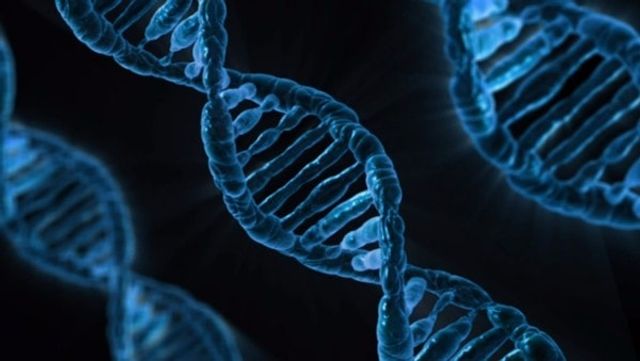
DNA
- DNA is double helix polymer, which means it is a polymer (a large molecule made up of many subunits) made up of two strands forming a twisted, ladder shape.

Genes
- A gene is a small section of DNA. Genes code for a sequence of amino acids, which combine to give a specific protein.

Chromosomes
- Long strands of DNA are coiled up to form chromosomes.
- Chromosomes contain many genes.
- Human body cells contain 23 pairs of chromosomes, one of each pair coming from each parent.
1Classification of Living Organisms
1.1Characteristics of Living Organisms
1.2Concept and Uses of Classification Systems
2Organisation of the Organism
2.1Cell Structure
3Movement Into & Out of Cells
3.2Osmosis
4Biological Molecules
5Enzymes
6Plant Nutrition
6.1Photosynthesis
6.1.1Photosynthesis6.1.2Photosynthesis - Plant Gas Exchange6.1.3Uses of Glucose6.1.4Ion Deficiency Conditions6.1.5Rate of Photosynthesis6.1.6Photosynthesis Experiments6.1.7Photosynthesis Equation6.1.8Photosynthesis - Calculations6.1.9Limiting Factors6.1.10Limiting Factors 26.1.11Grade 9 - Photosynthesis Experiment6.1.12Exam-Style Questions - Photosynthesis
7Human Nutrition
7.2Digestive System
7.3Physical Digestion
7.4Chemical Digestion
7.5Absorption
8Transport in Plants
8.1Xylem & Phloem
8.2Water Uptake
8.3Transpiration
9Transport in Animals
9.1Circulatory Systems
9.2Heart
9.3Blood Vessels
10Diseases & Immunity
10.1Diseases & Immunity
11Gas Exchange in Humans
12Respiration
13Excretion in Humans
14Coordination & Response
14.1Coordination & Response
14.2Sense Organs
14.3Hormones
14.4Homeostasis
14.4.1Homeostasis14.4.2Regulating Internal Conditions14.4.3Control Systems14.4.4Negative Feedback14.4.5Thermoregulation14.4.6Thermoregulation - Hot and Cold14.4.7Thermoregulation - Skin14.4.8Thermoregulation - Sweating & Shivering14.4.9Thermoregulation - Hairs14.4.10Thermoregulation - Blood Vessels14.4.11Blood Glucose14.4.12Detecting Glucose14.4.13Type 1 Diabetes14.4.14End of Topic Test - Homeostasis & Hormones14.4.15Grade 9 - Hormonal Coordination
16Reproduction
16.1Asexual Reproduction
16.2Sexual Reproduction
16.3Sexual Reproduction in Plants
16.4Sexual Reproduction in Humans
16.5Sex Hormones in Humans
16.6Sexually Transmitted Infections
17Inheritance
17.1Chromosomes, Genes & Proteins
17.2Mitosis & Meiosis
17.3Monohybrid Inheritance
17.3.1Alleles17.3.2Phenotype17.3.3Sex Determination17.3.4Monohybrid Inheritance17.3.5Punnett Square17.3.6Blood Groups17.3.7Sex-linked Disorders17.3.8Cystic Fibrosis17.3.9Cystic Fibrosis - Punnett Square17.3.10Cystic Fibrosis - Pedigree Diagram17.3.11Test Crosses17.3.12End of Topic Test - Genes & Inheritance
18Variation & Selection
18.1Variation
18.2Adaptive Features
19Organisms & Their Environment
19.1Energy Flow
19.2Food Chains & Food Webs
19.3Nutrient Cycles
20Human Influence on Ecosystems
20.1Food Supply
20.2Habitat Destruction
20.3Pollution
21Biotechnology & Genetic Modification
21.1Biotechnology & Genetic Modification
Jump to other topics
1Classification of Living Organisms
1.1Characteristics of Living Organisms
1.2Concept and Uses of Classification Systems
2Organisation of the Organism
2.1Cell Structure
3Movement Into & Out of Cells
3.2Osmosis
4Biological Molecules
5Enzymes
6Plant Nutrition
6.1Photosynthesis
6.1.1Photosynthesis6.1.2Photosynthesis - Plant Gas Exchange6.1.3Uses of Glucose6.1.4Ion Deficiency Conditions6.1.5Rate of Photosynthesis6.1.6Photosynthesis Experiments6.1.7Photosynthesis Equation6.1.8Photosynthesis - Calculations6.1.9Limiting Factors6.1.10Limiting Factors 26.1.11Grade 9 - Photosynthesis Experiment6.1.12Exam-Style Questions - Photosynthesis
7Human Nutrition
7.2Digestive System
7.3Physical Digestion
7.4Chemical Digestion
7.5Absorption
8Transport in Plants
8.1Xylem & Phloem
8.2Water Uptake
8.3Transpiration
9Transport in Animals
9.1Circulatory Systems
9.2Heart
9.3Blood Vessels
10Diseases & Immunity
10.1Diseases & Immunity
11Gas Exchange in Humans
12Respiration
13Excretion in Humans
14Coordination & Response
14.1Coordination & Response
14.2Sense Organs
14.3Hormones
14.4Homeostasis
14.4.1Homeostasis14.4.2Regulating Internal Conditions14.4.3Control Systems14.4.4Negative Feedback14.4.5Thermoregulation14.4.6Thermoregulation - Hot and Cold14.4.7Thermoregulation - Skin14.4.8Thermoregulation - Sweating & Shivering14.4.9Thermoregulation - Hairs14.4.10Thermoregulation - Blood Vessels14.4.11Blood Glucose14.4.12Detecting Glucose14.4.13Type 1 Diabetes14.4.14End of Topic Test - Homeostasis & Hormones14.4.15Grade 9 - Hormonal Coordination
16Reproduction
16.1Asexual Reproduction
16.2Sexual Reproduction
16.3Sexual Reproduction in Plants
16.4Sexual Reproduction in Humans
16.5Sex Hormones in Humans
16.6Sexually Transmitted Infections
17Inheritance
17.1Chromosomes, Genes & Proteins
17.2Mitosis & Meiosis
17.3Monohybrid Inheritance
17.3.1Alleles17.3.2Phenotype17.3.3Sex Determination17.3.4Monohybrid Inheritance17.3.5Punnett Square17.3.6Blood Groups17.3.7Sex-linked Disorders17.3.8Cystic Fibrosis17.3.9Cystic Fibrosis - Punnett Square17.3.10Cystic Fibrosis - Pedigree Diagram17.3.11Test Crosses17.3.12End of Topic Test - Genes & Inheritance
18Variation & Selection
18.1Variation
18.2Adaptive Features
19Organisms & Their Environment
19.1Energy Flow
19.2Food Chains & Food Webs
19.3Nutrient Cycles
20Human Influence on Ecosystems
20.1Food Supply
20.2Habitat Destruction
20.3Pollution
21Biotechnology & Genetic Modification
21.1Biotechnology & Genetic Modification
Practice questions on Genome
Can you answer these? Test yourself with free interactive practice on Seneca — used by over 10 million students.
- 1
- 2
- 3
- 4
- 5
Unlock your full potential with Seneca Premium
Unlimited access to 10,000+ open-ended exam questions
Mini-mock exams based on your study history
Unlock 800+ premium courses & e-books