2.9.1
Using Apostrophes with Regular Plurals
Test your knowledge with free interactive questions on Seneca — used by over 10 million students.
Recap: Regular Plurals
When there is more than one of a noun, the noun becomes a plural. We make regular plurals by adding 's' or 'es' to the end of singular nouns. Let's look at a few examples of regular plurals...


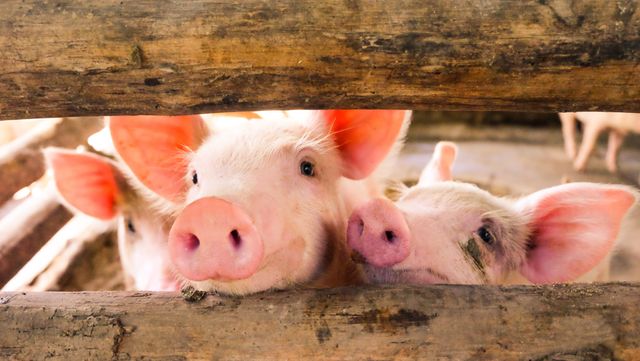
Using Apostrophes with Regular Plural Nouns
We sometimes need to show possession in a sentence, which is when something belongs to someone or something. We do this using an apostrophe ('). Let's walk through an example of how you add an apostrophe to a regular plural noun...

1) Make a sentence using possession
- The birds cage was very small.
- 'Birds' is a regular plural. The plural form 'birds' is the singular 'bird' + 's'.
- There is possession in the sentence because the cage belongs to the birds.
2) Put an apostrophe after the 's'
- The birds' cage was very small.
1Reading
1.1Root Words
1.2Prefixes
1.3Suffixes
2Writing
2.1Composition
2.2Conjunctions
2.3Present Perfect Tense
2.5Fronted Adverbials
2.7Homophones
2.8Spelling Rules
2.9Using Apostrophes
2.10Using a Dictionary
Jump to other topics
1Reading
1.1Root Words
1.2Prefixes
1.3Suffixes
2Writing
2.1Composition
2.2Conjunctions
2.3Present Perfect Tense
2.5Fronted Adverbials
2.7Homophones
2.8Spelling Rules
2.9Using Apostrophes
2.10Using a Dictionary
Practice questions on Using Apostrophes with Regular Plurals
Can you answer these? Test yourself with free interactive practice on Seneca — used by over 10 million students.
- 1
- 2Write the plural forms of these singular nouns:Fill in the list
- 3What is the plural form of __biscuit__?Multiple choice
- 4What is the singular form of __crickets__?Multiple choice
- 5Is the noun __nail__ singular or plural?Multiple choice
Unlock your full potential with Seneca Premium
Unlimited access to 10,000+ open-ended exam questions
Mini-mock exams based on your study history
Unlock 800+ premium courses & e-books