5.4.1
Imagery
Test your knowledge with free interactive questions on Seneca — used by over 10 million students.
Imagery in Blood Brothers
Imagery is where a writer uses language to create a visual image in the minds of the audience.

Russell's use of imagery
- There is limited imagery in the play because the characters mainly talk in a very realistic way.
- Many of them are working class and, as such, have a very straight-to-the-point way of communicating with one another.
The Narrator and imagery
- The exception to this, however, is the Narrator.
- Russell has made the Narrator use imagery frequently during his appearances.
- This clearly sets him apart from the rest of the characters.
- The audience is able to understand that he is an outsider to the story, observing and commenting from the sidelines, and not directly involved in the action.

The devil
- The Narrator frequently alludes to (references) “the devil”. This creates a clear image of impending doom, and serves as a reminder to the audience that the play will have an inevitable tragic ending.
Debt
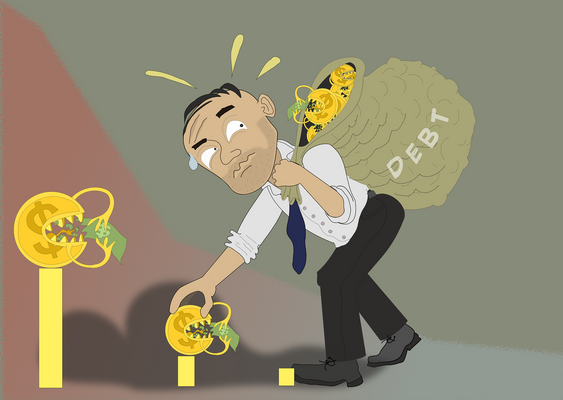
- The Narrator also makes a number of references to debt, for example, through his appearance as the Milkman demanding payment for unsettled bills.
- These references are actually intended as metaphors for the greatest debt of all: the price that Mrs. Johnstone must pay for agreeing to give Mrs. Lyons one of her children.
The beach
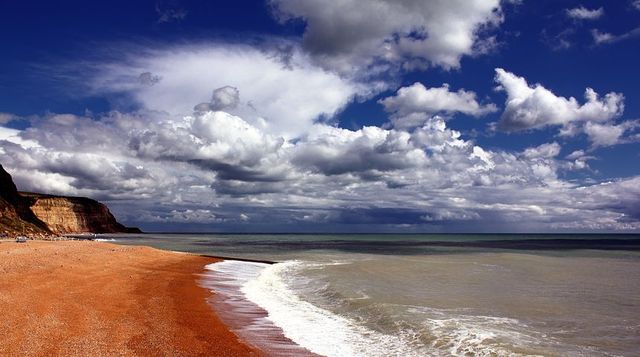
- During the scene where we see Mickey, Edward and Linda’s carefree teenage years, the Narrator describes a trip to the beach where the characters “don’t even notice the broken bottles in the sand.” (Act Two).
- This visual image is actually a metaphor, telling us that the teenagers are unable to notice the dangers that lie in their path, and are therefore unaware of the disastrous fate that awaits them.
1Context & Author
2Plot
2.1Act One
2.1.1Overview: Introduction to Mrs Johnstone & Lyons2.1.2Analysis: Introduction to Mrs. Johnston and Lyons2.1.3Overview: The Birth of Mickey & Edward2.1.4Analysis: The Birth of Mickey & Edward2.1.5Overview: Mickey Playing at Home2.1.6Overview: Mickey & Edward as Seven-year-olds2.1.7Analysis: Mickey & Edward as Seven-year-olds2.1.8Overview: Mickey & Edward as Seven-year-olds 22.1.9Analysis: Mickey & Edward as Seven-year-olds 22.1.10End of Topic Test - Act One2.1.11End of Topic Test - Act One 2
2.2Act Two
2.2.1Overview: Mickey & Edward as Teenagers2.2.2Analysis: Mickey & Edward as Teenagers2.2.3Overview: Mickey & Edward as Teenagers 22.2.4Analysis: Mickey & Edward as Teenagers 22.2.5Overview: Mickey & Edward as Teenagers 32.2.6Analysis: Mickey & Edward as Teenagers 32.2.7Overview: Mickey & Edward as Adults2.2.8Analysis: Mickey & Edward as Adults2.2.9End of Topic Test - Act Two2.2.10End of Topic Test - Act Two 2
3Characters
3.3Linda
3.4Mrs Johnstone
3.6Mr Lyons
3.7Sammy
3.8The Narrator
3.10End of Topic Sessions
4Themes
4.1Parents & Children
4.2Growing Up
4.3Friendship & Brotherhood
4.4Fate & Superstition
4.5Nature vs. Nurture
5Literary Techniques
5.1Structure
5.2Tragedy
5.3Dramatic Irony
5.4Imagery
5.5Character & Voice
5.6Music & Lyrics
Jump to other topics
1Context & Author
2Plot
2.1Act One
2.1.1Overview: Introduction to Mrs Johnstone & Lyons2.1.2Analysis: Introduction to Mrs. Johnston and Lyons2.1.3Overview: The Birth of Mickey & Edward2.1.4Analysis: The Birth of Mickey & Edward2.1.5Overview: Mickey Playing at Home2.1.6Overview: Mickey & Edward as Seven-year-olds2.1.7Analysis: Mickey & Edward as Seven-year-olds2.1.8Overview: Mickey & Edward as Seven-year-olds 22.1.9Analysis: Mickey & Edward as Seven-year-olds 22.1.10End of Topic Test - Act One2.1.11End of Topic Test - Act One 2
2.2Act Two
2.2.1Overview: Mickey & Edward as Teenagers2.2.2Analysis: Mickey & Edward as Teenagers2.2.3Overview: Mickey & Edward as Teenagers 22.2.4Analysis: Mickey & Edward as Teenagers 22.2.5Overview: Mickey & Edward as Teenagers 32.2.6Analysis: Mickey & Edward as Teenagers 32.2.7Overview: Mickey & Edward as Adults2.2.8Analysis: Mickey & Edward as Adults2.2.9End of Topic Test - Act Two2.2.10End of Topic Test - Act Two 2
3Characters
3.3Linda
3.4Mrs Johnstone
3.6Mr Lyons
3.7Sammy
3.8The Narrator
3.10End of Topic Sessions
4Themes
4.1Parents & Children
4.2Growing Up
4.3Friendship & Brotherhood
4.4Fate & Superstition
4.5Nature vs. Nurture
5Literary Techniques
5.1Structure
5.2Tragedy
5.3Dramatic Irony
5.4Imagery
5.5Character & Voice
5.6Music & Lyrics
Practice questions on Imagery
Can you answer these? Test yourself with free interactive practice on Seneca — used by over 10 million students.
- 1Which character uses imagery frequently?Multiple choice
Unlock your full potential with Seneca Premium
Unlimited access to 10,000+ open-ended exam questions
Mini-mock exams based on your study history
Unlock 800+ premium courses & e-books