1.1.5
Family
Test your knowledge with free interactive questions on Seneca — used by over 10 million students.
Family in 20th Century England
Between the 1950s and 1980s, a patriarchal, nuclear family was the norm. The characters in Blood Brothers are very aware of traditional family values and strive to achieve them.

The nuclear family
- In the 1960s, a ‘nuclear’ family was still the norm.
- This meant that a typical family would consist of a mother and father, who were married and living together, with their children.

The Johnstones
- The Johnstone family is identified as ‘different’ from the norm, and explains some of the snobbery they face from people like Mrs. Lyons, who condescendingly refers to them as “these people” (Act One).

The Lyons'
- Equally, Mrs. Lyons, who is clearly obsessed with maintaining an image of decency, would have felt shame at not being able to have children.
- This desperation to present a decent, typical family could have been one of the reasons she so badly wanted to take one of Mrs. Johnstone’s babies:
- “Mrs Lyons: … We bought such a large house for the - for the children - we thought children would come along” (Act One).
Divorce
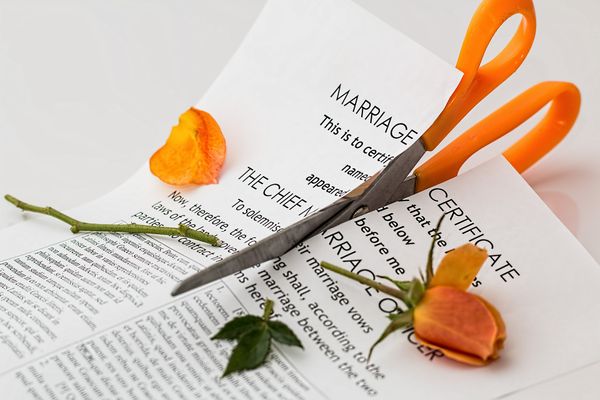
- Divorce was possible and was becoming easier to obtain, but many people still looked down on single-parent families.
- Again, this explains why Mrs. Johnstone had to struggle so much to raise her family in the face of snobbery from more ‘traditional’ people after her husband left her for “a girl they say who looks a bit like Marilyn Monroe.” (Act One).

Patriarchal families
- Families tended to be patriarchal, meaning that the man was in charge.
- This could link to Sammy’s troubles as he grew up. It is possible that, in the absence of a father, he would have felt significant pressure to take on responsibility as a ‘breadwinner’.
- Perhaps some of his criminal activity and antisocial behaviour stems from his frustration at not being able to provide for his family.
1Context & Author
2Plot
2.1Act One
2.1.1Overview: Introduction to Mrs Johnstone & Lyons2.1.2Analysis: Introduction to Mrs. Johnston and Lyons2.1.3Overview: The Birth of Mickey & Edward2.1.4Analysis: The Birth of Mickey & Edward2.1.5Overview: Mickey Playing at Home2.1.6Overview: Mickey & Edward as Seven-year-olds2.1.7Analysis: Mickey & Edward as Seven-year-olds2.1.8Overview: Mickey & Edward as Seven-year-olds 22.1.9Analysis: Mickey & Edward as Seven-year-olds 22.1.10End of Topic Test - Act One2.1.11End of Topic Test - Act One 2
2.2Act Two
2.2.1Overview: Mickey & Edward as Teenagers2.2.2Analysis: Mickey & Edward as Teenagers2.2.3Overview: Mickey & Edward as Teenagers 22.2.4Analysis: Mickey & Edward as Teenagers 22.2.5Overview: Mickey & Edward as Teenagers 32.2.6Analysis: Mickey & Edward as Teenagers 32.2.7Overview: Mickey & Edward as Adults2.2.8Analysis: Mickey & Edward as Adults2.2.9End of Topic Test - Act Two2.2.10End of Topic Test - Act Two 2
3Characters
3.3Linda
3.4Mrs Johnstone
3.6Mr Lyons
3.7Sammy
3.8The Narrator
3.10End of Topic Sessions
4Themes
4.1Parents & Children
4.2Growing Up
4.3Friendship & Brotherhood
4.4Fate & Superstition
4.5Nature vs. Nurture
5Literary Techniques
5.1Structure
5.2Tragedy
5.3Dramatic Irony
5.4Imagery
5.5Character & Voice
5.6Music & Lyrics
Jump to other topics
1Context & Author
2Plot
2.1Act One
2.1.1Overview: Introduction to Mrs Johnstone & Lyons2.1.2Analysis: Introduction to Mrs. Johnston and Lyons2.1.3Overview: The Birth of Mickey & Edward2.1.4Analysis: The Birth of Mickey & Edward2.1.5Overview: Mickey Playing at Home2.1.6Overview: Mickey & Edward as Seven-year-olds2.1.7Analysis: Mickey & Edward as Seven-year-olds2.1.8Overview: Mickey & Edward as Seven-year-olds 22.1.9Analysis: Mickey & Edward as Seven-year-olds 22.1.10End of Topic Test - Act One2.1.11End of Topic Test - Act One 2
2.2Act Two
2.2.1Overview: Mickey & Edward as Teenagers2.2.2Analysis: Mickey & Edward as Teenagers2.2.3Overview: Mickey & Edward as Teenagers 22.2.4Analysis: Mickey & Edward as Teenagers 22.2.5Overview: Mickey & Edward as Teenagers 32.2.6Analysis: Mickey & Edward as Teenagers 32.2.7Overview: Mickey & Edward as Adults2.2.8Analysis: Mickey & Edward as Adults2.2.9End of Topic Test - Act Two2.2.10End of Topic Test - Act Two 2
3Characters
3.3Linda
3.4Mrs Johnstone
3.6Mr Lyons
3.7Sammy
3.8The Narrator
3.10End of Topic Sessions
4Themes
4.1Parents & Children
4.2Growing Up
4.3Friendship & Brotherhood
4.4Fate & Superstition
4.5Nature vs. Nurture
5Literary Techniques
5.1Structure
5.2Tragedy
5.3Dramatic Irony
5.4Imagery
5.5Character & Voice
5.6Music & Lyrics
Practice questions on Family
Can you answer these? Test yourself with free interactive practice on Seneca — used by over 10 million students.
- 1What type of family was the norm in the 1960s?Multiple choice
- 2Obtaining a divorce in the mid-20th century:True / false
Unlock your full potential with Seneca Premium
Unlimited access to 10,000+ open-ended exam questions
Mini-mock exams based on your study history
Unlock 800+ premium courses & e-books