3.5.1
Mrs Lyons
Test your knowledge with free interactive questions on Seneca — used by over 10 million students.
Mrs. Lyons
Mrs. Lyons' wealth is the most striking difference between her and Mrs. Johnstone.

A luxurious lifestyle
- There is a stark contrast between the dire living conditions of Mrs. Johnstone, and the luxurious home of Mrs. Lyons.
- Mrs. Johnstone, who is employed as a cleaner by Mrs. Lyons, remarks that the house is like a “palace” (Act One) compared to her own.
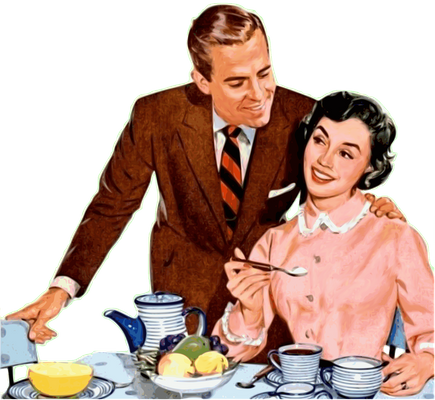
Dependency
- Mrs. Lyons is not at all self-sufficient.
- She relies on her husband to provide money for her to buy nice things, such as the shoes she is unpacking during her first conversation with Mrs. Johnstone, while she relies on the services of Mrs. Johnstone as a cleaner.

Ignorance of the working class
- A good example of Mrs. Lyons’ ignorance and lack of care for the working class comes from her meagre offer of “the week off, on full pay of course” (Act One) as maternity leave for Mrs. Johnstone.
- Mrs. Lyons’ tone suggests that she considers this to be a generous offer, which goes to show har far removed Mrs. Lyons is from the realities of motherhood.

Controlling Edward
- As Edward grows up, Mrs. Lyons’ snobbish attitude affects the way she raises him.
- She makes it very clear that she is unhappy with “these people that Edward has started mixing with” (Act One), and she does not consider it appropriate for her son to mix with the lower classes.
Mrs. Lyons: Manipulative and Calculating
Mrs. Lyons manipulates Mrs. Johnstone, pressuring her to give Edward away.

Wanting Edward
- From the moment she concocts the plan to raise one of the twins as her own, Mrs. Lyons puts pressure onto Mrs. Johnstone.
- Since Mrs. Johnstone is an employee of Mrs. Lyons, she is in a very awkward position and might feel as if she has no choice but to go along with the plan:
- “Please, Mrs. Johnstone. Please.” (Act One).

Manipulating Mrs Johnstone's superstitions
- Mrs. Lyons also uses the fact that Mrs. Johnstone is superstitious as a way of bullying and threatening her to keep quiet.
- She plays on Mrs. Johnstone’s fears and makes her believe that she would be killing the children if she revealed the truth about their origins:
- “You won’t tell anyone about this, Mrs. Johnstone, because if you do, you will kill them.” (Act One).

Becoming increasingly manipulative
- As her mental state declines, Mrs. Lyons becomes more and more vindictive.
- Eventually, it is Mrs. Lyons who “points out” (Act Two) Linda’s affair, which is what ultimately causes Mickey to go and get Sammy’s gun.
1Context & Author
2Plot
2.1Act One
2.1.1Overview: Introduction to Mrs Johnstone & Lyons2.1.2Analysis: Introduction to Mrs. Johnston and Lyons2.1.3Overview: The Birth of Mickey & Edward2.1.4Analysis: The Birth of Mickey & Edward2.1.5Overview: Mickey Playing at Home2.1.6Overview: Mickey & Edward as Seven-year-olds2.1.7Analysis: Mickey & Edward as Seven-year-olds2.1.8Overview: Mickey & Edward as Seven-year-olds 22.1.9Analysis: Mickey & Edward as Seven-year-olds 22.1.10End of Topic Test - Act One2.1.11End of Topic Test - Act One 2
2.2Act Two
2.2.1Overview: Mickey & Edward as Teenagers2.2.2Analysis: Mickey & Edward as Teenagers2.2.3Overview: Mickey & Edward as Teenagers 22.2.4Analysis: Mickey & Edward as Teenagers 22.2.5Overview: Mickey & Edward as Teenagers 32.2.6Analysis: Mickey & Edward as Teenagers 32.2.7Overview: Mickey & Edward as Adults2.2.8Analysis: Mickey & Edward as Adults2.2.9End of Topic Test - Act Two2.2.10End of Topic Test - Act Two 2
3Characters
3.3Linda
3.4Mrs Johnstone
3.6Mr Lyons
3.7Sammy
3.8The Narrator
3.10End of Topic Sessions
4Themes
4.1Parents & Children
4.2Growing Up
4.3Friendship & Brotherhood
4.4Fate & Superstition
4.5Nature vs. Nurture
5Literary Techniques
5.1Structure
5.2Tragedy
5.3Dramatic Irony
5.4Imagery
5.5Character & Voice
5.6Music & Lyrics
Jump to other topics
1Context & Author
2Plot
2.1Act One
2.1.1Overview: Introduction to Mrs Johnstone & Lyons2.1.2Analysis: Introduction to Mrs. Johnston and Lyons2.1.3Overview: The Birth of Mickey & Edward2.1.4Analysis: The Birth of Mickey & Edward2.1.5Overview: Mickey Playing at Home2.1.6Overview: Mickey & Edward as Seven-year-olds2.1.7Analysis: Mickey & Edward as Seven-year-olds2.1.8Overview: Mickey & Edward as Seven-year-olds 22.1.9Analysis: Mickey & Edward as Seven-year-olds 22.1.10End of Topic Test - Act One2.1.11End of Topic Test - Act One 2
2.2Act Two
2.2.1Overview: Mickey & Edward as Teenagers2.2.2Analysis: Mickey & Edward as Teenagers2.2.3Overview: Mickey & Edward as Teenagers 22.2.4Analysis: Mickey & Edward as Teenagers 22.2.5Overview: Mickey & Edward as Teenagers 32.2.6Analysis: Mickey & Edward as Teenagers 32.2.7Overview: Mickey & Edward as Adults2.2.8Analysis: Mickey & Edward as Adults2.2.9End of Topic Test - Act Two2.2.10End of Topic Test - Act Two 2
3Characters
3.3Linda
3.4Mrs Johnstone
3.6Mr Lyons
3.7Sammy
3.8The Narrator
3.10End of Topic Sessions
4Themes
4.1Parents & Children
4.2Growing Up
4.3Friendship & Brotherhood
4.4Fate & Superstition
4.5Nature vs. Nurture
5Literary Techniques
5.1Structure
5.2Tragedy
5.3Dramatic Irony
5.4Imagery
5.5Character & Voice
5.6Music & Lyrics
Practice questions on Mrs Lyons
Can you answer these? Test yourself with free interactive practice on Seneca — used by over 10 million students.
- 1Who does Mrs. Lyons rely on for money?Multiple choice
- 2
- 3Mrs. Lyons raising Edward:True / false
- 4
Unlock your full potential with Seneca Premium
Unlimited access to 10,000+ open-ended exam questions
Mini-mock exams based on your study history
Unlock 800+ premium courses & e-books