4.2.3
The Suez Canal Crisis - 1956
Test your knowledge with free interactive questions on Seneca — used by over 10 million students.
The Suez Canal Crisis, 1956
The Suez Canal Crisis was disastrous and embarrassing for the British Empire. The loss of influence over the Suez had major geopolitical repercussions.
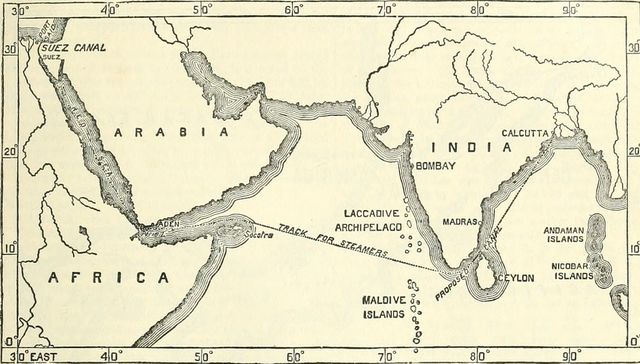
Britain in Egypt
- Britain had owned part of the Suez Canal for many years.
- British policy in Egypt and Palestine had focused on keeping control of the Suez Canal for many years.
- In 1922, Britain was forced to give Egypt its independence, as long as 'foreign' (probably British) interests were protected in Egypt.
- In 1924, Zaghlul became Egypt's first Prime Minister.
- As part of the agreement, Britain retained troops by the Suez Canal, protecting their shipping route to India.

Colonel Nasser and the Suez Canal
- In 1952, Colonel Nasser overthrew King Farouk of Egypt and took power in Egypt.
- Nasser was an Egyptian Nationalist and in 1956, he announced that he would nationalise the Suez Canal. In keeping with international law, Nasser committed to paying the British for their shareholding in the Suez Canal (an amount reported to be £28.3 million for Britain's 44% stake in the Canal).
- Nasser planned to use the Canal's revenue to build the Aswan Dam (which Britain had just withdrawn funding for) to improve Egypt's irrigation and farming infrastructure.
- Britain wanted to maintain its business interests as it did in Iran in the 1950s.

British response
- In 1953, the British had helped to overthrow Mossadegh in Iran to keep control of the Anglo Iranian Oil Company.
- The British Prime Minister, Anthony Eden, believed Nasser to be the ‘Hitler’ of the Middle East.
- Eden announced that he wanted to see him destroyed (historians have credited this unusual outburst to a liver condition - at the time Eden was being treated with amphetamines).
- Britain conspired with France and Israel (formed in 1948 in Palestine) to take back control of the Canal.
- Most of the Cabinet wasn't told about the invasion of Egypt, the USA condemned the invasion, and the Egyptians blocked the Suez Canal, stopping all ships from getting through.

Consequences of the Suez Canal Crisis
- Britain losing control of the Suez Canal signalled the end of the Empire to many.
- Anthony Eden, the British Prime Minister was forced to resign.
- The UN had to deploy peacekeeping forces in Egypt.
- Britain looked weak and had proved that its international aggression would be condemned by the international political community.

Historical interpretations
- Robinson and Gallagher present the crisis as the symbol of the fall of the British Empire.
- Selwyn Lloyd (foreign secretary under Anthony Eden) said that “Suez became an excuse. It was the scapegoat for what was happening to Britain in the world, and for all that flowed from the loss of power and economic weakness”.
- In The Uses and Abuses of History by Margaret MacMillan, she states that Eden misused the analogy of Hitler to justify British interests, whilst Nasser was trying to build up Egypt, instead of conquer its neighbours.

Historical narrative
- Suez became a significant part of Britain’s historical narrative. It moved into standard political vocabulary, especially with the recent focus on Brexit. It is a low point in British international relations against which other events are measured.
- Political commentator Jeremy Paxman said, “no prime minister has made a bigger miscalculation since Anthony Eden”.
- Gordon Brown added that Brexit would leave us “more isolated from our international partners than at any time since the humiliation of Suez”.
1High Water Mark of the British Empire, 1857-1914
1.1Development of Imperialism, 1857-1890
1.2Imperial & Colonial Policy, 1857-1890
1.3Trade & Commerce, 1857-1890
1.4Attitudes Towards the Empire, 1857-1890
1.5Relations with Indigenous Peoples, 1857-1890
2Imperial Consolidation & Liberal Rule, 1890-1914
2.1Consolidation & Expansion in Africa, 1890-1914
2.2Imperial & Colonial Policy, 1890-1914
2.3Trade & Commerce, 1890-1914
2.4Attitudes Towards the Empire, 1890-1914
2.5Relations with Indigenous Peoples, 1890-1914
3Imperialism Challenged, 1914-1967
3.1Expansion & Contraction of Empire, 1914-1947
3.2Colonial Policy & Administration, 1914-1947
3.3Trade, Commerce & Economic Impact of War
3.4Attitudes Towards the Empire, 1890-1914
3.5Relations with Indigenous Peoples, 1914-1947
4The Wind of Change, 1947-1967
4.1Decolonisation in Africa & Asia, 1947-1967
4.2Colonial Policy & Administration, 1947-1967
4.3Trade & Commerce, 1947-1967
4.4Attitudes Towards the Empire, 1947-1967
4.5Post-Colonial Ties, 1947-1967
4.6Relations with Indigenous Peoples, 1947-1967
Jump to other topics
1High Water Mark of the British Empire, 1857-1914
1.1Development of Imperialism, 1857-1890
1.2Imperial & Colonial Policy, 1857-1890
1.3Trade & Commerce, 1857-1890
1.4Attitudes Towards the Empire, 1857-1890
1.5Relations with Indigenous Peoples, 1857-1890
2Imperial Consolidation & Liberal Rule, 1890-1914
2.1Consolidation & Expansion in Africa, 1890-1914
2.2Imperial & Colonial Policy, 1890-1914
2.3Trade & Commerce, 1890-1914
2.4Attitudes Towards the Empire, 1890-1914
2.5Relations with Indigenous Peoples, 1890-1914
3Imperialism Challenged, 1914-1967
3.1Expansion & Contraction of Empire, 1914-1947
3.2Colonial Policy & Administration, 1914-1947
3.3Trade, Commerce & Economic Impact of War
3.4Attitudes Towards the Empire, 1890-1914
3.5Relations with Indigenous Peoples, 1914-1947
4The Wind of Change, 1947-1967
4.1Decolonisation in Africa & Asia, 1947-1967
4.2Colonial Policy & Administration, 1947-1967
4.3Trade & Commerce, 1947-1967
4.4Attitudes Towards the Empire, 1947-1967
4.5Post-Colonial Ties, 1947-1967
4.6Relations with Indigenous Peoples, 1947-1967
Practice questions on The Suez Canal Crisis - 1956
Can you answer these? Test yourself with free interactive practice on Seneca — used by over 10 million students.
- 1What were the terms of Egyptian independence? Fill in the list
- 2Which of these are true of Colonel Nasser?True / false
- 3Which of these was NOT a consequence of the Suez Canal Crisis? Multiple choice
- 4
Unlock your full potential with Seneca Premium
Unlimited access to 10,000+ open-ended exam questions
Mini-mock exams based on your study history
Unlock 800+ premium courses & e-books