1.4.4
Government Attitudes Towards Imperialism
Test your knowledge with free interactive questions on Seneca — used by over 10 million students.
Attitudes of the British Government up to the 1870s
Prior to the 1870s, the government took no decisive stance on imperialism.

Reasons for passive approach
- The British Government took neither an active nor interventionist approach for a variety of reasons:
- Communication technology was limited to the telegraph (invented in 1844) and the letter.
- The Companies' actions were thousands of miles from Whitehall and Parliament. There was no internet and only weak means of transmitting information.
- Commercial strength gained by defeating the colonial ambitions of France, Germany, and the Netherlands suited the British government.
- The belief in Adam Smith's invisible hand, free markets, and anti-interventionism as an economic ideology. This was so strong that governments would not intervene in famines in India and Ireland as they would create 'moral hazard' and inhibit free markets.

Attitudes in the Conservative Party
- Disraeli believed "those wretched colonies will all be independent in a few years and they are all a mill-stone around our necks.’’ (1852).

Attitudes in the Liberal Party
- Gladstone promised to "abstain from any territorial acquisition".
- When Gladstone became Prime Minister, he appointed Lord Ripon as Viceroy of India and Ripon gave Indian local governments more power and reduced censorship in India.
- The Liberal Party 'never shared Joseph Chamberlain's enthusiasm for tropical colonies' according to Kitchen (1996).

Resisting calls for expansion
- In 1865, the Parliamentary Select Committee recommended Britain withdraw from its West African settlements. This was because they were considered too costly.
- However, in 1884, Goldie was still able to get a charter from Parliament for his company in Niger.
Attitudes of the British Government after the 1870s
The attitudes within the government were marked by the personal and political rivalries of Disraeli and Gladstone, whose contrasting approaches to expansion often left policies appearing rather muddled.

Shift in attitudes
- From the 1870s onwards, the British government adopted more imperialist policies.
- Key reasons for this include:
- Responding to the ambitions of Germany and France and the associated economic competition.
- The long depression of the 1870s-1890s that meant foreign export markets became more attractive.
- The difficulty of exporting manufactured goods to the Western Hemisphere due to European and American protection tariffs.
- The increased poor conduct of chartered companies forcing intervention or taking control of protectorates.

Disraeli and the Conservatives
- Disraeli was the Prime Minister in 1868 and 1874-1880.
- He was Jewish by birth but converted to Christianity.
Disraeli's imperialism
- His actions reflect a pro-imperialist stance:
- In 1872, he asserted that the Conservatives were the ‘Party of Empire’ at the Crystal Palace Speech.
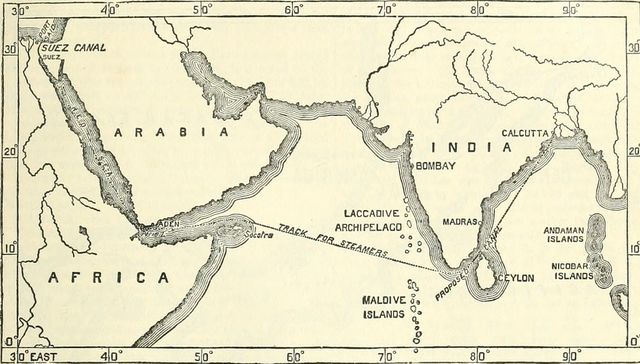
- In 1875, he secured a private loan from the Rothschild family to purchase £4 million worth of Suez Canal shares.
- In 1877, he named Queen Victoria the Empress of India, annexed the Boer republic and sent General Gordon into Sudan.
- In 1878, he annexed Afghanistan.
Gladstone and the Liberals
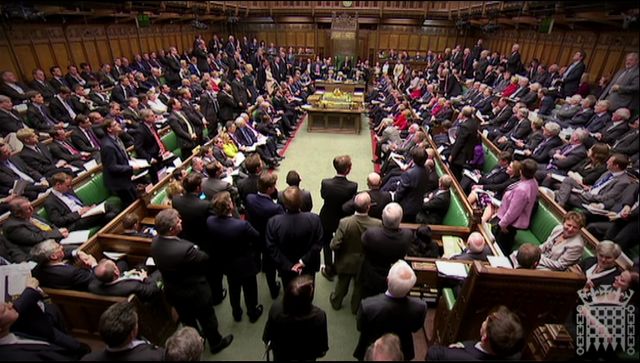
- Gladstone became Prime Minister in 1880 after a resounding victory over Conservatives.
- In total, he was Prime Minister between 1868-1874, 1880-1885 and 1892-1894.
- He was highly critical of Disraeli’s policies, often arguing that he was forced to ‘pick up the pieces’.
- Gladstone is often remembered as a ‘reluctant imperialist’ and Gladstone thought that India should be run for the good of Indian people, rather than the British.
- His actions reflect an inconsistent attitude towards British expansion.

Gladstone and imperialism
- In 1881, Gladstone refused to commit further troops, time or money to the Boer conflict after the defeat at Majuba Hill.
- In 1882, he sent British troops into Egypt to suppress Arabi Pasha’s uprising in Alexandria that saw 50 Europeans killed.
- In 1884, he withdrew Anglo-Egyptian troops after the Mahdist Rebellion in Sudan.
- Between 1884 and 1885, he represented British interests at the Berlin Conference.
- In 1886, he introduced the Home Rule Bill for Ireland.
1High Water Mark of the British Empire, 1857-1914
1.1Development of Imperialism, 1857-1890
1.2Imperial & Colonial Policy, 1857-1890
1.3Trade & Commerce, 1857-1890
1.4Attitudes Towards the Empire, 1857-1890
1.5Relations with Indigenous Peoples, 1857-1890
2Imperial Consolidation & Liberal Rule, 1890-1914
2.1Consolidation & Expansion in Africa, 1890-1914
2.2Imperial & Colonial Policy, 1890-1914
2.3Trade & Commerce, 1890-1914
2.4Attitudes Towards the Empire, 1890-1914
2.5Relations with Indigenous Peoples, 1890-1914
3Imperialism Challenged, 1914-1967
3.1Expansion & Contraction of Empire, 1914-1947
3.2Colonial Policy & Administration, 1914-1947
3.3Trade, Commerce & Economic Impact of War
3.4Attitudes Towards the Empire, 1890-1914
3.5Relations with Indigenous Peoples, 1914-1947
4The Wind of Change, 1947-1967
4.1Decolonisation in Africa & Asia, 1947-1967
4.2Colonial Policy & Administration, 1947-1967
4.3Trade & Commerce, 1947-1967
4.4Attitudes Towards the Empire, 1947-1967
4.5Post-Colonial Ties, 1947-1967
4.6Relations with Indigenous Peoples, 1947-1967
Jump to other topics
1High Water Mark of the British Empire, 1857-1914
1.1Development of Imperialism, 1857-1890
1.2Imperial & Colonial Policy, 1857-1890
1.3Trade & Commerce, 1857-1890
1.4Attitudes Towards the Empire, 1857-1890
1.5Relations with Indigenous Peoples, 1857-1890
2Imperial Consolidation & Liberal Rule, 1890-1914
2.1Consolidation & Expansion in Africa, 1890-1914
2.2Imperial & Colonial Policy, 1890-1914
2.3Trade & Commerce, 1890-1914
2.4Attitudes Towards the Empire, 1890-1914
2.5Relations with Indigenous Peoples, 1890-1914
3Imperialism Challenged, 1914-1967
3.1Expansion & Contraction of Empire, 1914-1947
3.2Colonial Policy & Administration, 1914-1947
3.3Trade, Commerce & Economic Impact of War
3.4Attitudes Towards the Empire, 1890-1914
3.5Relations with Indigenous Peoples, 1914-1947
4The Wind of Change, 1947-1967
4.1Decolonisation in Africa & Asia, 1947-1967
4.2Colonial Policy & Administration, 1947-1967
4.3Trade & Commerce, 1947-1967
4.4Attitudes Towards the Empire, 1947-1967
4.5Post-Colonial Ties, 1947-1967
4.6Relations with Indigenous Peoples, 1947-1967
Practice questions on Government Attitudes Towards Imperialism
Can you answer these? Test yourself with free interactive practice on Seneca — used by over 10 million students.
- 1What did Gladstone promise to do? Multiple choice
- 2When was Gladstone Prime Minister?True / false
- 3
- 4What did Disraeli NOT do in 1877?Multiple choice
Unlock your full potential with Seneca Premium
Unlimited access to 10,000+ open-ended exam questions
Mini-mock exams based on your study history
Unlock 800+ premium courses & e-books