2.4.3
Key Administrators - Curzon
Test your knowledge with free interactive questions on Seneca — used by over 10 million students.
George Curzon
Curzon was the Viceroy of India from 1899 to 1905.
Securing India's borders
- Curzon created the North West Frontier Province, now known as Khyber Pakhtunkhwa in Pakistan, in 1901.
- He also dispatched a military expedition to Tibet due to fears over Russian aggression near India.

Moral duty
- Curzon believed in his moral imperial duty.
- "The hand of Divine Providence behind the creation and expansion of an empire which is a supreme force for good in the world”.
- He took great pride in representing Britain and its imperial mission.
- Curzon reportedly said "the best work in the world was always done by members of the aristocracy".

Administrative reform
- Curzon had direct responsibility for famine relief projects and agricultural projects involving irrigation.
- He oversaw the construction of 10,000km of railway lines in India. However, this transport infrastructure probably helped to secure British control and advantage.
- Curzon also encouraged scientific and medical education in India.

Reforms incorporating the indigenous population
- Curzon founded the Imperial Cadet Corps in an attempt to give the Indian nobility a military education.
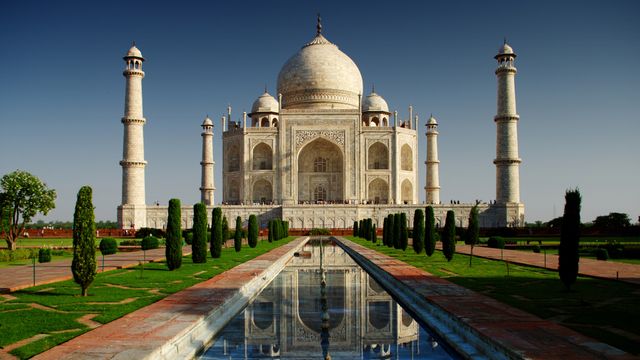
- Curzon was responsible for restoring the Taj Mahal and personally paid a £40,000 to the project.
- Curzon promoted an Anglo-Indian nationality, not a native Indian one.

Limiting the power of the indigenous population
- Despite Curzon's reforms, he didn’t want to give Indians too much power.
- He had a low opinion of the abilities of Indians and was hostile to the Indian National Congress.
- According to Kitchen (1996), "Lord Curzon regarded virtually all of humanity as inferior and put the Indians near the bottom of the scale".
- In 1901, he informed a colleague that no Indian person existed who was able enough to work on the country's Executive Council.

Reaction to Curzon's policies
- Curzon's policies were very unpopular among educated Indians, especially the Partition of Bengal.
- Curzon felt that by dividing Bengal in 1905 he would weaken the Raj’s internal enemies (wealthy Hindu elites).
- Steil (2013) argues that Curzon divided Bengal "for reasons of administrative efficiency", but did not consult Indians, who viewed the move as contrary to Bengali nationalism.
- Either way, the partition of Bengal backfired and he had to resign.
1High Water Mark of the British Empire, 1857-1914
1.1Development of Imperialism, 1857-1890
1.2Imperial & Colonial Policy, 1857-1890
1.3Trade & Commerce, 1857-1890
1.4Attitudes Towards the Empire, 1857-1890
1.5Relations with Indigenous Peoples, 1857-1890
2Imperial Consolidation & Liberal Rule, 1890-1914
2.1Consolidation & Expansion in Africa, 1890-1914
2.2Imperial & Colonial Policy, 1890-1914
2.3Trade & Commerce, 1890-1914
2.4Attitudes Towards the Empire, 1890-1914
2.5Relations with Indigenous Peoples, 1890-1914
3Imperialism Challenged, 1914-1967
3.1Expansion & Contraction of Empire, 1914-1947
3.2Colonial Policy & Administration, 1914-1947
3.3Trade, Commerce & Economic Impact of War
3.4Attitudes Towards the Empire, 1890-1914
3.5Relations with Indigenous Peoples, 1914-1947
4The Wind of Change, 1947-1967
4.1Decolonisation in Africa & Asia, 1947-1967
4.2Colonial Policy & Administration, 1947-1967
4.3Trade & Commerce, 1947-1967
4.4Attitudes Towards the Empire, 1947-1967
4.5Post-Colonial Ties, 1947-1967
4.6Relations with Indigenous Peoples, 1947-1967
Jump to other topics
1High Water Mark of the British Empire, 1857-1914
1.1Development of Imperialism, 1857-1890
1.2Imperial & Colonial Policy, 1857-1890
1.3Trade & Commerce, 1857-1890
1.4Attitudes Towards the Empire, 1857-1890
1.5Relations with Indigenous Peoples, 1857-1890
2Imperial Consolidation & Liberal Rule, 1890-1914
2.1Consolidation & Expansion in Africa, 1890-1914
2.2Imperial & Colonial Policy, 1890-1914
2.3Trade & Commerce, 1890-1914
2.4Attitudes Towards the Empire, 1890-1914
2.5Relations with Indigenous Peoples, 1890-1914
3Imperialism Challenged, 1914-1967
3.1Expansion & Contraction of Empire, 1914-1947
3.2Colonial Policy & Administration, 1914-1947
3.3Trade, Commerce & Economic Impact of War
3.4Attitudes Towards the Empire, 1890-1914
3.5Relations with Indigenous Peoples, 1914-1947
4The Wind of Change, 1947-1967
4.1Decolonisation in Africa & Asia, 1947-1967
4.2Colonial Policy & Administration, 1947-1967
4.3Trade & Commerce, 1947-1967
4.4Attitudes Towards the Empire, 1947-1967
4.5Post-Colonial Ties, 1947-1967
4.6Relations with Indigenous Peoples, 1947-1967
Practice questions on Key Administrators - Curzon
Can you answer these? Test yourself with free interactive practice on Seneca — used by over 10 million students.
- 1What did Curzon do to secure India's borders?Fill in the list
- 2Why did Curzon divide Bengal, according to Steil (2013)?Multiple choice
Unlock your full potential with Seneca Premium
Unlimited access to 10,000+ open-ended exam questions
Mini-mock exams based on your study history
Unlock 800+ premium courses & e-books