4.2.3
Away & Far
Test your knowledge with free interactive questions on Seneca — used by over 10 million students.
Ab - Away From
Words beginning with 'ab' generally mean being away from something.

Abnormal
- To be abnormal means to be 'away from' what is normal. In other words, to be different from what is normal.
- Example: That jacket is an abnormal colour.
- Alternative: That jacket is an unusual colour.

Absent
- To be absent means to be away.
- Example: James was absent from school today.
- Alternative: James was not at school today.

Abbreviate
- To abbreviate is to shorten something, especially words.
- Example: As soon as possible abbreviates to ASAP.
- Alternative: As soon as possible shortens to ASAP.

Abstain
- To abstain is to stay away from doing something - in other words, to stop doing something.
- Example: Bertie thought it was a good idea to abstain from drinking.
- Alternative: Bertie thought it was a good idea to stay away from drinking.

Abject
- Abject means really bad, really unhappy, really hopeless etc. The word abject is used to stress how bad something is.
- Example: William lived in abject poverty.
- Alternative: William lived in utter poverty.
Tele - Far
Words beginning with 'tele' generally mean far or far off.

Telescope
- A telescope is a device that makes far-off objects seem closer.
- Example: Kevin used his telescope to look at stars.

Telephone
- A telephone is a device that can transmit voices over far distances. So you can talk to people in far off places using a telephone!
- Example: I haven't seen Jenny in three months, but we speak every day on the telephone.
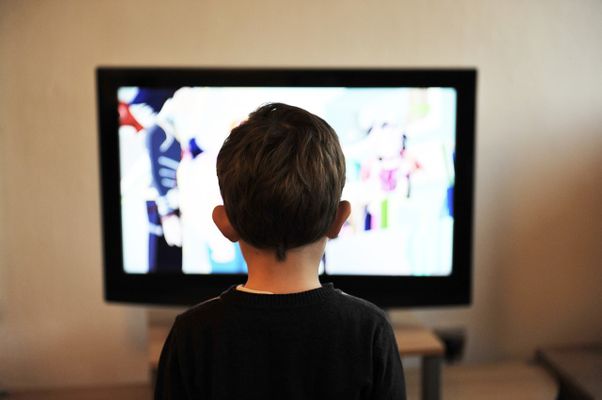
Television
- A television is a device that transmits visual images to be displayed on screens elsewhere. So a television allows you to see far off things from where you are!
- Example: Gareth has never seen a meerkat in real life, but he has seen plenty on the television.

Teleport
- To teleport means to transfer something across a very far distance instantly. It's often used in a sci-fi context to mean to transfer across space.
- Example: It would be so great to teleport to school when it's raining so that I wouldn't get wet walking to the bus stop.
- Alternative: It would be so great to be instantly transported to school when it's raining so that I wouldn't get wet walking to the bus stop.
1Spelling
1.1Spelling
1.2Prefixes
1.3Suffixes
1.3.1Vowel Suffixes1.3.2Short Vowel Suffixes1.3.3Suffixes: '-ous'1.3.4Rules for Suffixes: '-ous'1.3.5Rules for Suffixes: '-ous' 21.3.6Suffixes: '-ly'1.3.7Suffixes: '-ation'1.3.8Suffixes: '-ation' 21.3.9Spelling: '-tion' Endings1.3.10Spelling: '-sion' Endings1.3.11Spelling: '-ssion' Endings1.3.12Spelling: '-cian' Endings1.3.13End of Topic Test - Suffixes1.3.14End of Topic Test - Spelling
1.4Making Words Plural
1.5Homophones
1.5.1Accept & Except1.5.2Affect & Effect1.5.3Ball & Bawl1.5.4Berry & Bury1.5.5Brake & Break1.5.6Fair & Fare1.5.7Grate & Great1.5.8Groan & Grown1.5.9Hear & Here1.5.10Heal, Heel & He'll1.5.11Knot & Not1.5.12Mail & Male1.5.13Main & Mane1.5.14Meat & Meet1.5.15Medal & Meddle1.5.16Missed & Mist1.5.17Peace & Piece1.5.18Plain & Plane1.5.19Rain & Reign & Rein1.5.20Scene & Seen1.5.21Weather & Whether1.5.22Whose & Who's1.5.23End of Topic Test - Homophones1.5.24End of Topic Test - Homophones 21.5.25End of Topic Test - Homophones 3
1.6Word Meanings
2Punctuation
2.1Punctuation
2.1.1Full Stops2.1.2Capital Letters2.1.3Commas2.1.4Commas 22.1.5Using Apostrophes with Regular Plurals2.1.6Using Apostrophes with Irregular Plurals2.1.7Question Marks & Exclamation Marks2.1.8Brackets2.1.9Dashes2.1.10Colon2.1.11Semi-Colon2.1.12Direct Speech2.1.13Indirect Speech2.1.14Hyphens2.1.15Ellipses2.1.16End of Topic Test - Punctuation2.1.17End of Topic Test - Punctuation 2
3Grammar
3.1Word Classes
3.2Conjunctions
3.3Writing Coherently
3.5Modal Verbs
3.6Phrasal Verbs
3.7Subjunctive Verbs
3.8Sentences
3.8.1Subject of a Sentence3.8.2Object of a Sentence3.8.3Main & Subordinate Clauses3.8.4Simple Sentences & Compound Sentences3.8.5Complex Sentences3.8.6Relative Clauses3.8.7Relative Clauses Without Relative Pronouns3.8.8Participle Clauses3.8.9Run-on Sentences3.8.10Sentence Functions3.8.11End of Topic Test - Sentences
3.9Tenses
3.10Adverbials
4Decoding Words
4.1Common Word Roots
4.2Common Prefixes
4.2.1For & Against4.2.2All & Same4.2.3Away & Far4.2.4Colour & Shape4.2.5Back & Down4.2.6Numbers4.2.7Across & Through4.2.8Life & Earth4.2.9Empty & Broken4.2.10Great & Greater4.2.11Hearing & Speaking4.2.12Apart & Together4.2.13Over & Under4.2.14In4.2.15Less & Smaller4.2.16Before & After4.2.17End of Topic Test - Common Prefixes 24.2.18End of Topic Test - Common Prefixes
5Reading & Writing
5.1Reading Formats
5.2Writing Formats
Jump to other topics
1Spelling
1.1Spelling
1.2Prefixes
1.3Suffixes
1.3.1Vowel Suffixes1.3.2Short Vowel Suffixes1.3.3Suffixes: '-ous'1.3.4Rules for Suffixes: '-ous'1.3.5Rules for Suffixes: '-ous' 21.3.6Suffixes: '-ly'1.3.7Suffixes: '-ation'1.3.8Suffixes: '-ation' 21.3.9Spelling: '-tion' Endings1.3.10Spelling: '-sion' Endings1.3.11Spelling: '-ssion' Endings1.3.12Spelling: '-cian' Endings1.3.13End of Topic Test - Suffixes1.3.14End of Topic Test - Spelling
1.4Making Words Plural
1.5Homophones
1.5.1Accept & Except1.5.2Affect & Effect1.5.3Ball & Bawl1.5.4Berry & Bury1.5.5Brake & Break1.5.6Fair & Fare1.5.7Grate & Great1.5.8Groan & Grown1.5.9Hear & Here1.5.10Heal, Heel & He'll1.5.11Knot & Not1.5.12Mail & Male1.5.13Main & Mane1.5.14Meat & Meet1.5.15Medal & Meddle1.5.16Missed & Mist1.5.17Peace & Piece1.5.18Plain & Plane1.5.19Rain & Reign & Rein1.5.20Scene & Seen1.5.21Weather & Whether1.5.22Whose & Who's1.5.23End of Topic Test - Homophones1.5.24End of Topic Test - Homophones 21.5.25End of Topic Test - Homophones 3
1.6Word Meanings
2Punctuation
2.1Punctuation
2.1.1Full Stops2.1.2Capital Letters2.1.3Commas2.1.4Commas 22.1.5Using Apostrophes with Regular Plurals2.1.6Using Apostrophes with Irregular Plurals2.1.7Question Marks & Exclamation Marks2.1.8Brackets2.1.9Dashes2.1.10Colon2.1.11Semi-Colon2.1.12Direct Speech2.1.13Indirect Speech2.1.14Hyphens2.1.15Ellipses2.1.16End of Topic Test - Punctuation2.1.17End of Topic Test - Punctuation 2
3Grammar
3.1Word Classes
3.2Conjunctions
3.3Writing Coherently
3.5Modal Verbs
3.6Phrasal Verbs
3.7Subjunctive Verbs
3.8Sentences
3.8.1Subject of a Sentence3.8.2Object of a Sentence3.8.3Main & Subordinate Clauses3.8.4Simple Sentences & Compound Sentences3.8.5Complex Sentences3.8.6Relative Clauses3.8.7Relative Clauses Without Relative Pronouns3.8.8Participle Clauses3.8.9Run-on Sentences3.8.10Sentence Functions3.8.11End of Topic Test - Sentences
3.9Tenses
3.10Adverbials
4Decoding Words
4.1Common Word Roots
4.2Common Prefixes
4.2.1For & Against4.2.2All & Same4.2.3Away & Far4.2.4Colour & Shape4.2.5Back & Down4.2.6Numbers4.2.7Across & Through4.2.8Life & Earth4.2.9Empty & Broken4.2.10Great & Greater4.2.11Hearing & Speaking4.2.12Apart & Together4.2.13Over & Under4.2.14In4.2.15Less & Smaller4.2.16Before & After4.2.17End of Topic Test - Common Prefixes 24.2.18End of Topic Test - Common Prefixes
5Reading & Writing
5.1Reading Formats
5.2Writing Formats
Practice questions on Away & Far
Can you answer these? Test yourself with free interactive practice on Seneca — used by over 10 million students.
- 1What does the prefix 'ab' mean?Multiple choice
- 2
- 3What does the prefix 'tele' generally mean?Multiple choice
Unlock your full potential with Seneca Premium
Unlimited access to 10,000+ open-ended exam questions
Mini-mock exams based on your study history
Unlock 800+ premium courses & e-books