6.1.3
Perfect Competition 2
Test your knowledge with free interactive questions on Seneca — used by over 10 million students.
Dynamic Efficiency
Dynamic efficiency refers to how efficient a firm is over time. Perfect competition is not dynamically efficient. This may mean that there is underinvestment in the market in the long run.

Efficiency in the long term
- Dynamic efficiency requires innovation and research over time, which needs supernormal profits.
- Perfectly competitive firms only make normal profit because any abnormal profits would be immediately competed away.
- So perfectly competitive firms are not dynamically efficient.

Supernormal profits
- Firms that are perfectly competitive make no supernormal profit long term.
- Any supernormal profits will signal to competing firms to enter the industry and competing away the profits.
- Low barriers to entry and perfect information make this possible. But perfect information may not exist in reality. Perfect competition is JUST A MODEL.

Supernormal profit after entry
- As new firms enter the industry, supply shifts right to S1.
- Firms must start to produce at their minimum average cost, so only normal profits are made.
Examples of Perfectly Competitive Markets
A perfectly competitive market is one where there are a large number of sellers producing homogeneous goods, there are no barriers to entry or exit, there is perfect information and no buyer/seller can affect market price. This is just a model, but some industries have characteristics like this:
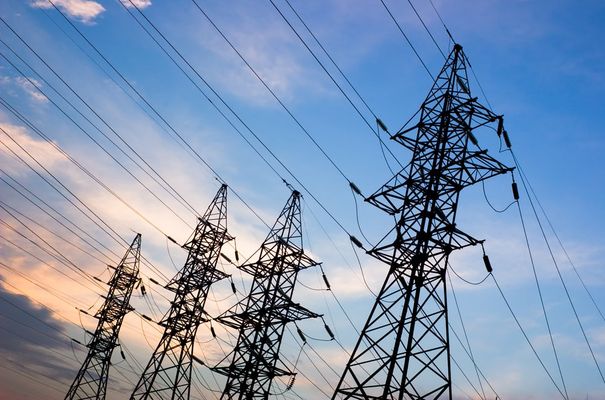
Electricity
- Electricity is a homogeneous good. When it is being consumed, there is no way of knowing in which power plant it has been produced or whether it has been produced by gas, coal, solar, wind or hydro power plants.
- Over the last decade, households who generate their own electricity (e.g. using solar power), have been able to sell what they don’t use back to the national grid. There are lots of electricity sellers in the market.

Electricity cont.
- Price comparison websites make information more widely available and the wholesale price of electricity is available on a public market.
- But there are some barriers to entry for a household to make electricity (solar power cells) and sell it to the National Grid.

Farmers' markets
- At a farmers' market, there are dozens of farmers from a local areas selling homogenous goods like potatoes and tomatoes.
- Information is readily available- walking around a few stalls will give a good idea of price.
- There are some barriers to entry, like the cost of a stand and the need for farm equipment.
- No market is exactly like perfect competition, but we can use the model of perfect competition to predict what outcomes for consumers and firms will be.
1Introduction to Markets
1.1Nature of Economics
1.2How Markets Work
2Market Failure
2.1Market Failure
2.2Government Intervention
3The UK Macroeconomy
3.1Measures of Economic Performance
3.2Aggregate Demand
3.3Aggregate Supply
3.4National Income
4The UK Economy - Policies
4.1Macroeconomic Objectives & Policies
5Business Behaviour
5.1Business Growth
5.2Business Objectives
6Market Structures
6.1Market Structures
6.2Labour Market
6.3Government Intervention
7A Global Perspective
7.1International Economics - Globalisation & Trade
7.2International Economics - Currency
8Finance & Inequality
8.1Poverty & Inequality
8.2Emerging & Developing Economies
8.3The Financial Sector
8.4Role of the State in the Macroeconomy
9Examples of Global Policy
9.1International Policies
Jump to other topics
1Introduction to Markets
1.1Nature of Economics
1.2How Markets Work
2Market Failure
2.1Market Failure
2.2Government Intervention
3The UK Macroeconomy
3.1Measures of Economic Performance
3.2Aggregate Demand
3.3Aggregate Supply
3.4National Income
4The UK Economy - Policies
4.1Macroeconomic Objectives & Policies
5Business Behaviour
5.1Business Growth
5.2Business Objectives
6Market Structures
6.1Market Structures
6.2Labour Market
6.3Government Intervention
7A Global Perspective
7.1International Economics - Globalisation & Trade
7.2International Economics - Currency
8Finance & Inequality
8.1Poverty & Inequality
8.2Emerging & Developing Economies
8.3The Financial Sector
8.4Role of the State in the Macroeconomy
9Examples of Global Policy
9.1International Policies
Practice questions on Perfect Competition 2
Can you answer these? Test yourself with free interactive practice on Seneca — used by over 10 million students.
- 1
- 2
- 3
- 4
- 5
Unlock your full potential with Seneca Premium
Unlimited access to 10,000+ open-ended exam questions
Mini-mock exams based on your study history
Unlock 800+ premium courses & e-books