5.1.2
Business Growth
Test your knowledge with free interactive questions on Seneca — used by over 10 million students.
Business Expansion - Organic Growth
Businesses can grow organically by expanding their own operations. This is usually a slower route to expand than external expansion (acquiring other businesses), but it is usually less risky. Businesses can grow organically by:

Launching new products
- Launching new products can help businesses to expand their customer base as well as potentially selling more products to people who are already customers.
- For example, Virgin Records then launched the Virgin Trains, Virgin Atlantic (airline) and Virgin Active (gyms) businesses.
- This can be risky due to the large investment required and the fact the business owner may not be as knowledgeable in other product markets.

Increase production capacity
- Investing in new capital and technology can allow a business to produce more goods.
- If for example, a firm’s products are consistently selling out and they are unable to produce more, then the production capacity is restricting their expansion.

Opening new stores (premises)
- Opening a new store is a common way for a company to expand as it allows them to be closer to customers in another location. It can be low risk if the business model is already proven to work.
- Aldi and Byron burger shop are examples of this. They opened up lots of stores in different towns, all using a similar business model and operations.
- However, internal expansion can need a lot of investment and can be costly.
Types of External Growth
Businesses can grow non-organically by acquiring other businesses who are suppliers, distributors or competitors.

Forward vertical integration
- Forward vertical integration involves a business moving closer towards the customer. This would involve buying a business involved in the distribution directly to customers.
- Samsung buying a chain of retail stores like Dixons would be an example of forward vertical integration.

Backward vertical integration
- Backward vertical integration involves acquiring companies that are further up the supply chain than the acquirer.
- Apple purchasing Vrvana, who make specialist digital screens for VR is an example of backward vertical integration.

Horizontal integration
- Horizontal integration would involve two competitors operating in the same business area merging.
- Asda and Sainsbury's proposed merger is an example of horizontal integration.
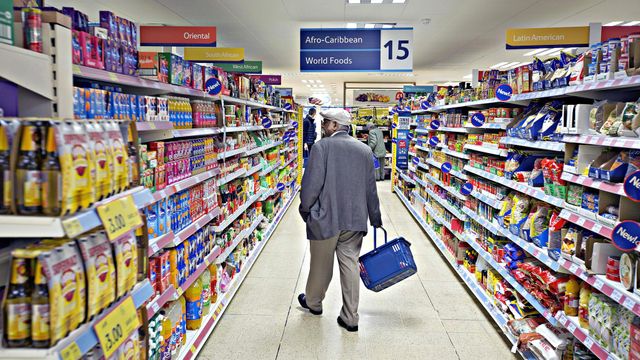
Conglomerate integration
- Conglomerate integration is a merger between two completely unrelated businesses.
- Apple purchasing Tesco would seem to be an example of this.
- However, Amazon buying Whole Foods may not be an example of conglomerate integration, rather backward vertical integration by Amazon, as Amazon already distributed some food to consumers.
1Introduction to Markets
1.1Nature of Economics
1.1.1Economics as a Social Science1.1.2Positive & Normative Economic Statements1.1.3The Economic Problem1.1.4Resources1.1.5Production Possibility Frontiers1.1.6Specialisation & Division of Labour1.1.7Types of Economies1.1.8End of Topic Test - Nature of Economics1.1.9Application Questions - Nature of Economics
1.2How Markets Work
1.2.1Rational Decision Making1.2.2Demand1.2.3Elasticities of Demand1.2.4Elasticities of Demand 21.2.5Elasticity & Revenue1.2.6Supply1.2.7Elasticity of Supply1.2.8Price Determination1.2.9Price Mechanism1.2.10Consumer & Producer Surplus1.2.11Indirect Taxes & Subsidies1.2.12A-A* (AO3/4) - Taxing Prices or Quantities?1.2.13Alternative View of Consumer Behaviour1.2.14End of Topic Test - Markets1.2.15A-A* (AO3/4) - Markets
2Market Failure
2.1Market Failure
2.2Government Intervention
2.2.1Government Intervention in Markets2.2.2Subsidies & Price Controls2.2.3Pollution Permits & Regulation2.2.4A-A* (AO3/4) - European Emissions Trading2.2.5State Provision & Information Provision2.2.6Government Failure2.2.7End of Topic Test - Government Intervention2.2.8A-A* (AO3/4) - Government Intervention
3The UK Macroeconomy
3.1Measures of Economic Performance
3.1.1Measuring Economic Growth3.1.2National Income Data3.1.3Inflation3.1.4Causes of Inflation3.1.5Consequences of Inflation3.1.6Employment & Unemployment3.1.7Causes & Impact of Unemployment3.1.8A-A* (AO3/4) - Hysteresis3.1.9Balance of Payments3.1.10Current Account Deficit & Imbalances3.1.11End of Topic Test - Economic Performance3.1.12Application Questions Macroeconomy
3.2Aggregate Demand
3.3Aggregate Supply
3.4National Income
4The UK Economy - Policies
4.1Macroeconomic Objectives & Policies
4.1.1Possible Objectives4.1.2Demand-Side Policies - Monetary4.1.3Demand-Side Policies - Monetary 24.1.4A-A* (AO3/4) - The Future of Interest Rates4.1.5Demand-Side Policies - Fiscal4.1.6Demand-Side Policies in 2007-084.1.7Strengths & Weaknesses of Demand Side4.1.8Supply-Side Policies4.1.9Supply-Side Policies 24.1.10Conflicts Between Objectives4.1.11A-A* (AO3/4) - Conflicting Incentives4.1.12Phillips Curve4.1.13End of Topic Topic - Policies & Objectives4.1.14Application Questions - UK Policies
5Business Behaviour
5.1Business Growth
5.2Business Objectives
6Market Structures
6.1Market Structures
6.1.1Efficiency6.1.2Perfect Competition6.1.3Perfect Competition 26.1.4Monopolistic Competition6.1.5Oligopolies6.1.6The Prisoner's Dilemma6.1.7Collusion in Oligopolistic Markets6.1.8A-A* (AO3/4) - Which Factors Affect Collusion?6.1.9Monopolies6.1.10Price Discrimination6.1.11Monopsony6.1.12A-A* (AO3/4) - Models in Economics6.1.13Contestability6.1.14Benefits of Contestability6.1.15End of Topic Test - Market Structures6.1.16Application Questions - Market Structures6.1.17A-A* (AO3/4) - Cereal Collusion
6.2Labour Market
6.2.1Demand for Labour6.2.2Supply of Labour6.2.3Labour Market Imperfections6.2.4A-A* (AO3/4) - Labour Productivity & Unemployment6.2.5A-A* (AO3/4) - What Level of Unionisation is Good?6.2.6Wage Determination6.2.7Elasticity of Labour Supply & Demand6.2.8Intervention in Setting Wages6.2.9End of Topic Test - Labour Market6.2.10A-A* (AO3/4) - Labour Markets
6.3Government Intervention
6.3.1Reasons for Government Intervention6.3.2Government Promotion of Competition6.3.3Usefulness of Competition Policy & Examples6.3.4A-A* (AO3/4) - Modern Competition Policy6.3.5Privatisation6.3.6Government Regulation6.3.7A-A* (AO3/4) - Nationalisation vs Privatisation6.3.8Government Protection of Suppliers and Employees6.3.9Impact of Government Intervention6.3.10End of Topic Test - Government Intervention6.3.11Application Questions - Government Intervention
7A Global Perspective
7.1International Economics - Globalisation & Trade
7.2International Economics - Currency
7.2.1Merged Currency7.2.2Restrictions on Free Trade7.2.3Arguments for Protectionism7.2.4Arguments Against Protectionism7.2.5Balance of Payments7.2.6Balance of Payments 27.2.7Floating Exchange Rates7.2.8Fixed Exchange Rate7.2.9International Competitiveness7.2.10End of Topic Test - International Economy7.2.11Application Questions - International Economics
8Finance & Inequality
8.1Poverty & Inequality
8.2Emerging & Developing Economies
8.2.1Measures of Development8.2.2Factors Influencing Growth & Development8.2.3Barriers to Development8.2.4Barriers to Development 28.2.5A-A* (AO3/4) - The Bottom Billion8.2.6Development Strategies8.2.7Interventionist Strategies8.2.8Aid8.2.9International Institutions8.2.10International Institutions 28.2.11End of Topic Test - Emerging & Developing8.2.12Application Questions - Developing Countries
8.3The Financial Sector
8.4Role of the State in the Macroeconomy
9Examples of Global Policy
9.1International Policies
Jump to other topics
1Introduction to Markets
1.1Nature of Economics
1.1.1Economics as a Social Science1.1.2Positive & Normative Economic Statements1.1.3The Economic Problem1.1.4Resources1.1.5Production Possibility Frontiers1.1.6Specialisation & Division of Labour1.1.7Types of Economies1.1.8End of Topic Test - Nature of Economics1.1.9Application Questions - Nature of Economics
1.2How Markets Work
1.2.1Rational Decision Making1.2.2Demand1.2.3Elasticities of Demand1.2.4Elasticities of Demand 21.2.5Elasticity & Revenue1.2.6Supply1.2.7Elasticity of Supply1.2.8Price Determination1.2.9Price Mechanism1.2.10Consumer & Producer Surplus1.2.11Indirect Taxes & Subsidies1.2.12A-A* (AO3/4) - Taxing Prices or Quantities?1.2.13Alternative View of Consumer Behaviour1.2.14End of Topic Test - Markets1.2.15A-A* (AO3/4) - Markets
2Market Failure
2.1Market Failure
2.2Government Intervention
2.2.1Government Intervention in Markets2.2.2Subsidies & Price Controls2.2.3Pollution Permits & Regulation2.2.4A-A* (AO3/4) - European Emissions Trading2.2.5State Provision & Information Provision2.2.6Government Failure2.2.7End of Topic Test - Government Intervention2.2.8A-A* (AO3/4) - Government Intervention
3The UK Macroeconomy
3.1Measures of Economic Performance
3.1.1Measuring Economic Growth3.1.2National Income Data3.1.3Inflation3.1.4Causes of Inflation3.1.5Consequences of Inflation3.1.6Employment & Unemployment3.1.7Causes & Impact of Unemployment3.1.8A-A* (AO3/4) - Hysteresis3.1.9Balance of Payments3.1.10Current Account Deficit & Imbalances3.1.11End of Topic Test - Economic Performance3.1.12Application Questions Macroeconomy
3.2Aggregate Demand
3.3Aggregate Supply
3.4National Income
4The UK Economy - Policies
4.1Macroeconomic Objectives & Policies
4.1.1Possible Objectives4.1.2Demand-Side Policies - Monetary4.1.3Demand-Side Policies - Monetary 24.1.4A-A* (AO3/4) - The Future of Interest Rates4.1.5Demand-Side Policies - Fiscal4.1.6Demand-Side Policies in 2007-084.1.7Strengths & Weaknesses of Demand Side4.1.8Supply-Side Policies4.1.9Supply-Side Policies 24.1.10Conflicts Between Objectives4.1.11A-A* (AO3/4) - Conflicting Incentives4.1.12Phillips Curve4.1.13End of Topic Topic - Policies & Objectives4.1.14Application Questions - UK Policies
5Business Behaviour
5.1Business Growth
5.2Business Objectives
6Market Structures
6.1Market Structures
6.1.1Efficiency6.1.2Perfect Competition6.1.3Perfect Competition 26.1.4Monopolistic Competition6.1.5Oligopolies6.1.6The Prisoner's Dilemma6.1.7Collusion in Oligopolistic Markets6.1.8A-A* (AO3/4) - Which Factors Affect Collusion?6.1.9Monopolies6.1.10Price Discrimination6.1.11Monopsony6.1.12A-A* (AO3/4) - Models in Economics6.1.13Contestability6.1.14Benefits of Contestability6.1.15End of Topic Test - Market Structures6.1.16Application Questions - Market Structures6.1.17A-A* (AO3/4) - Cereal Collusion
6.2Labour Market
6.2.1Demand for Labour6.2.2Supply of Labour6.2.3Labour Market Imperfections6.2.4A-A* (AO3/4) - Labour Productivity & Unemployment6.2.5A-A* (AO3/4) - What Level of Unionisation is Good?6.2.6Wage Determination6.2.7Elasticity of Labour Supply & Demand6.2.8Intervention in Setting Wages6.2.9End of Topic Test - Labour Market6.2.10A-A* (AO3/4) - Labour Markets
6.3Government Intervention
6.3.1Reasons for Government Intervention6.3.2Government Promotion of Competition6.3.3Usefulness of Competition Policy & Examples6.3.4A-A* (AO3/4) - Modern Competition Policy6.3.5Privatisation6.3.6Government Regulation6.3.7A-A* (AO3/4) - Nationalisation vs Privatisation6.3.8Government Protection of Suppliers and Employees6.3.9Impact of Government Intervention6.3.10End of Topic Test - Government Intervention6.3.11Application Questions - Government Intervention
7A Global Perspective
7.1International Economics - Globalisation & Trade
7.2International Economics - Currency
7.2.1Merged Currency7.2.2Restrictions on Free Trade7.2.3Arguments for Protectionism7.2.4Arguments Against Protectionism7.2.5Balance of Payments7.2.6Balance of Payments 27.2.7Floating Exchange Rates7.2.8Fixed Exchange Rate7.2.9International Competitiveness7.2.10End of Topic Test - International Economy7.2.11Application Questions - International Economics
8Finance & Inequality
8.1Poverty & Inequality
8.2Emerging & Developing Economies
8.2.1Measures of Development8.2.2Factors Influencing Growth & Development8.2.3Barriers to Development8.2.4Barriers to Development 28.2.5A-A* (AO3/4) - The Bottom Billion8.2.6Development Strategies8.2.7Interventionist Strategies8.2.8Aid8.2.9International Institutions8.2.10International Institutions 28.2.11End of Topic Test - Emerging & Developing8.2.12Application Questions - Developing Countries
8.3The Financial Sector
8.4Role of the State in the Macroeconomy
9Examples of Global Policy
9.1International Policies
Practice questions on Business Growth
Can you answer these? Test yourself with free interactive practice on Seneca — used by over 10 million students.
- 1
- 2What is another term for internal expansion?Multiple choice
- 3What are 3 ways businesses expand internally?Fill in the list
- 4
Unlock your full potential with Seneca Premium
Unlimited access to 10,000+ open-ended exam questions
Mini-mock exams based on your study history
Unlock 800+ premium courses & e-books