
Duality
English Lit: AQA GCSE The Sign of the Four, topic 4.1.5
Duality in The Sign of the Four
Duality is when characters have two sides to them – this is often good versus evil.

Sherlock Holmes
- We see the two sides of Holmes very clearly.
- In Chapter 1 we see Holmes’ dependence on drugs. Later in the novella, we see Holmes being dependent on the investigation to stimulate his brain (‘I crave for mental exaltation’).
- In Chapter 7, Watson considers how terrible it would be if Holmes were to use his powers for crime rather than detective work.
- In Chapter 12, Holmes quotes a German text that laments that he is only one man when he could have been two: a good man and a rascal.
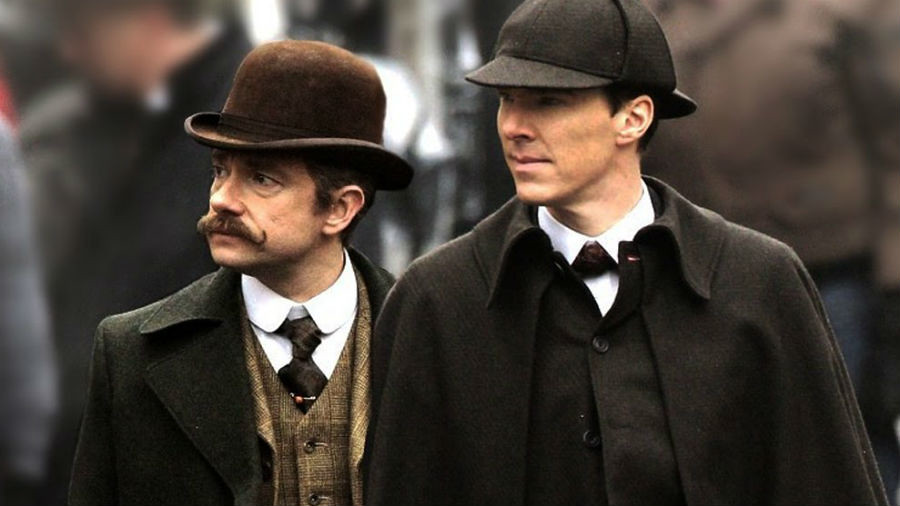
Holmes and Watson
- Holmes and Watson could also be said to represent two sides of humanity themselves.
- Holmes represents clear, scientific, unbiased reasoning and intellect.
- Watson is more romantic and wants to develop good, personal relationships.

Thaddeus and Bartholomew
- The Sholto twins could be viewed as a good twin and an evil twin.
- Thaddeus (the good twin) wants Mary to receive her fair share of the treasure and wants to tell her about her father’s fate. He ultimately gets to live his life freely at the end (‘I can do you justice; and I will, too, whatever Brother Bartholomew may say’).
- Bartholomew does not want to reveal anything to Mary or give her any treasure. He is greedy and wants to keep it for himself. Bartholomew is murdered.

Victorian interest
- In Victorian times there was interest in the idea of split personalities, for example in the ‘Strange case of Dr Jekyll and Mr Hyde’ by Robert Louis Stevenson and ‘The picture of Dorian Gray’ by Oscar Wilde.
Test yourself on Duality
Which of these are true of Sherlock Holmes?