5.1.2
Power & Efficiency
Test your knowledge with free interactive questions on Seneca — used by over 10 million students.
Power
The "energy transferred per second" is equivalent to saying "the rate of energy transfer". Both are definitions for power.
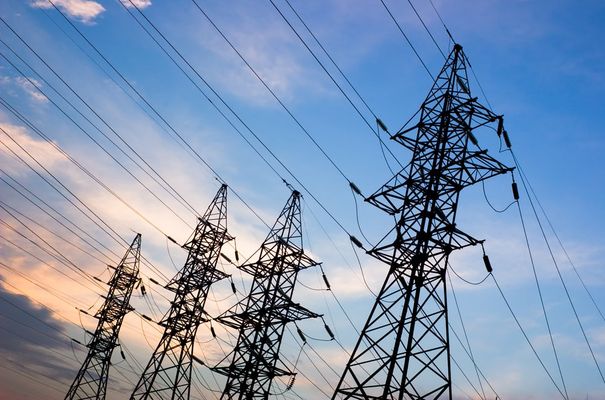
Rate of energy transfer
- The rate at which energy is transferred from one form to another is called power.
- This is equivalent to saying the energy transferred per second.
- The energy transferred is also known as the work done, W.
- So, power can also be described as the work done per second (or the rate of doing work).

Equation
- Power is the rate of doing work.
- Power = work done ÷ time taken

Units
- Power is measured in Watts (W).
- 1 Watt is defined as 1 Joule transferred per second.
Force × velocity
- Power is also equal to the force applied times the velocity of the object the force is applied to.
- This equation can be more useful if you're given the speed and not the distance travelled.
Efficiency
When energy is transferred, there are some losses. For example, some energy may be dissipated as heat or sound.

Useful energy
- Efficiency is the fraction of energy that is used for something useful.
- The higher the efficiency, the better.
- Efficiency is calculated by:
- Efficiency =
- A kettle supplied with 50 W of power and converts 40 W to heat water has an efficiency of .

Percentage
- Efficiency can also be expressed as a percentage:
- Efficiency (%) =
- A kettle supplied with 50 W of power and converts 40 W to heat water has an efficiency of 80%.
1Physical Quantities & Units
1.1Physical Quantities & Units
2Kinematics
3Dynamics
3.1Momentum & Newton's Laws of Motion
3.2Non-Uniform Motion
3.3Linear Momentum & Conservation
4Force, Density & Pressure
4.1Force, Density & Pressure
4.1.1Fields4.1.2Force in Uniform Fields4.1.3Friction4.1.4Buoyancy4.1.5Terminal Speed4.1.6End of Topic Test - Acceleration Due to Gravity4.1.7Centre of Mass4.1.8Forces & Equilibrium4.1.9End of Topic Test - Scalars & Vectors4.1.10Moments4.1.11End of Topic Test - Moments & Centre of Mass4.1.12Density4.1.13Pressure
5Work, Energy & Power
6Deformation of Solids
7Waves
7.1Simple Harmonic Motion
7.2Waves
7.2.1Progressive Waves7.2.2Intensity of Waves7.2.3Wave Speed & Phase Difference7.2.4Longitudinal & Transverse Waves7.2.5End of Topic Test - Progressive Waves7.2.6Electromagnetic Waves7.2.7Doppler Effect7.2.8Sound Waves7.2.9Measuring Sound Waves7.2.10End of Topic Test - Waves7.2.11Ultrasound Imaging7.2.12Ultrasound Imaging 2
8Superposition
9Thermal Physics
9.1Circular Motion
9.2Thermal Physics
9.2.1Temperature9.2.2Measuring Temperature9.2.3Ideal Gas Law9.2.4Ideal Gases9.2.5Boyle's Law & Charles' Law9.2.6Molecular Kinetic Theory Model9.2.7Molecular Kinetic Theory Model 29.2.8Thermal Energy Transfer9.2.9Thermal Energy Transfer Experiments9.2.10End of Topic Test - Thermal Energy & Ideal Gases9.2.11First Law of Thermodynamics
10Communication
10.1Communication Channels
10.2Digital Communication
11Electric Fields
11.1Electric Fields
12Current Electricity
12.1Current Electricity
12.1.1Basics of Electricity12.1.2Mean Drift Velocity12.1.3Current-Voltage Characteristics12.1.4End of Topic Test - Basics of Electricity12.1.5Resistivity12.1.6End of Topic Test - Resistivity & Superconductors12.1.7Power and Conservation12.1.8Microphones12.1.9Components12.1.10Relays12.1.11Strain Gauges
13Magnetic Fields
13.1Magnetic Fields
14Modern Physics
14.1Quantum Physics
14.1.1The Photoelectric Effect14.1.2The Photoelectric Effect Explanation14.1.3End of Topic Test - The Photoelectric Effect14.1.4Collisions of Electrons with Atoms14.1.5Energy Levels & Photon Emission14.1.6Wave-Particle Duality14.1.7End of Topic Test - Absorption & Emission14.1.8Band Theory14.1.9Diagnostic X-Rays14.1.10X-Ray Image Processing14.1.11Absorption of X-Rays14.1.12CT Scanners
14.2Nuclear Physics
14.2.1Rutherford Scattering14.2.2Atomic Model14.2.3Isotopes14.2.4Stable & Unstable Nuclei14.2.5A-A* (AO3/4) - Stable & Unstable Nuclei14.2.6Alpha & Beta Radiation14.2.7Gamma Radiation14.2.8Particles, Antiparticles & Photons14.2.9Quarks & Antiquarks14.2.10Particle Interactions14.2.11Radioactive Decay14.2.12Half Life14.2.13End of Topic Test - Radioactivity14.2.14Nuclear Instability14.2.15Mass & Energy14.2.16Binding Energy14.2.17A-A* (AO3/4) - Nuclear Fusion
Jump to other topics
1Physical Quantities & Units
1.1Physical Quantities & Units
2Kinematics
3Dynamics
3.1Momentum & Newton's Laws of Motion
3.2Non-Uniform Motion
3.3Linear Momentum & Conservation
4Force, Density & Pressure
4.1Force, Density & Pressure
4.1.1Fields4.1.2Force in Uniform Fields4.1.3Friction4.1.4Buoyancy4.1.5Terminal Speed4.1.6End of Topic Test - Acceleration Due to Gravity4.1.7Centre of Mass4.1.8Forces & Equilibrium4.1.9End of Topic Test - Scalars & Vectors4.1.10Moments4.1.11End of Topic Test - Moments & Centre of Mass4.1.12Density4.1.13Pressure
5Work, Energy & Power
6Deformation of Solids
7Waves
7.1Simple Harmonic Motion
7.2Waves
7.2.1Progressive Waves7.2.2Intensity of Waves7.2.3Wave Speed & Phase Difference7.2.4Longitudinal & Transverse Waves7.2.5End of Topic Test - Progressive Waves7.2.6Electromagnetic Waves7.2.7Doppler Effect7.2.8Sound Waves7.2.9Measuring Sound Waves7.2.10End of Topic Test - Waves7.2.11Ultrasound Imaging7.2.12Ultrasound Imaging 2
8Superposition
9Thermal Physics
9.1Circular Motion
9.2Thermal Physics
9.2.1Temperature9.2.2Measuring Temperature9.2.3Ideal Gas Law9.2.4Ideal Gases9.2.5Boyle's Law & Charles' Law9.2.6Molecular Kinetic Theory Model9.2.7Molecular Kinetic Theory Model 29.2.8Thermal Energy Transfer9.2.9Thermal Energy Transfer Experiments9.2.10End of Topic Test - Thermal Energy & Ideal Gases9.2.11First Law of Thermodynamics
10Communication
10.1Communication Channels
10.2Digital Communication
11Electric Fields
11.1Electric Fields
12Current Electricity
12.1Current Electricity
12.1.1Basics of Electricity12.1.2Mean Drift Velocity12.1.3Current-Voltage Characteristics12.1.4End of Topic Test - Basics of Electricity12.1.5Resistivity12.1.6End of Topic Test - Resistivity & Superconductors12.1.7Power and Conservation12.1.8Microphones12.1.9Components12.1.10Relays12.1.11Strain Gauges
13Magnetic Fields
13.1Magnetic Fields
14Modern Physics
14.1Quantum Physics
14.1.1The Photoelectric Effect14.1.2The Photoelectric Effect Explanation14.1.3End of Topic Test - The Photoelectric Effect14.1.4Collisions of Electrons with Atoms14.1.5Energy Levels & Photon Emission14.1.6Wave-Particle Duality14.1.7End of Topic Test - Absorption & Emission14.1.8Band Theory14.1.9Diagnostic X-Rays14.1.10X-Ray Image Processing14.1.11Absorption of X-Rays14.1.12CT Scanners
14.2Nuclear Physics
14.2.1Rutherford Scattering14.2.2Atomic Model14.2.3Isotopes14.2.4Stable & Unstable Nuclei14.2.5A-A* (AO3/4) - Stable & Unstable Nuclei14.2.6Alpha & Beta Radiation14.2.7Gamma Radiation14.2.8Particles, Antiparticles & Photons14.2.9Quarks & Antiquarks14.2.10Particle Interactions14.2.11Radioactive Decay14.2.12Half Life14.2.13End of Topic Test - Radioactivity14.2.14Nuclear Instability14.2.15Mass & Energy14.2.16Binding Energy14.2.17A-A* (AO3/4) - Nuclear Fusion
Practice questions on Power & Efficiency
Can you answer these? Test yourself with free interactive practice on Seneca — used by over 10 million students.
- 1What is the equation for the power?Multiple choice
- 2How are power and force related?Multiple choice
- 3What is the equation for efficiency?Multiple choice
Unlock your full potential with Seneca Premium
Unlimited access to 10,000+ open-ended exam questions
Mini-mock exams based on your study history
Unlock 800+ premium courses & e-books