5.1.2
Key Ideas
Test your knowledge with free interactive questions on Seneca — used by over 10 million students.
Love, Historical Context and Historicism (Act 4, Scene 1)
Jealousy over love and suspicion over Desdemona’s liaisons with Cassio cause Othello’s physical and mental breakdown here. It shows how devastating love can be if it misaligned or misconstrued.

Double standards
- Iago calls Bianca a ‘bauble’ and the audience sees more of his double standards regarding women.

Desdemona's death
- When discussing Desdemona Iago persuades Othello to ‘strangle her in her bed’ rather than use poison.
- There are many possible reasons for this:
- It will make Othello’s guilt the greater.
- Strangulation is a military assault in which the stronger prevails.
- It is a travesty of the act of love to kill in bed with a pillow.
- The bed is where they made love; it will now be a death bed.

Misinterpretations
- Desdemona explains that Cassio and Othello have fallen out but she hopes that they can work things out because of the ‘love I bear to Cassio’ which is not a wise thing to say considering what Othello is thinking at this point.
- She is referring to platonic love and the promise she made to him but Othello is bound to read this in another way.

Public/private
- Sadly when Othello strikes Desdemona and she cries, Othello says that she is only crying crocodile (false) tears, and it appears their true love is now not only shattered privately, but also publicly as well.
Tragedy (Act 4, Scene 1)
Iago is completely in control in this scene, and of the play within a play that he has created.

Iago's direction
- Iago directs the action in front of everyone else and they jump according to what he says.
- Othello has now been reduced to a common spy, and one who misinterprets what he sees.
- He has fallen so low as to be writhing on the ground, with triumphant Iago looking down on him and sadistically enjoying the degradation of the once great general.

Mental collapse
- One of the great indicators of Othello’s tragic fall is his speech or rather his difficulty with it.
- He was once a great orator (as seen in the early part of the drama) but now rants.
- His speech is not confident and is full of questions and exclamation marks, obsessive repetition and lapses of syntax.
- This linguistic breakdown reflects his mental collapse.
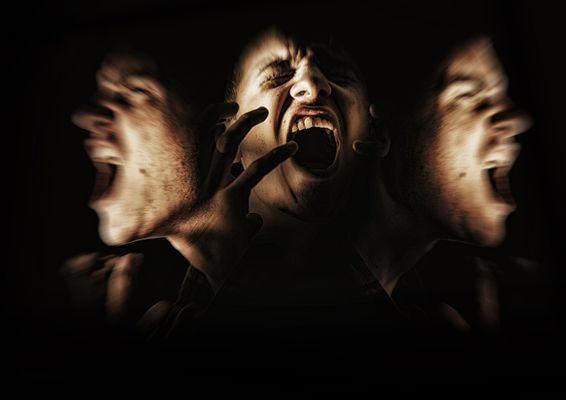
Physical collapse
- When Othello falls to the ground in a fit of ‘savage madness’ this matches his linguistic collapse.
- On the floor, he is reduced to being savage and base, put back by Iago into the place he ought to be.

Poetry
- The scene ends in prose, another sign of Othello’s tragic mental breakdown.
- Earlier on, Othello spoke in poetry but he can no longer do this.
- It was his poetry and storytelling that first enchanted Desdemona and now that is crumbling.

Private and public
- Lodovico knows that something very dark is brewing and that the collision of private and public worlds in this way is not going to end well.
1Context
1.1Introduction
1.3Othello
2Act One: Summaries & Themes
2.1Act and Scene Summaries
2.2Scene One
2.3Scene Two
3Act Two: Summaries & Themes
3.1Scene One & Two
3.2Scene Three
4Act Three: Summaries & Themes
5Act Four
5.1Scene One
5.2Scene Two
5.3Scene Three
6Act Five
6.1Scene One
6.2Scene Two
7Character Profiles
7.1Major Characters
7.2Minor Characters
8Key Themes
8.1Love & Tragedy
8.2Other Key Themes
9Writing Techniques
9.1Writing Techniques
10Critical Debates
10.1Criticism & Performance
11Approaching AQA English Literature
11.1Specification A
11.2Specification B
12Issues of Assessment
12.1The Exams
Jump to other topics
1Context
1.1Introduction
1.3Othello
2Act One: Summaries & Themes
2.1Act and Scene Summaries
2.2Scene One
2.3Scene Two
3Act Two: Summaries & Themes
3.1Scene One & Two
3.2Scene Three
4Act Three: Summaries & Themes
5Act Four
5.1Scene One
5.2Scene Two
5.3Scene Three
6Act Five
6.1Scene One
6.2Scene Two
7Character Profiles
7.1Major Characters
7.2Minor Characters
8Key Themes
8.1Love & Tragedy
8.2Other Key Themes
9Writing Techniques
9.1Writing Techniques
10Critical Debates
10.1Criticism & Performance
11Approaching AQA English Literature
11.1Specification A
11.2Specification B
12Issues of Assessment
12.1The Exams
Practice questions on Key Ideas
Can you answer these? Test yourself with free interactive practice on Seneca — used by over 10 million students.
- 1
- 2Language use in Act Four Scene One:Fill in the list
Unlock your full potential with Seneca Premium
Unlimited access to 10,000+ open-ended exam questions
Mini-mock exams based on your study history
Unlock 800+ premium courses & e-books