1.1.1
Tennessee Williams
Test your knowledge with free interactive questions on Seneca — used by over 10 million students.
The Author: Tennessee Williams
You should not spend too long talking about the life of the author as you will not gain many marks for doing this. But it is still important to note a few things about the author for context.

Hometown
- Thomas Lanier “Tennessee” Williams III was born in 1911 in Columbus, Mississippi.
- Mississippi is a state in the south of the United State of America.
- Some scholars have observed that he shares his southern roots with many of the characters in the play.
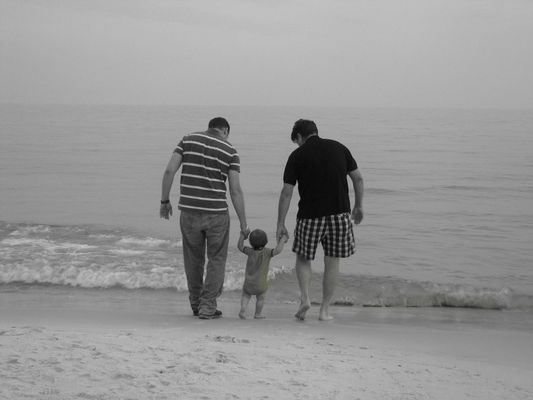
Williams' family
- Williams had English, Welsh, and Huguenot ancestry.
- His father was a travelling shoe salesman who became an alcoholic and was frequently away from home.
- His mother, Edwina, was the daughter of a music teacher and the Reverend Walter Dakin, an Episcopal priest from Illinois who was assigned to a parish in Mississippi shortly after Williams’ birth.
- Williams lived in his parsonage with his family for much of his early childhood and was close to his grandparents.

University life
- Williams went to the University of Missouri, in Columbia, where he enrolled in journalism classes.
- He was bored by his classes and was distracted by unrequited love for a girl.
- He soon began entering his poetry, essays, stories, and plays in writing contests, hoping to earn both extra income and success.

Early career
- After university, Williams had a set of menial jobs.
- In 1939, he moved to New Orleans in Louisiana for the Works Progress Administration (WPA), a federally funded program begun by President Franklin D. Roosevelt.
- This brought him to the attention of the Metro-Goldwyn-Mayer film studio. He worked for them for a while as a writer.

Sex life
- Williams had several relationships with women, but during the 1930s he realised that he was homosexual.
Tennessee Williams' Plays
We need to be careful about fully connecting the author’s life to the text of a play because this can be dangerous. What the author has written may be an ‘imagined construction’ only and have little to do with the author’s life.
_1,h_400,q_80,w_640.jpg)
The Glass Menagerie
- During the winter of 1944–45, Williams' so-called “memory play” The Glass Menagerie, developed from his 1943 short story Portrait of a Girl in Glass, was produced in Chicago and gained good reviews.
- It then moved to New York and was very successful.

A Streetcar Named Desire
- His next play, A Streetcar Named Desire opened in New York in 1947. The play was an instant success.
- It was directed by Elia Kazan – a director who worked closely with Williams.
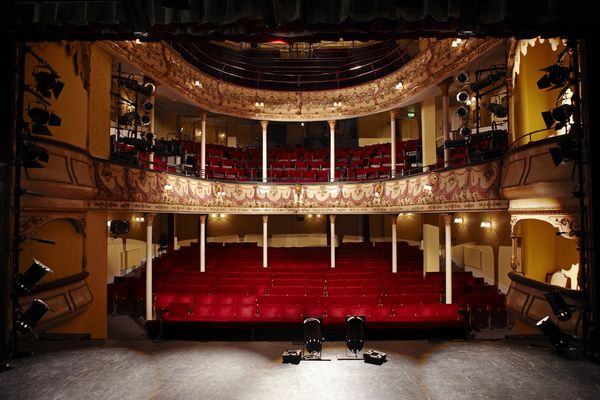
Other plays
- Several other successful plays followed including Summer and Smoke (1948), The Rose Tattoo (1951), Camino Real (1953), and Cat on a Hot Tin Roof (1955).

Blanche
- Some critics have argued that the character of Blanche is based on Williams’ sister, Rose Williams, who struggled with mental health issues and became incapacitated after a lobotomy.

Films
- During the early 1950s, The Glass Menagerie and A Streetcar Named Desire were adapted as major motion pictures and this brought Williams international acclaim.

Later life
- After this early success, however, Williams' work declined following poor decisions.
- He became an alcoholic. In 1963, his partner Frank Merlo died.
- Williams wrote several later plays but few of these were appreciated by critics or audiences.
- On February 25, 1983, Williams was found dead at the age of 71 in his suite at the Hotel Elysée in New York.
1Context & Overview
1.1The Author
1.2Social Context & Setting
2Scene Summaries
2.1Scene One-Two
2.2Scene Three-Four
2.3Scenes Five-Eigth
3Character Profiles
3.1Blanche DuBois & Stanley Kowalski
3.2Stella Kowalski & Harold Mitchell (Mitch)
4Key Ideas
4.1Sex & Gender
4.2Appearances, Fantasy & Reality
5Writing Techniques
5.2Genre, Form & Language
6Critical Debates
6.1Early & Modern Reception
6.2Feminist, Psychoanalytic & Marxist Approach
7Ideas About Tragedy
8Recap: Main Quotes
8.1Main Quotes by Scene
Jump to other topics
1Context & Overview
1.1The Author
1.2Social Context & Setting
2Scene Summaries
2.1Scene One-Two
2.2Scene Three-Four
2.3Scenes Five-Eigth
3Character Profiles
3.1Blanche DuBois & Stanley Kowalski
3.2Stella Kowalski & Harold Mitchell (Mitch)
4Key Ideas
4.1Sex & Gender
4.2Appearances, Fantasy & Reality
5Writing Techniques
5.2Genre, Form & Language
6Critical Debates
6.1Early & Modern Reception
6.2Feminist, Psychoanalytic & Marxist Approach
7Ideas About Tragedy
8Recap: Main Quotes
8.1Main Quotes by Scene
Practice questions on Tennessee Williams
Can you answer these? Test yourself with free interactive practice on Seneca — used by over 10 million students.
- 1Where did Tennessee Williams go to university?Multiple choice
- 2What ancestry did Williams have?True / false
- 3Which state is Williams from?Multiple choice
- 4Chronology of Williams' PlaysPut in order
- 5In which year did Williams' partner die?Multiple choice
Unlock your full potential with Seneca Premium
Unlimited access to 10,000+ open-ended exam questions
Mini-mock exams based on your study history
Unlock 800+ premium courses & e-books