4.21.1
Types of 3D Shape
Test your knowledge with free interactive questions on Seneca — used by over 10 million students.
3D Shapes
On a 3D shape, flat surfaces are called faces, the lines where two surfaces meet are called edges and the corners where two edges meet are called vertices. Edges can be curved or straight.
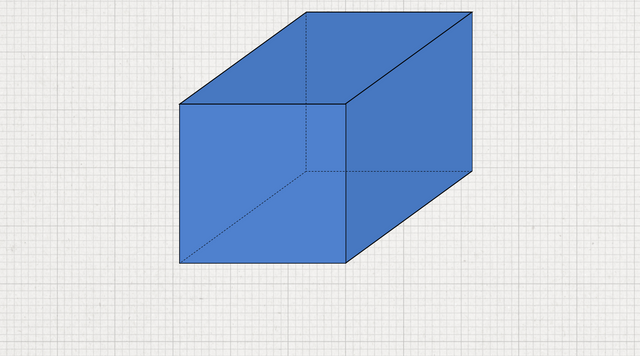
Cuboid
- A cuboid has 6 faces which are all rectangles. It has 12 edges and 8 vertices. Its edges are not necessarily all the same length.

Cube
- A cube is a special kind of cuboid whose edges are all the same length so that its 6 faces are identical and all squares.

Prism
- A prism is a 3D shape with flat faces and an identical cross-section throughout the length of the shape.
- A prism has two end faces called bases then one face for each side of the base.

Pyramid
- This is a square based pyramid.
- Square based pyramids have 5 faces, 5 vertices and 8 edges.
- Triangular based pyramids have 4 faces, 4 vertices and 6 edges.

Cylinder
- A cylinder has a flat face at each end called a base, and a curved surface along its length.
- It has two edges (one around each base) and no vertices.

Cone
- A cone has 2 surfaces, 1 edge and 1 vertex.
- The top of a cone is called the apex.

Sphere
- A sphere is a perfectly round 3D shape.
- It has one curved surface and no edges or vertices.
1Number
1.1Place Value & Ordering
1.2Numerical Operations
1.2.1Adding Integers1.2.2Subtracting Integers1.2.3Multiplying Integers1.2.4Dividing Integers1.2.5Adding & Subtracting Decimals1.2.6Multiplying Decimals1.2.7Dividing Decimals1.2.8Adding & Subtracting Negative Numbers1.2.9Multiplying & Dividing Negative Numbers1.2.10Multiplying by Powers of Ten1.2.11Dividing by Powers of Ten
1.3Fractions
1.4Numerical Operations on Fractions
1.5Roots & Powers
1.6Structure of Calculations
1.7Numerical Skills
1.8Factors & Multiples
1.9Systematic Listing
1.10Surds
1.11Standard Form
1.11.1Converting to Standard Form (Positive Powers)1.11.2Converting to Standard Form (Negative Powers)1.11.3Converting From Standard Form (Positive Powers)1.11.4Converting From Standard Form (Negative Powers)1.11.5Adding & Subtracting Standard Form1.11.6Multiplying & Dividing Standard Form1.11.7Standard Form on a Calculator
1.12Fractions, Decimals & Percentages
1.13Percentage Change
1.14Rounding & Estimation
1.15Bounds & Accuracy
2Algebra
2.1Algebraic Notation
2.2Substitution & Simplification
2.3Brackets
2.3.1Expanding Single Brackets2.3.2Expanding & Simplifying with Single Brackets2.3.3Expanding Double Brackets2.3.4Expanding Multiple Brackets2.3.5Factorising into One Bracket2.3.6Factorising Quadratics of the Form x^2 + bx + c2.3.7Factorising Quadratics - AC Method2.3.8Factorising Quadratics - Middle Term Method2.3.9Factorising the Difference of Two Squares2.3.10Completing the Square
2.4Algebraic Fractions
2.6Functions
2.7Solving Linear Equations
2.8Inequalities
2.9Solving Quadratic Equations
2.10Simultaneous Equations
2.12Sequences
2.14Linear Graphs
2.15Quadratic Graphs
2.16More Non-Linear Graphs
2.17Graph Transformations
3Ratio
3.1Unit Conversions
3.2Compound Units
3.3Ratio Fundamentals
3.4Advanced Ratio & Scale
3.5Proportion
3.6Algebraic Proportion
3.7Percentages & Growth
3.8Manipulating Ratios
3.9Percentage & Interest
4Geometry
4.1Area & Perimeter
4.2Properties of Shapes
4.3Angles
4.4Trigonometry
4.5Similarity & Congruence
4.6Circle Geometry
4.7Circle Theorems
4.93D Representations
4.10Surface Area
4.11Volume
4.13Transformations
4.14Scale Drawings
4.15Bearings
4.16Geometry Proof
4.17Introduction to Geometry
4.18Triangles & Quadrilaterals
4.19Transformations
4.20Measurements & Units
5Probability
5.1Single Events
5.2Combined Events
5.3Experimental Probability
5.4Counting Outcomes
5.5Conditional Probability
5.6Representing Probabilities
5.7Probability Calculations
6Statistics
6.1Averages & Range
6.2Bar Charts
6.3Scatter Graphs
6.4Histograms
6.5Frequency Polygons
6.6Cumulative Frequency
6.8Collecting & Presenting Data
Jump to other topics
1Number
1.1Place Value & Ordering
1.2Numerical Operations
1.2.1Adding Integers1.2.2Subtracting Integers1.2.3Multiplying Integers1.2.4Dividing Integers1.2.5Adding & Subtracting Decimals1.2.6Multiplying Decimals1.2.7Dividing Decimals1.2.8Adding & Subtracting Negative Numbers1.2.9Multiplying & Dividing Negative Numbers1.2.10Multiplying by Powers of Ten1.2.11Dividing by Powers of Ten
1.3Fractions
1.4Numerical Operations on Fractions
1.5Roots & Powers
1.6Structure of Calculations
1.7Numerical Skills
1.8Factors & Multiples
1.9Systematic Listing
1.10Surds
1.11Standard Form
1.11.1Converting to Standard Form (Positive Powers)1.11.2Converting to Standard Form (Negative Powers)1.11.3Converting From Standard Form (Positive Powers)1.11.4Converting From Standard Form (Negative Powers)1.11.5Adding & Subtracting Standard Form1.11.6Multiplying & Dividing Standard Form1.11.7Standard Form on a Calculator
1.12Fractions, Decimals & Percentages
1.13Percentage Change
1.14Rounding & Estimation
1.15Bounds & Accuracy
2Algebra
2.1Algebraic Notation
2.2Substitution & Simplification
2.3Brackets
2.3.1Expanding Single Brackets2.3.2Expanding & Simplifying with Single Brackets2.3.3Expanding Double Brackets2.3.4Expanding Multiple Brackets2.3.5Factorising into One Bracket2.3.6Factorising Quadratics of the Form x^2 + bx + c2.3.7Factorising Quadratics - AC Method2.3.8Factorising Quadratics - Middle Term Method2.3.9Factorising the Difference of Two Squares2.3.10Completing the Square
2.4Algebraic Fractions
2.6Functions
2.7Solving Linear Equations
2.8Inequalities
2.9Solving Quadratic Equations
2.10Simultaneous Equations
2.12Sequences
2.14Linear Graphs
2.15Quadratic Graphs
2.16More Non-Linear Graphs
2.17Graph Transformations
3Ratio
3.1Unit Conversions
3.2Compound Units
3.3Ratio Fundamentals
3.4Advanced Ratio & Scale
3.5Proportion
3.6Algebraic Proportion
3.7Percentages & Growth
3.8Manipulating Ratios
3.9Percentage & Interest
4Geometry
4.1Area & Perimeter
4.2Properties of Shapes
4.3Angles
4.4Trigonometry
4.5Similarity & Congruence
4.6Circle Geometry
4.7Circle Theorems
4.93D Representations
4.10Surface Area
4.11Volume
4.13Transformations
4.14Scale Drawings
4.15Bearings
4.16Geometry Proof
4.17Introduction to Geometry
4.18Triangles & Quadrilaterals
4.19Transformations
4.20Measurements & Units
5Probability
5.1Single Events
5.2Combined Events
5.3Experimental Probability
5.4Counting Outcomes
5.5Conditional Probability
5.6Representing Probabilities
5.7Probability Calculations
6Statistics
6.1Averages & Range
6.2Bar Charts
6.3Scatter Graphs
6.4Histograms
6.5Frequency Polygons
6.6Cumulative Frequency
6.8Collecting & Presenting Data
Practice questions on Types of 3D Shape
Can you answer these? Test yourself with free interactive practice on Seneca — used by over 10 million students.
- 1Which of these are 3D shapes?True / false
- 2Which of these are 3D shapes?True / false
- 3Which of these are 3D shapes?True / false
- 4What is the name of this shape?Multiple choice
- 5How many vertices does a sphere have?Multiple choice
Unlock your full potential with Seneca Premium
Unlimited access to 10,000+ open-ended exam questions
Mini-mock exams based on your study history
Unlock 800+ premium courses & e-books